PORTLAND, Ore.–If alternative financial services such as payday lenders and check-cashers are so bad, why do so many people use them? It may surprise some CU leaders, but the reason is because their customers are actually making rational and intelligent decisions, according to one person.

Lisa Servon, presidential professor of the City and Regional Planning Department at the University of Pennsylvania, and who has spent time working inside check-cashing outlets as part of her research, told attendees at the GoWest CU Association’s MAXX meeting that the 25-million unbanked or underbanked households in the United States make the decisions they do for what are often good reasons, including that they don’t feel credit unions or banks are good options.
“Many people feel Main Street financial services are no longer serving them in the way they want to be served,” Servon said.
While mobile banking has exploded in usage, Servon added, “It’s important to recognize that certain needs that customers have maintained. They have the same need for trust. They need to be able to feel like they know the people who are managing their money.”
Servon, who researches poverty and who believes it’s a “little bit pejorative” to call people unbanked or underbanked, because it implies there is a “problem,” said policymakers often mistakenly assume the only way to be a full participant in the economy is to be fully banked with a traditional provider.
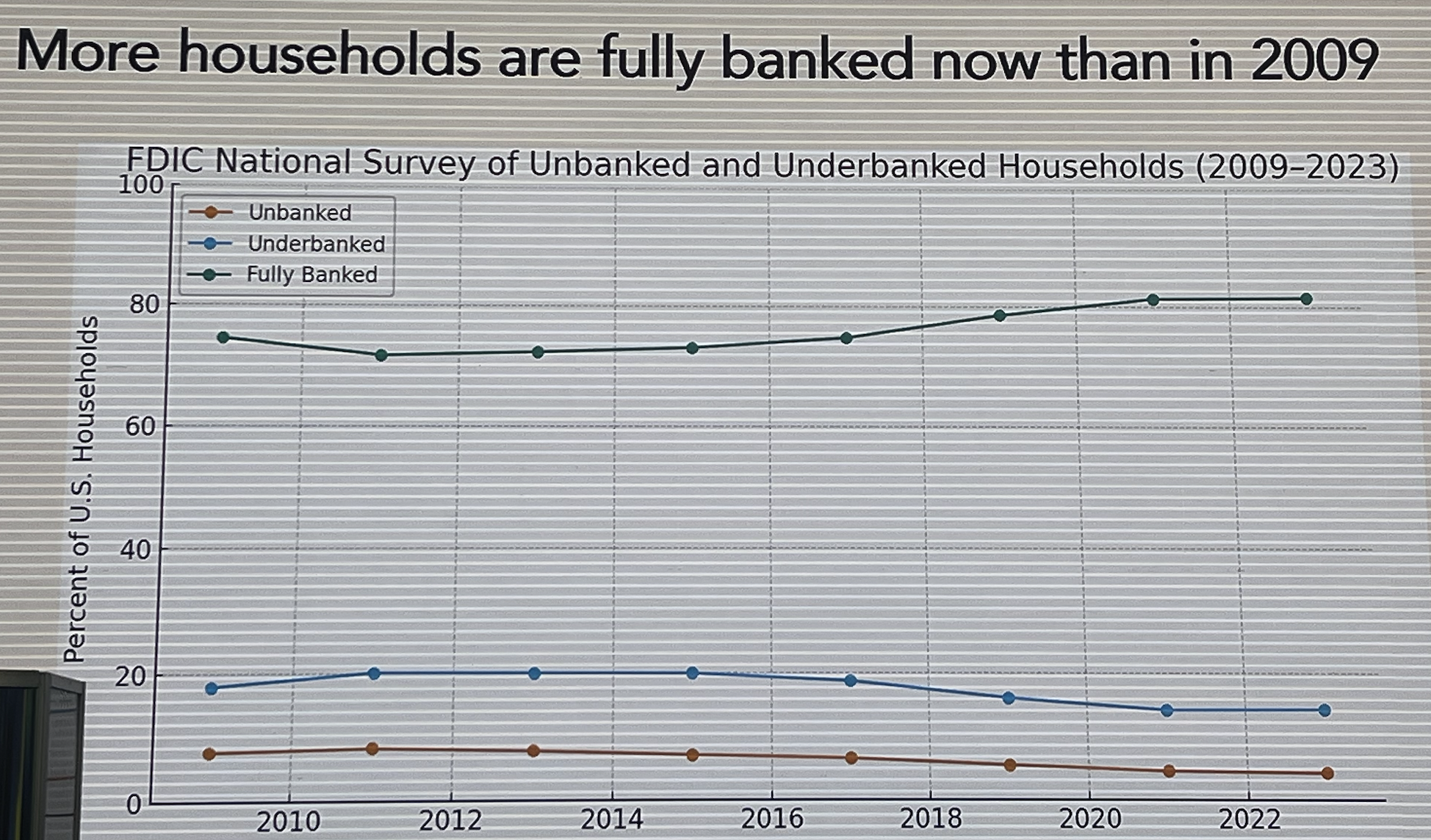
While she cited data showing that more households than ever in the U.S. have banking relationships, Servon said she wanted to focus on the 25-million underbanked and unbanked households so that credit unions would have a better understanding of the market, and perhaps make changes to better serve it.
About the Market
For the most part, Servon said that market is:
- Lower income
- Less educated
- Black, Hispanic, American Indian or Alaska Native
- Working age households with a disability
- Households with income volatility (and this has been increasing)
- Single-parent households
“I would also argue the big banks are not that interested in serving them, even though they make a lot of money from them,” Servon said.
Expanding Demographic
Servon said the underserved demographic is expanding, as people are more financially precarious than they have been, and has experienced declining real wages since the mid 1970s. It’s also a market that holds $1.2 trillion in student loan debt.
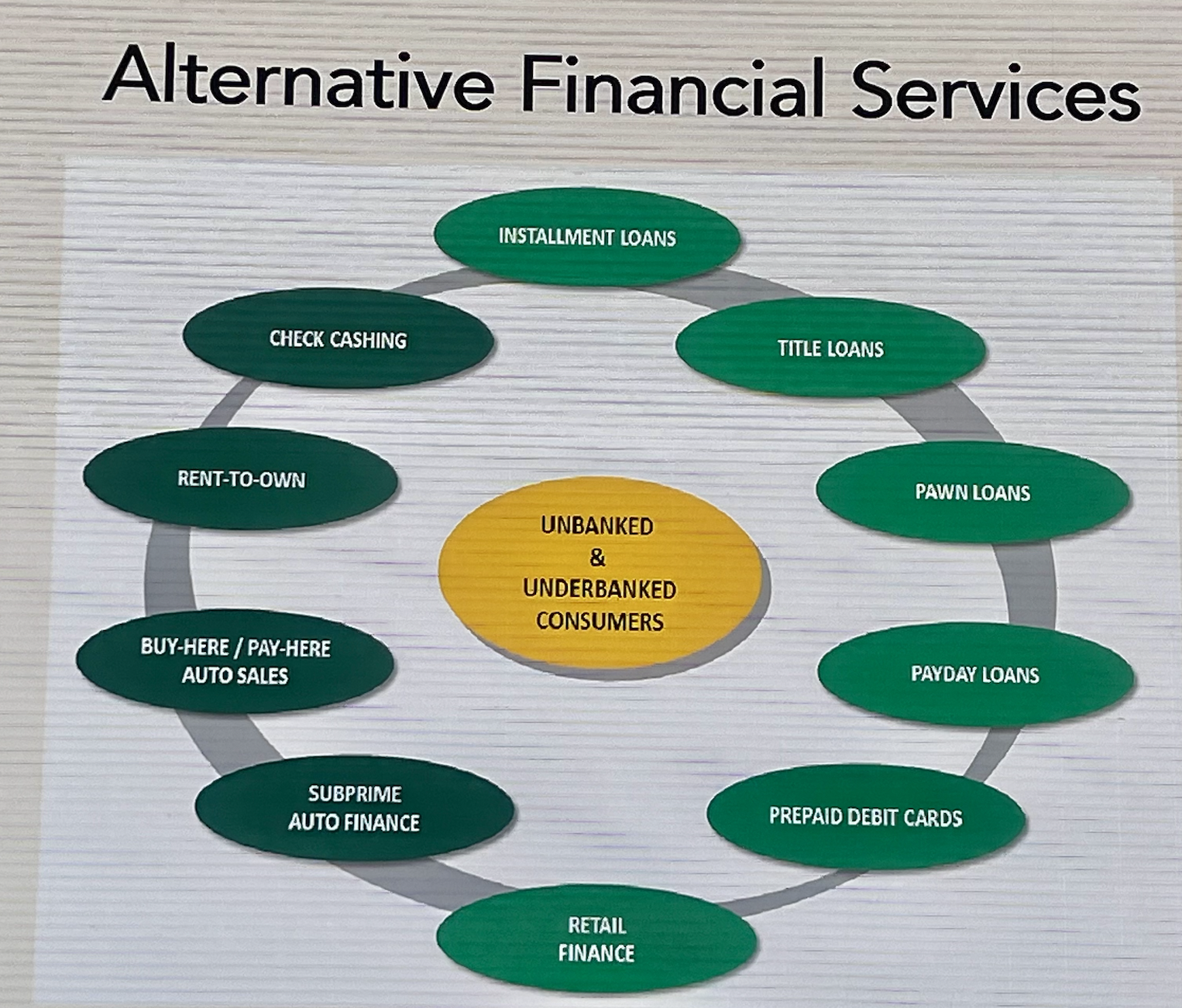
After showing the graphic above, Servon asked for a show of hands of those who had used any of the services listed. Only a few hands were raised, with Servon saying there is a “stigma” attached to using any of them.
Most audience members also indicated they had never been inside a payday lending/check-cashing store.
“You should go to the one that’s closest to one of your branches,” Servon recommended. “See how you’re served. Cash a check. Your members are using these services, too, and it’s really important to understand why. That 25-million households are using these services is not indicative that they don’t know any better. You have to be aware of why people are making the choices they are making.”
The Check-Casher’s Perspective
Servon shared her experience in working in a RiteCheck store in the South Bronx. She worked at a similar check casher/payday lender in Oakland, Calif., and also worked in debt collection.
At the time she was working in New York the store had a relationship with the then Bethex FCU. Customers could deposit some funds into a credit union account, while getting services at the check-casher that they could not get at the credit union. (Bethex FCU was liquidated in 2015.)
The owner of RiteCheck, Joe Coleman, said there was great demand for his company’s services and he took pride in meeting customers’ needs, with Servon saying Coleman believed policymakers often misunderstand the market and oversimplify things in believing all the unbanked and underbanked need is to be banked.
“This assumption frames the problem from the top down rather than the bottom up,” Coleman said., according to Servon. “It’s like providing pots and pans as a solution to hunger.”
The work in the check-cashing outlets and other related service providers, combined with her work on researching poverty, has led Servon to conclude that the reason consumers use such providers isn’t that “people aren’t smart enough.”
Some People Never Surprised
To illustrate her point, she said that most everyone in the audience has likely experienced the surprise of finding money in a pocket. Lower-income individuals never experience that surprise, she said, because they know where every dime they have is.
For many people, she explained, spending for a high-fee financial service or expensive loan is the most rationale decision they can make given their situation. She shared this chart, right, to point out that many people also lack access to traditional financial services. It’s a system she described as “broken.”
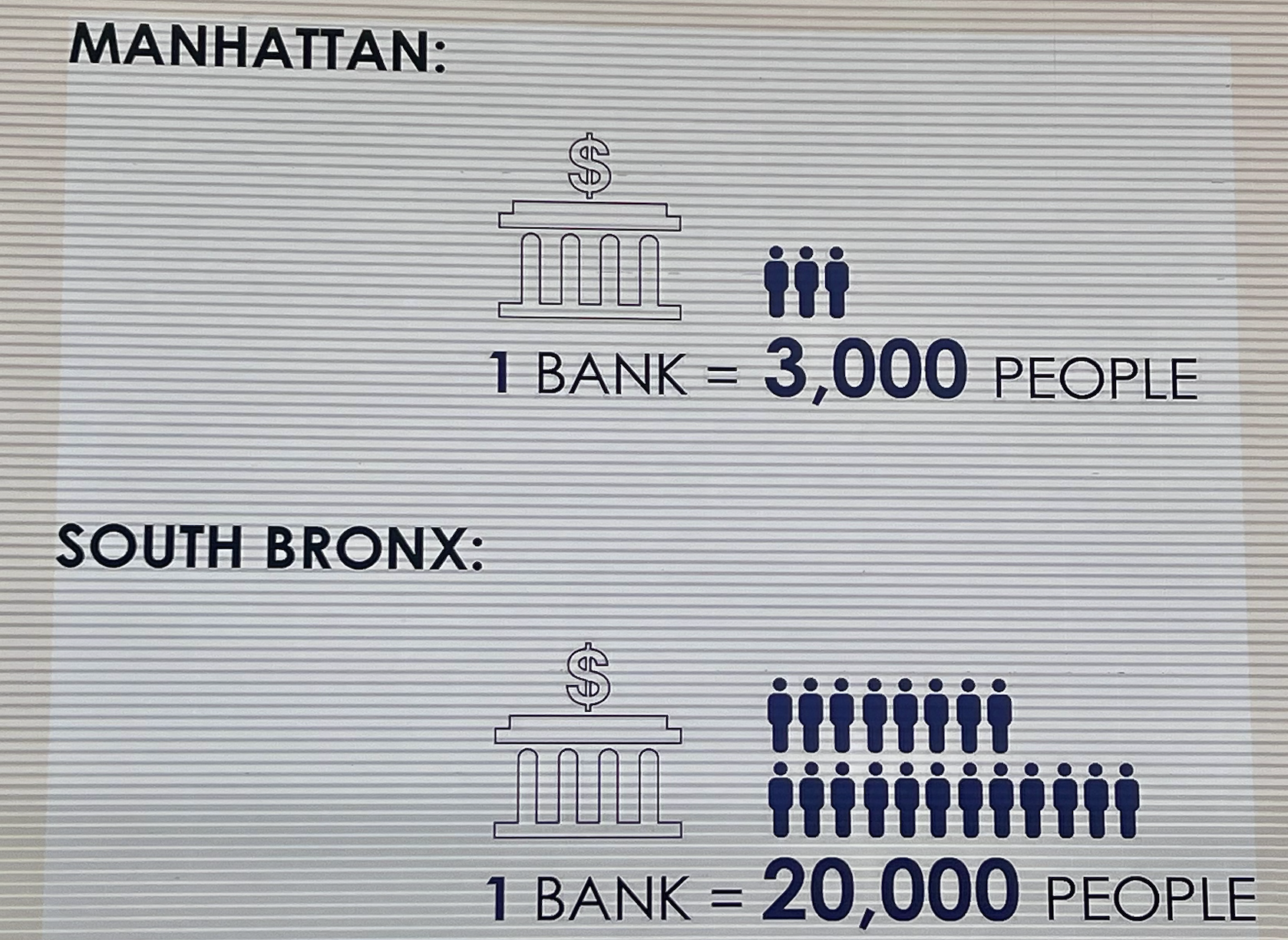
“They are not getting their needs met by banks and credit unions, and I love credit unions,” Servon said. “I think it’s a mistake banks and credit unions get lumped together, because there are important differences, but I don’t think most people realize that.:”
Servon shared this graphic of how she views the financial services landscape.
Three Big Things AFS Customers Value
Servon said her research has identified three things that customers of alternative financial services value:
- Lower cost/greater liquidity
- Greater transparency
- Better service
Value One: Costs
Servon noted bank fees have been going up on everything from overdrafts to minimum balances to avoid fees to ATM fees and more.
“People who use alternative financial services are worried about all these things,” Servon said, adding that in the U.S. today just 45% of checking accounts are free. “People who live on the edge are really noticing these things. There is a lot of dynamism in how people use financial services. A lot of policymakers think people go from unbanked to underbanked to banked. But that’s not how it works. We see people moving in and out of these stages.”
May Seem Irrational, But…
Servon said it may seem irrational to credit union leaders that someone would pay a 2% check-cashing fee and then pay another $1.50 per bill paid, but it’s a smart move for many compared to monthly bank account fees or the fee for bouncing a check or for incurring a late fee.
“I realized this is rational behavior,” she said.
Servon said many too-big-to-fail banks have also become “too-big to serve,” and added that with deregulation the nature of the bank/government social contract has changed and fee income has become a “goldmine” in checking for many institutions.
Servon shared this comparison of the real cost of payday loans vs. overdrafts:
- Average APR of a payday loan is 391%
- The average APR of an overdraft is 912%
A Surprise
So, who takes out payday loans?
“You’d probably be surprised,” said Servon. “Twenty percent make over $50,000 a year. One-third are homeowners. And 43% have a college degree. You would think they are financially stable, but that isn’t always the case.”
Value Two: Greater Transparency.
“People often told me they felt they were getting tricked by banks,” Servon told the meeting. “They were getting fees they didn’t expect and didn’t know when checks would clear. That’s not a surprise, since the average checking account disclosure agreement is 40-pages long, and virtually no one reads them.”
The lengthy disclosures and the industry jargon all contribute to mistrust among consumers, said Servon.
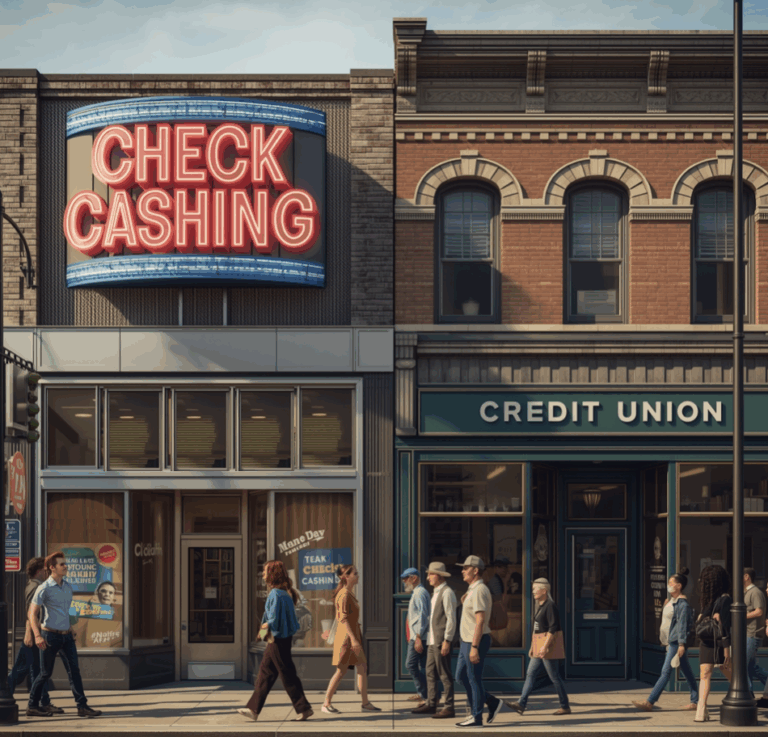
She showed photos of the typical FI branch and typical check cashing store to illustrate the lack of signage and disclosures in the former and a full menu of services and pricing that was easily viewed in the latter.
“This gives people a sense of comfort,” Servon said. “They are not going to be surprised.”
Value Three: Better Service
Servon said that in working at the two check-cashing stores she went through extensive customer service training due to all of the competition.
“The first thing I noticed in the first store I worked in was how welcoming they were,” Servon related. “The tellers knew people’s names. They had been there a long time and customers recognized someone they could trust.”
How did customers show their appreciation? Through loyalty, by tipping tellers, bringing coffee or baby gifts; and by working with tellers when in a financial pinch.
What Credit Unions Can Do to Help
Servon said if credit unions want to make a difference in this market, they should:
- Reframe the debate from unbanked to financial health and financial justice
- Know their members’ situations and focus on their needs
- Consider unlikely partnerships.
- Play to their strengths. “You already have more trust than your competitors.”
- Consider offering Better Choice Loans or capping fees.
How to Be More Transparent
Servon urged credit unions to think about how transparent they are, and recommended:
- Clear and complete signage
- Consider creating a one-page summary disclosure agreement that goes on top of those 40 pages.
How to Improve Services
- Focus on matching products and services to members; needs
- Create unlikely partnerships, such as Oregon’s Financial Empowerment Collaborative.