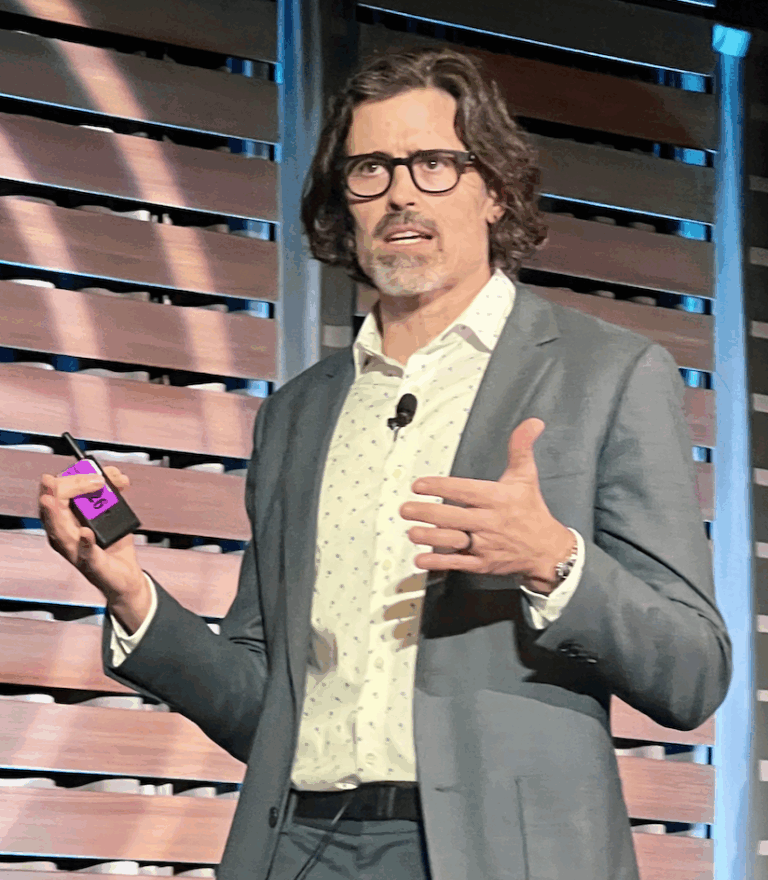
LOST PINES, Texas–As popular a management mantra as it may be among some, this is not the time to be a “fast follower” when it comes to artificial intelligence, according to Dr. Lamont Black.
In fact, noted Black in remarks to Catalyst Corporate’s Strategic Summit, he is a personal barometer of just how quickly the pressure is increasing around AI. A popular speaker and consultant to credit union, he said as recently as a few years ago most of his work and credit union interest involved the blockchain and bitcoin. Now, it’s all about AI—as it should be for all credit unions, he said.
Black, an associate professor at the Driehaus College of Business at DePaul University, where among other things he teaches a graduate course on cryptocurrency, and who is also a fellow in Filene’s Credit Union of the Future Center of Excellence, told the meeting the launch of ChatGPT has sparked the surge of interest in AI.
Black also spoke to the event about stablecoins, as the CU Daily reports here.
Thinking Through on AI
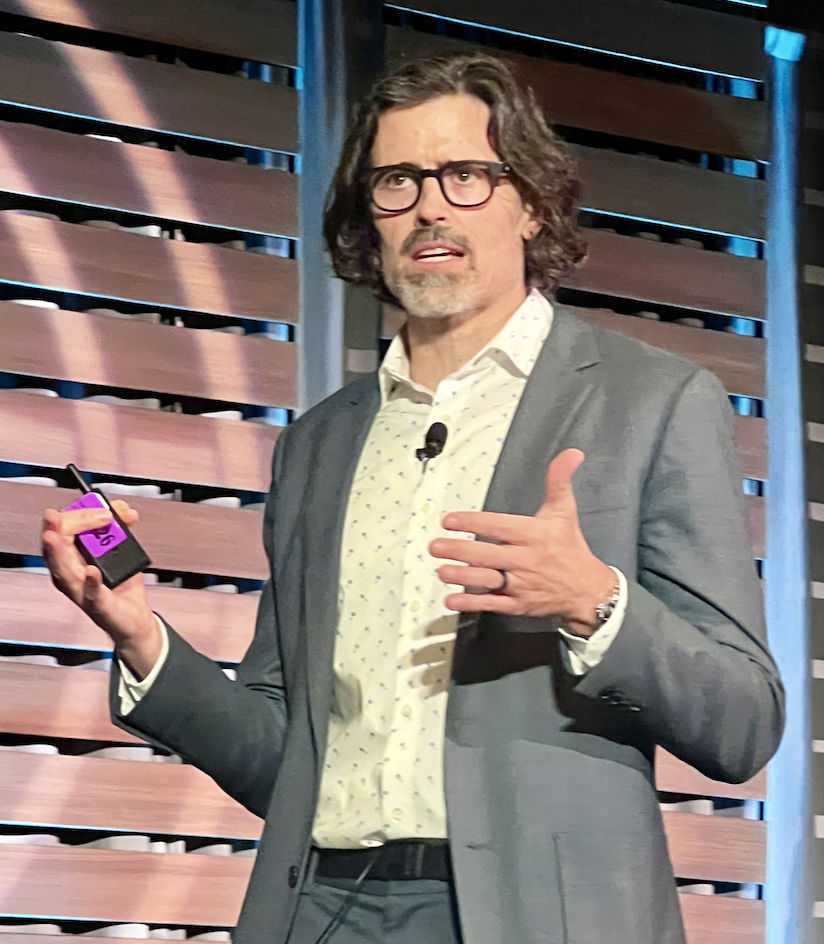
“I want to help you be thinking through (what’s taking place) so that as you go into this next year you can position yourself appropriately,” Black said. “A lot of credit unions don’t want to be bleeding edge, I’m very aware of that. But you’ve probably also heard 1,000 times this other phrase, ‘fast follower.’ I am not a huge fan of that phrase, because for most credit unions that becomes an excuse to wait and see…and then we will move forward. This stuff is not moving linearly, it is moving exponentially and it’s going to be very easy to get dropped on that curve if you’re just sort of waiting to see how this stuff works. I’m going to encourage you to be leaning in.”
A New Age
Black, who calls himself a futurist, believes the world is now moving into a new age, the Age of AI, and it’s a “transformative moment in time.”
Black said a year ago when he asked audiences who had used AI in some form, a third to one-half of hands were raised. When he polled the Catalyst audience, nearly every hand was raised.
“This is not just something that is on my phone like a novelty,” he said. “What does it mean for enterprise applications? You have to figure out the business implications of this.”
Under the AI Umbrella
Saying AI is really an umbrella term, Black reviewed three types of AI:
- Machine learning, which is used by most CUs in automated loan decisioning. It automates a formerly human process. “This is where most of the focus has been in the future of work. AI is going to fill some of the seats on your bus. People are doing jobs now they will not be doing a year from now, and you will have to find new roles for them.”
- Generative AI, which he said is “completely different. It’s touch it, feel it, AI. What will it mean for the future of work? It’s gone from the basement to the palm of your hand.” Black said the key word here is augment, as in augmenting the human in their role. “It is not replacing you, it is working with you. It is like Microsoft Office in the 1980s.”
- Agentic AI. “The root word here is agent, the ability to take action on your behalf. More and more there will be AI agents as part of your workflow. There will be human swim lanes and AI swim lanes, and every business process will go back and forth. Humans will do what humans do best and computers will do what computers do best.”
Black said in agentic AI the word he likes to use is “delegate.”
“Human delegation is a skill and I think the skill of this generation will be learning how to effectively delegate to AI,” Black said.
Google This Lesson
In terms of generative AI, he noted how the AI summary has now moved to the top of Google search and changed the way people search for information. He suggested the launch of ChatGPT’s browser is “potentially disrupting Google; that’s the level of disruption coming here.”
Some people are excited by AI, others are fearful, and boards and management teams reflect both poles, meaning all of that needs to be on the table in order to have effective conversations, Black observed.
And yet what used to “feel like science fiction is getting closer and closer to everyday life,” said Black, such as self-driving cars.
How to Think About AI
Should leaders and boards be talking about AI? You bet, said Black.
“This is transformative. As a board you need to figure out how do we pivot into this transformative moment.”
He advised boards and management to think of AI in terms of:
- Internal: What is the future of operations, including lending (decisioning), fraud (identification), and knowledge-based assistant? Black said CUs are sitting on piles of policies and procedures and information. The question is how can staff access the information? If staff could ask a simple, plain-English question it would be super-helpful.
- External: How will AI change the experience? Black said self-service assistants (chatbots) are going to “become more conversational and helpful. That seems like members might appreciate that.” For marketing, it could be that “next-best product.”
- Personalization. “This is where this is headed. Today, it means something different from what it will mean10 or 20 years ago. This word today means data and analytics–how much do you know about your member based on all the information you have on them. Too many CUs treat data as records to be kept. You need to treat data as actionable insights.”
Not Just for IT
Black emphasized the transformative change taking place in AI is not a matter for just IT.
“This is going to impact every leader in the credit union, from the CEO to middle managers. One mistake we find is some people think of this as just technology. But you need to think of this in terms of strategy and direction; you cannot just stick this under your technologist. If you understand this as technological change, it means every member of the executive team having their own set of AI priorities. Your strategic plan needs to be informed by AI. It needs to empower your strategic objectives. How will AI help you get there?”