
TURKEY, N.C.–Whether they like to admit or not (and it’s mostly not), leaders of every kind of organization have had their share of turkey ideas, some larger than others (and some fully stuffed idea turkeys with all the fixins). Below, in honor of Thanksgiving, The CU Daily—with some help from our good, virtual friends in AI, highlight some of the biggest turkeys in corporate history, as well as a round up of turkey management ideas to be avoided like that questionable green Jello salad.
Corporate Turkeys: Strategies That Landed Squarely in the Stuffing
Below are some of the most widely cited strategic blunders in corporate history — ideas that sounded bold in the boardroom but ended up on the carving block.
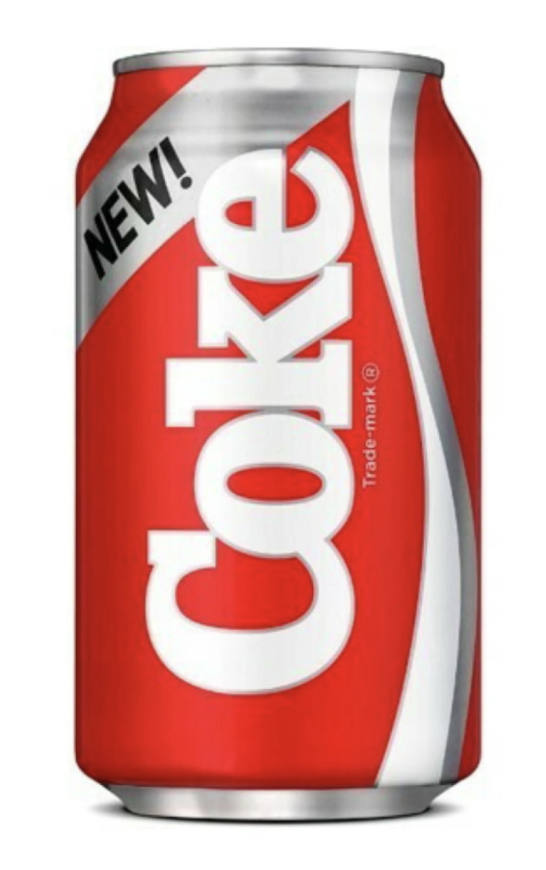
New Coke (Coca-Cola, 1985)
Strategy: Replace the flagship Coca-Cola formula to combat Pepsi’s rising market share.
What Went Wrong: Coke underestimated the emotional attachment consumers had to the original product and did not anticipate the scale of backlash.
Result: Massive consumer revolt; Coca-Cola was forced to bring back the original formula as “Coca-Cola Classic” within 79 days.
Why It Was a Turkey: A flagship brand identity was upended without understanding customer loyalty.
Blockbuster Turns Down Netflix (2000)
Strategy: Declined a $50 million offer to buy Netflix and chose to double down on physical rental stores.
What Went Wrong: Misread the digital transition and assumed streaming was a niche.
Result: Netflix became a global giant; Blockbuster filed for bankruptcy by 2010.
Why It Was a Turkey: A once-dominant market leader ignored seismic shifts in consumer behavior.

Google+ (2011)
Strategy: Create a social network to compete with Facebook by integrating Google+ across all Google services.
What Went Wrong: Forced adoption irritated users, the platform lacked differentiation, and privacy issues eroded trust.
Result: Low engagement and eventual shutdown in 2019.
Why It Was a Turkey: A “me too” strategy built on compulsion rather than authentic user experience.
JC Penney’s “Fair and Square” Pricing (2012)
Strategy: Eliminate sales and coupons in favor of simplified everyday pricing, led by then-CEO Ron Johnson.
What Went Wrong: Regular customers were loyal because of coupons and sales. Removing them alienated the core base overnight.
Result: Quarterly losses topped $400 million; traffic plunged; strategy scrapped.
Why It Was a Turkey: The company tried to transform customer behavior instead of responding to it.

Quibi (2020)
Strategy: Launch a mobile-only streaming service with high-end Hollywood content, expecting consumers to prefer 5–10 minute “quick bites.”
What Went Wrong: Launched at the start of the pandemic, when mobile viewing collapsed; no device flexibility; no breakout hits.
Result: The $1.75 billion startup shut down after just six months.
Why It Was a Turkey: Overestimated demand, misunderstood shifting context, and ignored the importance of distribution flexibility.
Microsoft’s Nokia Acquisition (2013)
Strategy: Buy Nokia’s phone business for $7.2 billion to reboot Windows Phone and compete with Apple and Android.
What Went Wrong: Too late to the smartphone revolution; integration failed; developers weren’t interested.
Result: Microsoft wrote off nearly the entire investment.
Why It Was a Turkey: Entered the market after the ecosystem had already consolidated.

Kodak Misses Digital Photography (1975–2000s)
Strategy: Protect film sales by downplaying its own invention: the digital camera.
What Went Wrong: Competitors raced ahead; Kodak clung to legacy profits.
Result: Filed for bankruptcy in 2012.
Why It Was a Turkey: Fear of cannibalization led to being eaten by the market instead.
Yahoo Says No to Google (2002) & Facebook (2006)
Strategy: Declined opportunities to buy Google for ~$5 billion and Facebook for $1 billion.
What Went Wrong: Misjudged growth potential of search and social media.
Result: Yahoo’s value cratered; company sold to Verizon for $4.8 billion in 2017.
Why It Was a Turkey: Repeatedly misreading the future of the internet.
Sears’ “Bimodal Retail” Strategy (2000s–2010s)

Strategy: CEO Eddie Lampert split Sears into competing internal business units to create a “market-like” structure.
What Went Wrong: Departments refused to share data, undercut each other, and sabotaged collaboration.
Result: Massive decline leading to bankruptcy in 2018.
Why It Was a Turkey: Internal competition replaced customer focus and caused systemic dysfunction.
Boeing’s 737 MAX Decisions (2011–2019)
Strategy: Modify the decades-old 737 platform to compete with Airbus instead of designing a new plane.
What Went Wrong: Technological shortcuts contributed to two catastrophic crashes and global grounding.
Result: Billions in losses, criminal investigations, and lasting brand damage.
Why It Was a Turkey: Short-term cost savings drove long-term catastrophe.

“Honorable Mention Turkeys”
- McDonald’s Arch Deluxe (1996): Adults-only burger that adults didn’t want.
- Samsung’s exploding Galaxy Note 7 (2016).
- Toys “R” Us outsourcing its website to Amazon (2000): Gave away its future e-commerce channel.
- Apple’s “Antennagate” iPhone 4 (2010): “Just hold it differently.”
Management Turkeys to Avoid
Meanwhile, from misguided motivational tactics to sweeping reorganizations that cratered morale, management missteps have long provided cautionary tales for corporate leaders. Organizational experts say some of the most infamous strategies in modern business history share a common thread: leaders underestimated how people would respond.
Among the biggest turkeys:
Micromanagement at Every Turn

One of the most persistent management misfires is excessive control. Companies from Silicon Valley startups to legacy manufacturers have struggled when leaders try to direct every task and decision.
Experts say micromanagement often emerges in periods of uncertainty, but typically leads to higher turnover, stalled creativity and declines in productivity. Employees who feel scrutinized tend to disengage, according to workplace researchers.
Stack Ranking’s High Cost
In the early 2000s, stack ranking—also known as “rank and yank”—became a widely adopted performance system after its use at General Electric. Employees were graded on a forced curve, with those in the lowest tier routinely terminated.
Microsoft, Amazon and other companies eventually abandoned or revised the practice. Internal reviews found the system fostered cutthroat behavior, discouraged collaboration and rewarded individual self-promotion rather than team performance. Microsoft later acknowledged the practice undermined its culture for years.
Reorganizations Without a Map
Sweeping restructurings are another common managerial pitfall. Analysts point to high-profile examples, including Sears’ decades-long shift to an internal “marketplace structure,” which separated departments into competing business units.
The intent, according to reports at the time, was to spark innovation. Instead, it fractured the organization, reduced information sharing and created internal rivalries that confused customers and employees.
Organizational researchers say large restructurings often fail because leaders underestimate transition time, communication needs and cultural impact.
Unlimited Vacation That No One Takes
Some companies have introduced “unlimited paid time off” as a perk intended to boost flexibility and trust. But workplace surveys show the policy can backfire when employees fear taking too much time away or lack guidance from managers.
Industries that adopted the policy early found workers often take less vacation than before, raising concerns about burnout and uneven policy enforcement. Critics argue these plans shift responsibility from employers to employees, creating ambiguity rather than relief.
The Open-Office Backlash
Open floor plans swept through corporate America over the past decade, pitched as a way to encourage collaboration and reduce real estate costs. But research from Harvard Business School and others later found the opposite effect: face-to-face interactions declined and digital communication increased.
Employees reported higher stress, reduced privacy and lower job satisfaction. Some companies have since returned to hybrid models of enclosed and shared spaces.
Culture as a Slogan, Not a Strategy
Leadership consultants say culture initiatives often fail when executives roll out lofty values statements without aligning them to incentives, training or accountability.
One widely cited example is Wells Fargo, where internal pressure for aggressive sales goals clashed with the bank’s stated commitment to ethics and customer focus. The disconnect contributed to a major scandal in which employees opened millions of unauthorized accounts to meet quotas.

Ignoring Front-Line Feedback
Management experts note that organizations frequently stumble when leaders discount the insights of front-line workers. Retailers, airlines and customer service-driven companies have faced public criticism and operational failures tied to understaffing, scheduling glitches or flawed technology rollouts.
Analysts say decisions made without input from employees closest to customers often result in higher error rates and lower service quality.
The Takeaway
Whether through micromanagement, forced competition, vague benefits or poorly communicated reorganizations, many management strategies falter for the same reason: leaders impose change on employees rather than developing it with them.
Workplace researchers say the most successful organizations treat management not as a top-down directive, but as a continuous dialogue—one in which strategy evolves with, not ahead of, the people expected to implement it.