BOSTON–With the holiday spending season here, a new report shows uses data from a prior season this year to find consumers are not moving from buy now, pay later (BNPL) products to credit card installments, but instead are using both options to match payment plans with specific financial needs.
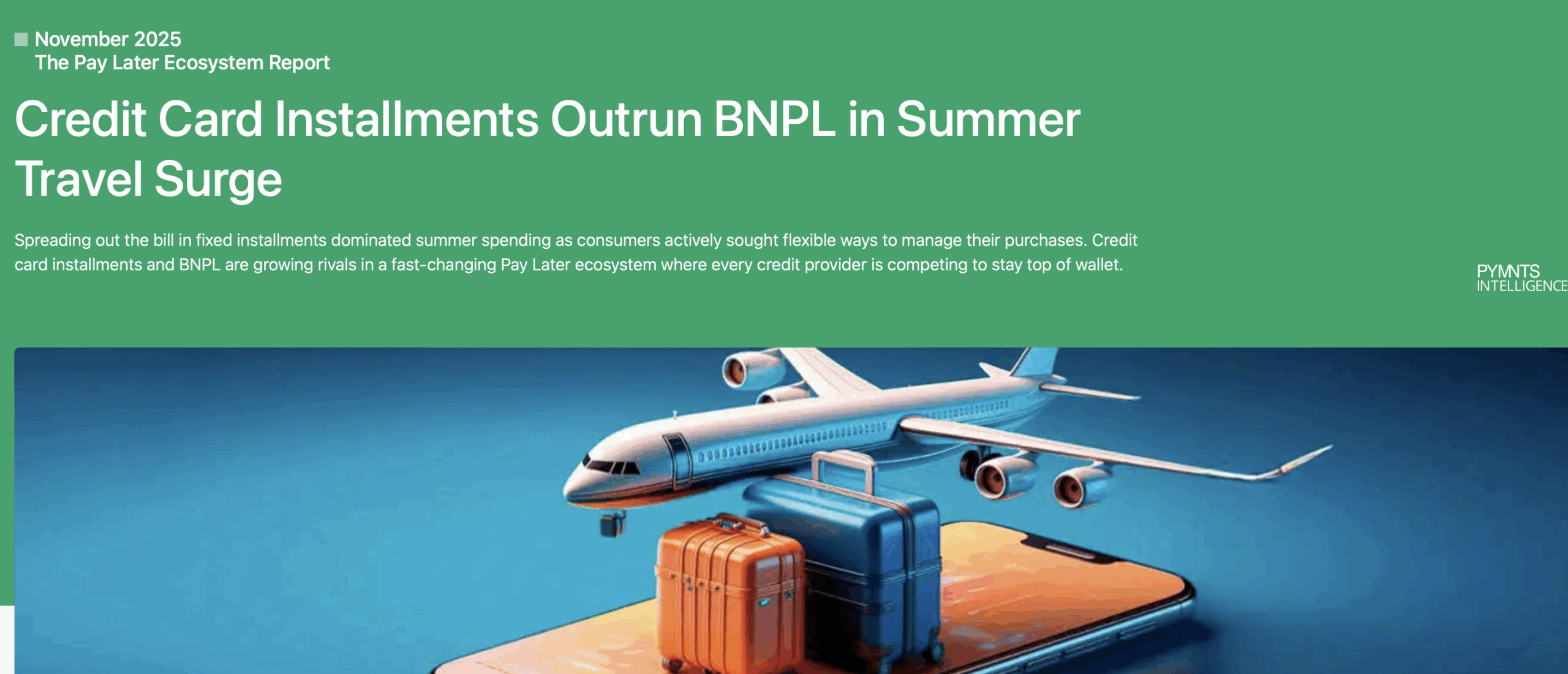
The study, The Pay Later Ecosystem Report: Credit Card Installments Outrun BNPL in Summer Travel Surge,” is based on a survey of 1,989 U.S. consumers conducted from late August to early September by PYMNTS Intelligcence, suggests that pay-later options are becoming part of an everyday budgeting strategy in which shoppers rely on installments to navigate higher prices and tighter monthly liquidity.

These tools help smooth expenses and keep spending predictable, PYMNTS noted.
The Findings
Among the findings, according to PYMENTS:
- Credit card installment usage rose 46% during the survey period compared with April levels. The study found 1 in 3 consumers paid for at least one purchase this way, up from 23% in the spring.
- BNPL usage held steady at about 14%, showing no sign that consumers are abandoning the method even as card-based installments grow faster.
- Consumers using pay later for both essentials and discretionary categories spent more than $1,000 on average over three months, compared with notably lower totals among those who limited installments to a single category.
“Beyond the seasonal surge in travel spending, the report shows that higher-income and younger consumers are driving increased adoption of both BNPL and credit card installment plans,” PYMNTS said in releasing the study. “Households earning more than $100,000 annually are 57% more likely to use card installments and 71% more likely to use BNPL than the lowest-income consumers. These users are not turning to pay-later options for budget relief alone.”
Tapping Installments
The study found many consumers are tapping installments to maximize card rewards, preserve available credit and exercise more control over when and how payments come due. The trend is strongest among Gen Z and millennials, who show the highest usage rates for both products, PYMNTS said.
“The findings also reveal how consumers divide spending between essential and occasional purchases. BNPL users split nearly evenly across essentials, discretionary purchases and a mix of the two,” the analysis states. “Lower-income shoppers rely on BNPL more heavily for groceries, utilities and recurring household costs. Younger users and higher earners tend to employ both BNPL and card installments more broadly, distributing payments across categories in ways that support larger average outlays. Spend patterns show that consumers who diversify their pay later usage expand purchasing power and maintain more stable cash flow. This behavior reflects an evolving credit strategy in which payment flexibility is just as important as access to credit.”
Additional Findings
According to PYMNTS, other findings in the report illustrate the dual appeal of pay-later products. BNPL users prioritize adjustable payment frequency, which helps them align repayment schedules with variable monthly budgets. Card installment users place greater weight on loyalty programs and cash-back incentives, which strengthen the link between installment spending and rewards programs.
‘These distinctions matter for issuers, merchants and platforms competing to remain top of wallet,” PYMNTS said. “They also point to a credit landscape in which consumers are exercising more intentional and more strategic control over their spending. They are moving with purpose.”