WASHINGTON–The president’s proposed 10% cap on credit card APRs has the potential to merge with other card-related proposals to become a “Frankenstein” issue in Washington, while threatening the 2026 budgets of most credit unions, according to one person.
Jason Stverak, chief advocacy officer with the Defense Credit Union Council, said the president’s proposal, the lingering Credit Card Competition Act, and earlier bipartisan legislation that would mandate a 10% rate cap that had been introduced in Congress by Rep. Alexandria Ocasio-Cortez (D-NY) Rep. Anna Paulina Luna (R-FL) and in the Senate, Sens. Josh Hawley (R-MO) and Bernie Sanders (I-VT) , have come together like something out Dr. Frankenstein’s lab.
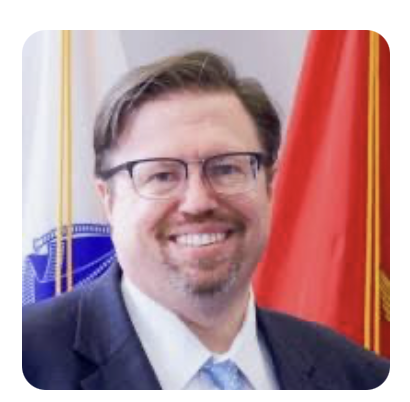
Stverak acknowledged the president’s proposal “could have some popularity among members” (of Congress), given its populist appeal.
‘Improved’ Job of Education Needed
“That’s where we as a movement and as individual credit unions have to do an improved job of education in talking about what going from 18% to 10% (on card APRs) actually means,” said Stverak. “Programs are going to have to be reduced. If you’re a board of directors at a credit union, you’re looking at how much of your loan portfolio is unsecured–the personal loans andcredit cards. If you budgeted (that interest income) was going to be X amount at 18%, now it’s X amount at 10%. You’re going to have to scale back because you’re going to have less revenue.
“So, do you fire employees? Do you shut branches? Do you decide ‘I’m not going to take risks on individuals that might have marginal credit scores?’” Stverak asked. “A lot of young junior officers haven’t built up a large or lengthy or extensive credit profile. They’re not going to get a chance taken on them. What we’ve done is once again open up the front gate of the base and we’re walking them straight into the front doors of the payday lenders at 300%, 400% or 500% interest. That’s not something we want to do.”
‘Barreling Toward a Cliff’
Stverak said the response to Trump’s proposed cap is going to consume much of DCUC’s time, at the same time Congress is attempting to tackle the looming shutdown of the federal government (again), by month’s end, if it can’t reach an agreement on funding.
“We have continually pushed, over and over again, that as we are barreling towards this cliff, once again, let’s get legislation passed,” said Stverak. “Everyone supports paying the military and the Coast Guard when the government shuts down. There are multiple bills that are out there. Let’s get those done. Let’s take off the chess board using our military active-duty members and their families, along with our veterans, as a political tool to try to settle scores here in Washington.”