WASHINGTON — With some people urging Americans to move their money out of big banks and into credit unions, a loose group of activists are calling for a one-day economic boycott today, urging people across the United States to refrain from shopping, going to work or attending school as part of a protest aimed at exerting economic pressure on policymakers.
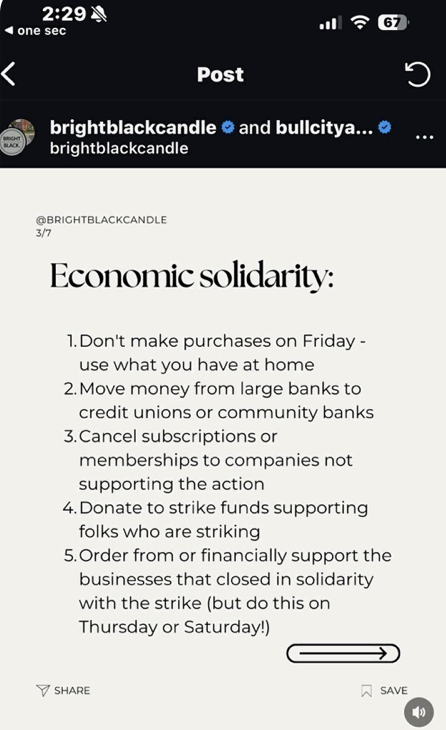
The action, promoted on social media as a “national shutdown” or “economic blackout,” is being driven largely by grassroots groups and student organizers rather than a single national organization. Supporters say the goal is to demonstrate public opposition to federal policies — particularly immigration enforcement — and to show how collective economic behavior can be used as a tool for protest.
Redirecting Economic Power
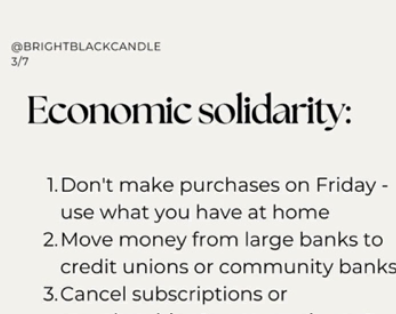
Alongside calls to halt spending for 24 hours, some social media posts are encouraging participants to move money out of large national banks and into credit unions or community banks. Those messages frame the transfer of deposits as a longer-term extension of the boycott, arguing that shifting funds away from major financial institutions can redirect economic power toward locally focused lenders.
The calls to move money are not tied to any formally recognized banking campaign and have circulated primarily on platforms such as Instagram, TikTok and X. Similar “move your money” efforts have surfaced periodically over the past decade, often during periods of political or economic unrest, though their measurable impact has been difficult to quantify.
Participation is Uncertain
There is no centralized leadership or unified list of demands associated with the Jan. 30 boycott, and participation levels remain uncertain. Some small businesses in select cities have posted notices indicating they plan to close in solidarity, while others say they will remain open as usual.
Economists and retail analysts caution that single-day spending boycotts rarely produce lasting economic effects unless they are sustained or accompanied by broader structural changes. Even so, such actions can attract public attention and amplify political messaging, particularly when fueled by social media.