
WASHINGTON — Younger Americans are increasingly turning away from credit cards in favor of debit cards and alternative payment methods, widening a generational divide in how consumers pay for everyday purchases, according to a new survey from U.S. News & World Report.
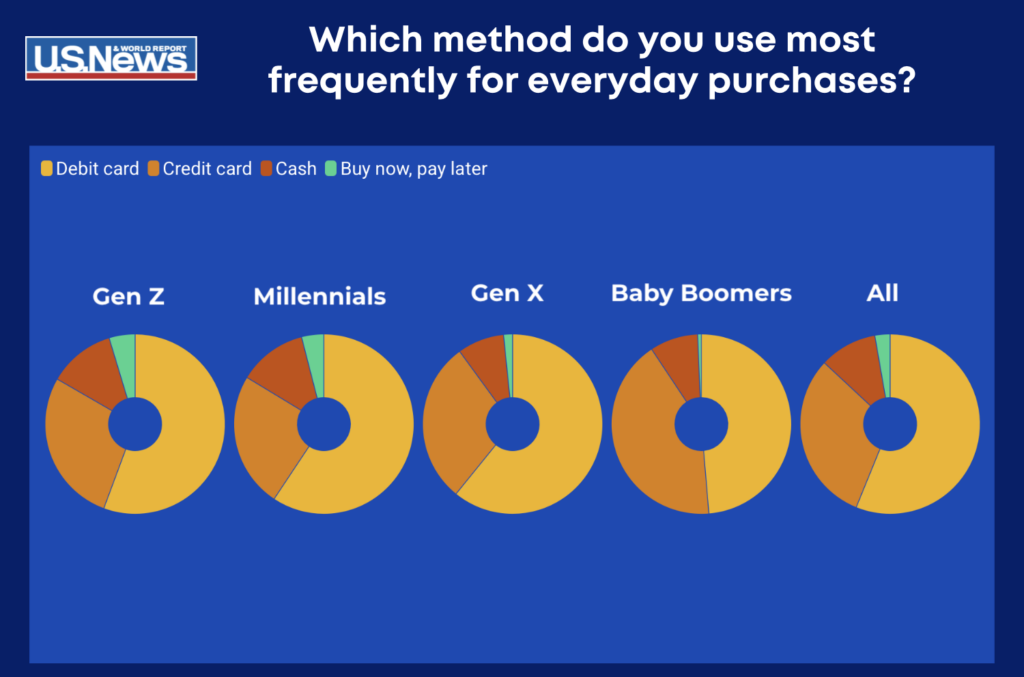
The survey, conducted Dec. 16–17 among 1,209 adults nationwide, found that 56% of respondents most frequently use debit cards for routine spending, compared with 31% who rely primarily on credit cards. Cash was the top choice for 10% of respondents, while 3% said they most often use buy now, pay later services such as Klarna or Afterpay. Respondents were evenly split among Baby Boomers, Gen X, Millennials and Gen Z.
Credit card use dropped sharply among younger generations, the survey found. While 42% of Baby Boomers said credit cards are their primary payment method, only 27% of respondents across Gen X, Millennials and Gen Z reported the same. More than one in five Gen Z respondents said they never use credit cards, compared with 11% of Baby Boomers.
Why Debit Cards are Favored
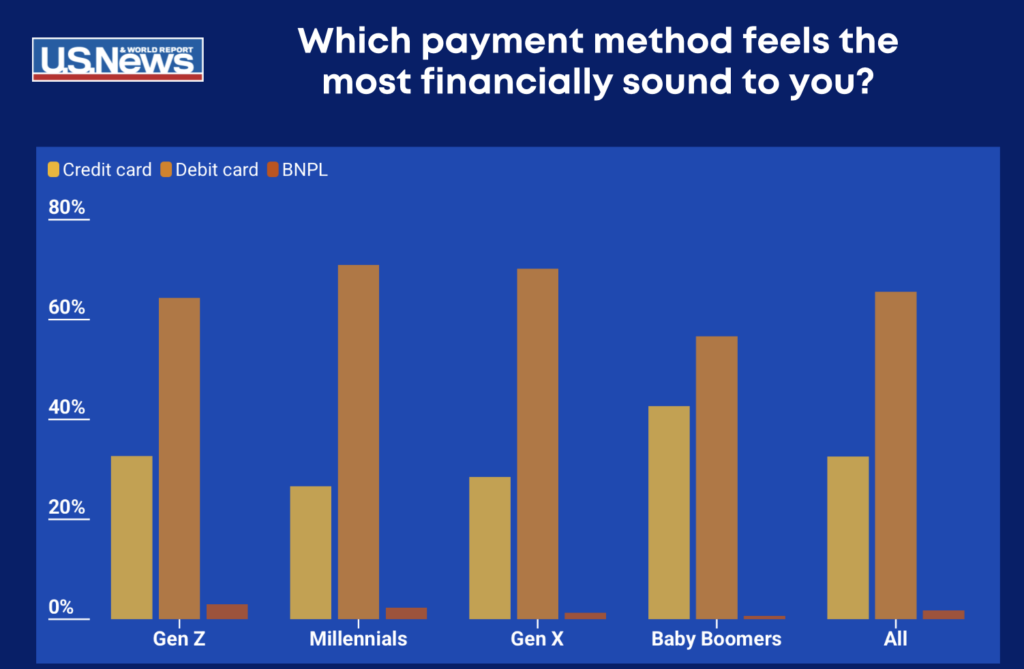
Avoiding debt was a leading reason younger consumers cited for favoring debit cards, with many saying the method offers greater spending control and financial certainty.
“I like the idea of a debit card because it means you’re using money that you’ve already earned and not betting on a future that may or may not come financially,” one Gen X respondent said.
Millennials showed the strongest preference for debit cards, with just 24% saying they most frequently use credit cards. About 71% of Millennials said debit cards are the most financially sound payment option, according to the survey.
Still, some respondents who prefer credit cards pointed to advantages such as rewards and consumer protections.
“It is easier to dispute charges, and I use my credit card to get rewards and airline miles,” a Gen X respondent who recently switched from debit to credit cards said.
Card Purchases are Larger
Although debit cards dominate everyday transactions, credit card purchases tend to be larger. Data from the Federal Reserve Bank of Atlanta’s 2024 Survey and Diary of Consumer Payment Choice show the average credit card transaction was $83, compared with $70 for debit card purchases.
The U.S. News survey also found signs of financial strain across all payment methods. About three in five respondents said they overdrew their checking account or debit card in the past year, while 38% reported missing a credit card payment and 14% said they missed a buy now, pay later payment.
Overdrafts were especially common among younger adults, with roughly two-thirds of Gen Z and Millennials reporting at least one overdraft in 2025. Among Baby Boomers, 41% said they missed a credit card payment, the highest rate of any generation.
Concerns Over Card Debt
Concerns about credit card debt remain widespread. About 60% of respondents said they are at least somewhat worried about carrying credit card balances, and nearly 30% said they are very concerned. Those worries have led about 30% of respondents to avoid opening a credit card altogether, the survey found.
As payment preferences continue to evolve, U.S. News said financial institutions and payment providers face growing pressure to help consumers balance convenience, control and long-term financial health, particularly as younger generations navigate credit, debt and alternative payment options.
For the full survey, go here.