WASHINGTON–Even as one person acknowledged few if any members have been asking for a stablecoin from their credit union, four people here said credit unions have no choice but to be fully prepared to embrace stablecoins, as the merchants are going to drive interest and the transition to the new payments system will eventually eliminate most interchange income for credit unions.
As the CU Daily reported here, TruStage plans to launch the TruStage Stablecoin (TSDA), a fully reserved U.S. dollar stablecoin solution it said is designed to broaden CU access to the digital payment infrastructure, while also defending CUs from the erosion of their deposit bases.
The company is now seeking credit unions to participate in a pilot. There is no member-facing stablecoin as part of the new offering.
As part of a session titled GENIUS Action during Mitchell Stankovic’s Underground conference, after the recently passed legislation that provides a regulatory framework around stablecoins, four people discussed the rapidly evolving and growing stablecoin market.
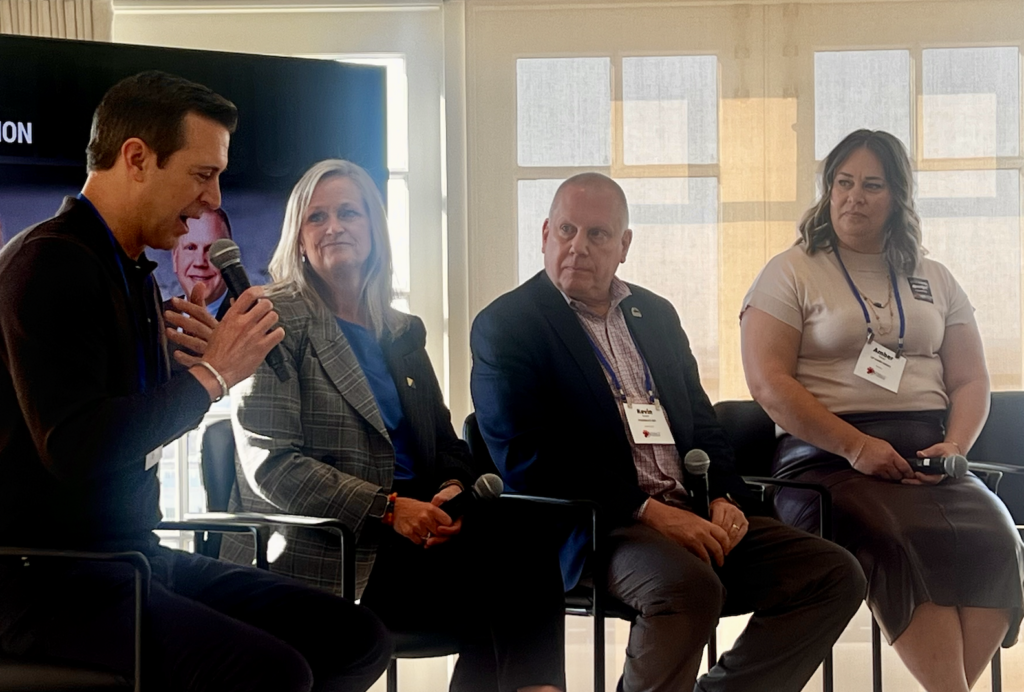
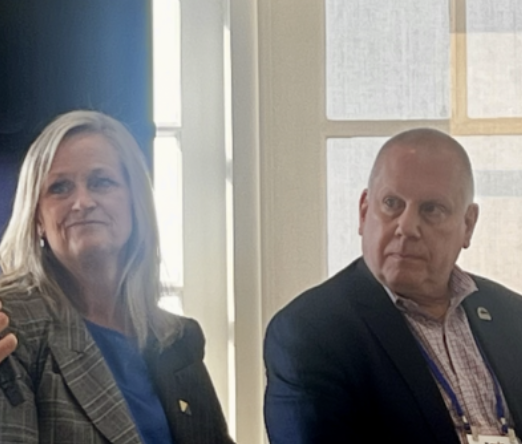
The four included Stephen Bohanon, founder, chief strategy officer, Alkami (who acted as moderator); Amber Harsin, VP-credit unions with Mambu; Kevin Brauer, president/CEO of Affinity FCU, and Tammy Schultz, EVP-sales and marketing with TruStage. Prior to the panel, Schultz shared with the audience an overview of TruStage’s plans for its stablecoin.
Bohannon: I’m struggling to understand, what is the big benefit with stablecoin. Would you be a genius to act or not act on the GENIUS Act?
Harsin: I think the data shows us that it’s moved beyond fad or trend. There are billions of dollars that consumers are putting into crypto and blockchain. (Members are) kind of telling us they’ve moved. I think we’re just in the next round of that structural shift and the question is becoming less and less about the ideology and the should we, into the can we architecturally, structurally adjust to this structural shift?
Bohanon: Why would I have my stablecoin with you?
Brauer: It’s very exciting to have a new channel in which we can move money for our members. We can add that to the 12-plus channels we already have for money movement in and out of the organization. I think that’s the ultimate opportunity. We’ve got to be there for our members.
The problem I’m having is our members aren’t asking for stablecoins. There’s not a person I’ve talked to from a member standpoint who has asked for this. What’s going to drive this is the merchants. The merchants are going to force the change on consumers. If you take Walmart or Amazon and they start offering you incentives to pay by stablecoin, we as an industry have to be prepared to answer that.
Now, remember, there are a lot of things that go with this. The stable coin isn’t insured. We’ve got to help them convert from a digital currency to a hard currency. That’s where the credit unions can come into this. We need industry solutions to help us do this because most credit unions, including Affinity, are not prepared to offer our own stablecoin. Our benefit is if we coalesce as a credit union movement around this, howe can we benefit, how can we be different? Can we answer the bell. Each of us individually are not going to be able to do that on a regular basis.
Bohanon: Is stablecoin really the answer to deposit outflows?
Harsin: Maybe, but members are asking for money movement to be faster. And that’s what gets enabled in this environment. Consumer are expecting a 24/7 instant settlement world.
Brauer: What’s going to be impacted is interchange. Interchange is going to go away. You’ll never make up the interchange, but it can be a fee income source. This has long-term implications.
Schultz: I transferred money from one credit union to the other and it took five days! That’s not going to be our future. The average member is 50 years old. The younger generation wants things faster and they don’t want the fees associated with it. So, to be relevant. we’re going to have to do something and we believe stable coin is one of the solutions.
Bohanon: Is this a needle mover or a box checker to say we’re not behind?
Brauer: We’re waiting on the regulations. Most institutions that I’m aware of are still in the planning process. What’s the next step. What are the things we need to do to prepare ourselves to get ready for the next state of employment. That is going to be the next big question that board of directors are going to have to address.
We also have to be realistic that there’s going to be a significant amount of fraud in this opportunity, as well. We still have credit union members that give away their credentials on a regular basis. Can you imagine having them open this up in a wallet?
Schultz: I don’t think it’s just check the box. I think it sets us up for the future.Harsin: Maybe stablecoin is still more of a fad, but I do think it’s an additional inflection point to talk about. Are we structurally ready to take advantage of emerging technologies that are going to grab a foothold. We’re doing that around the fringes. What is it that’s going to actually make us future-ready to respond? Is the movement capable of taking advantage of the technologies that are available in ways to make us usable and relevant.