

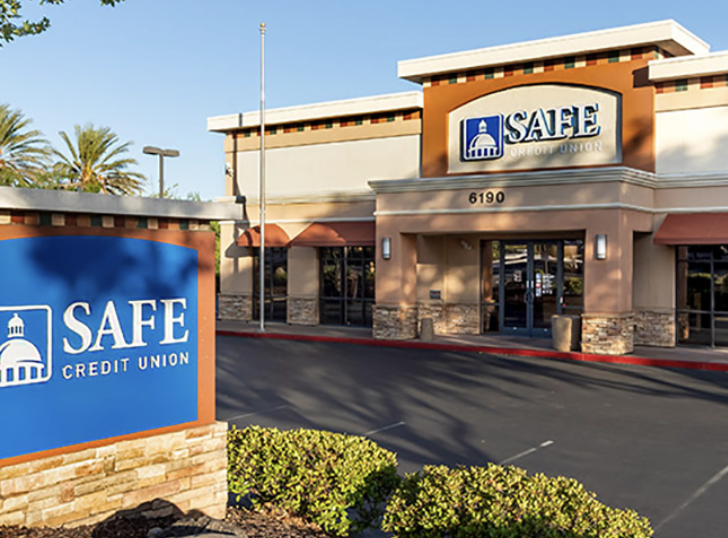
SACRAMENTO, Calif.–With the $4.3-billion SAFE Credit Union asking its members to vote in favor of a merger in the $29-billion BECU In Seattle, SAFE CU’s president and CEO, Faye Nabhani, has made his case in local media for why the combination should be approved.
As the CU Daily reported here, one member has challenged who owns SAFE CU’s equity in the event the two CUs do merge.
“This isn’t about an efficiency play,” Nabhani told the Sacramento Bee. “The intention is to grow in California. The intention is to make this an even stronger area and region.”
SAFE has nearly 700 employees and about 244,000 members, while BECU employs roughly 3,200 people and serves more than 1.5 million members, according to the Bee. Under the proposed agreement, Nabhani would become BECU’s Sacramento region market president and said she would advocate for the needs of members in the region.
‘Drive More Value’
“I have 30-some odd years doing everything I do to try to help drive more value, better value, better opportunities, faster service to the members that I serve,” Nabhani told the Bee. “That doesn’t stop just because my role changes slightly. I will continue to be that voice. I will continue to represent our members’ needs.”
Nabhani said members could see lower fees following the merger, along with expanded lending options and stronger investments in technology, including fraud protection tools and digital banking platforms. SAFE recently upgraded its mobile banking app and plans to add the Zelle money-transfer platform, though Nabhani told the Bee the pace of change in financial technology is accelerating.
“Our ability to continue to provide for consumers and our members … will only continue to get more challenged — just to keep the status quo,” Nabhani said.
‘Fragile Institutions’
Luis Dopico, partner and chief economist at the Washington, D.C.-based advisory firm CUCollaborate, told the Bee that credit unions today bear little resemblance to the small institutions of the mid-20th century, sometimes called “shoebox credit unions” because their paperwork could fit in a shoebox.”
“Those rules created fragile institutions,” Dopico told the Bee, referring to early geographic and membership restrictions placed on credit unions. “If there is a problem in the local economy, then people can’t repay their loans there, and the bank is not diversified, and the bank will go belly up.”
James Wilcox, a professor at the University of California, Berkeley’s Haas School of Business, told the Bee that rising regulatory costs and technology demands have made it harder for smaller institutions to compete, even for credit unions the size of SAFE.

“There’s a huge impetus to get bigger,” Wilcox told the Bee. “There are all kinds of pressures. Cost pressures. Diversification pressures. Regulatory costs… I think there’s just no end in sight.”
‘Shifts’ in Decision-Making
Still, some analysts told the Bee that mergers can shift decision-making and charitable giving toward the city where the larger credit union is headquartered. Nabhani told the Bee the structure of the agreement is designed to preserve the Sacramento region’s voice.
“The merger is structured to ensure that California is heard,” Nabhani told the Bee.
Under the agreement, SAFE would receive two seats on BECU’s board, and Nabhani said she expects philanthropic giving in the Sacramento region to increase following the merger.
“The intention is to grow in California,” she told the Bee.




13 Responses
A $29B credit union does not merge with a $4.3B CU; it eats it whole, one swallow.
.
Saying this merger “isn’t about efficiency” while listing scale, technology investment, and diversification as the benefits is a bit like revving up a chainsaw and insisting you’re not here to cut down the tree.
That’s literally what the tool is for.
Mergers consolidate assets. They centralize decision-making. They create economies of scale that help institutions afford technology, regulatory compliance, and growth. None of that is controversial. It’s the standard playbook.
The odd part is pretending it isn’t.
If the case for the merger is strong, it shouldn’t require this much PR choreography to explain it. Yet every explanation seems to circle the same talking points without plainly stating the tradeoff: a larger institution, more scale, and more centralized power.
SAFE members would be wise to look beyond the PR spin and ask a simple question: if this isn’t about efficiency and scale, why do all the benefits described come directly from exactly that?
Great perspective. Totally about scale and efficiency, especially when the acquirer can’t grow deposits and assets but expenses are growing rapidly. They’re effectively descaling and this is their only play.
The pressures they describe are real. But the assumption that those pressures must be solved through institutional consolidation rather than cooperative infrastructure is not an economic inevitability, it’s a system design choice. I imagine it sounds compelling coming from an economist who works at CUCollaborate and used to work for America’s Credit Unions but this person is not speaking from the lens of a cooperative economist and that difference matters.
BECU’s cooperative perspective began to erode when members of its executive leadership team were brought in from problematic banking institutions like USAA and Wells Fargo. At the same time, employees who questioned whether certain decisions aligned with the cooperative movement and credit union philosophy were targeted and pushed out. Over that time, that cooperative lens has largely disappeared. As a result, many of the “values-driven” PR statements coming from leadership are more performative than principled. The organization has also made it difficult to openly discuss that shift, as many employees who were laid off, pushed out, or fired are required to sign NDAs.
Good insight, and notably not the type of information that is required in disclosures that are part of the NCUA merger approval process. Hopefully SAFE members who will vote to approve or deny this merger will do their homework.
The prior execs saw what was coming a few years ago and opted out. Those that didn’t then have by now after living it. A couple of execs who replaced them have also opted out already. SAFE board members missed or didn’t understand this in their due diligence. Hopefully members won’t before they vote.
Indeed, who cares about due diligence if you are getting a golden parachute. A quick Google search at their current Google and Glassdoor reviews that have tanked in the last 3 years tells you everything you need to know. SAFE members might want to do their due diligence. A “not for profit” CU with a “revenue goal” is indeed operating for a profit and making decisions based on that point of view.
Agreed, and the buzz in the industry is that’s only a start. Toxic culture, profit focus, abusive and narcissistic leadership, a community focus that half the membership, and an ill-conceived national growth strategy, despite known FOM limitations. Also have a board making a 100k+ a year running it like a for profit bank. This doesn’t end well for SAFE.
Boeing CU discloses their board pay. $125k each and 15k more if you’re a committee chair, highest in the industry by far. It’s not apparent how SAFE members benefit from this merger, but clear how the 2 board seats that sweetened the deal work out. They talk about golden parachutes for execs, but it sure makes you wonder how objective the Safe board was on this vote to merge. Huge win for a couple of them and you can be the 2 were selected after the board vote, so that all board members thought they might have had lotto ticket when they voted.
That really hits the nail on the head. I’ve heard the same sentiment echoed by several former leaders and employees. The reputation as a beloved local brand is eroding quickly, and this merger is unlikely to reverse that trajectory. SAFE employees should be paying close attention as well — the leadership culture at BECU has become increasingly toxic, the work environment is suffering, and long-standing employee benefits like pensions are quietly being phased out.
As I’ve been following the BECU + SAFE merger, I keep coming back to a few questions that feel important — not just for this deal, but for the direction of our industry:
How are member reserves being stewarded and communicated in moments of consolidation?
What level of transparency should exist around executive transition or retention structures?
How are we defining — and measuring — “member benefit” in these decisions?
Growth and scale can absolutely strengthen our impact. But so can clarity, alignment, and trust.
The balance between the two is what shapes credibility long-term.