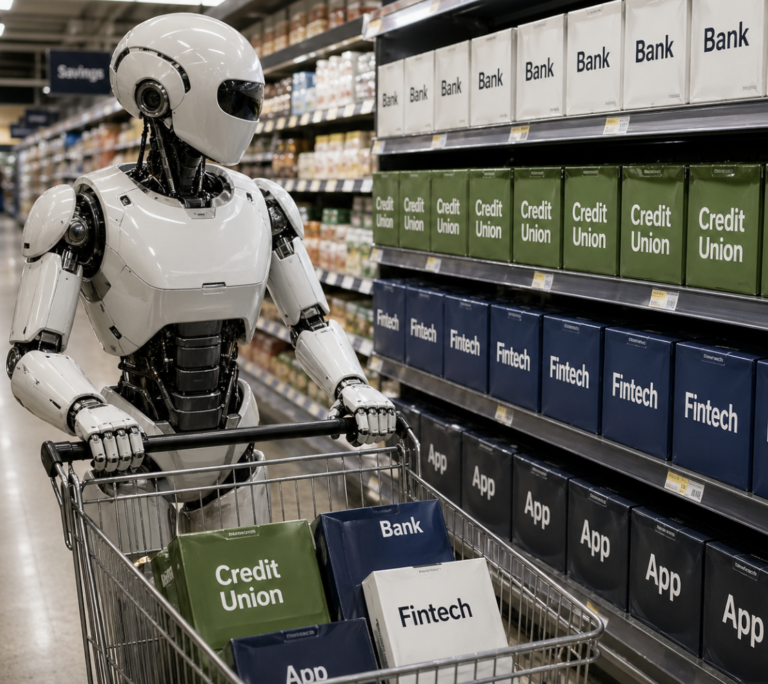
MADISON, Wis.–With members and consumers increasingly turning to AI to select financial products for them, how does a credit union ensure it is considered and selected? There are three things to start doing now, three Filene researchers are advising.
That question is being examined in a post by three researchers with Filene Research. Caroline Vahrenkap, advisory services director; Anna Bruzgulis, senior market insights and advisory services manager, and McKay Black, head of incubation, observed in a post, “Somewhere right now, a member is asking an AI agent to find them a better rate, compare financial products, or choose a payment method. The agent isn’t weighing your brand or your community reputation; it’s reading structured data. If your credit union’s products aren’t machine-readable, you may already be out of the consideration set and not know it.”
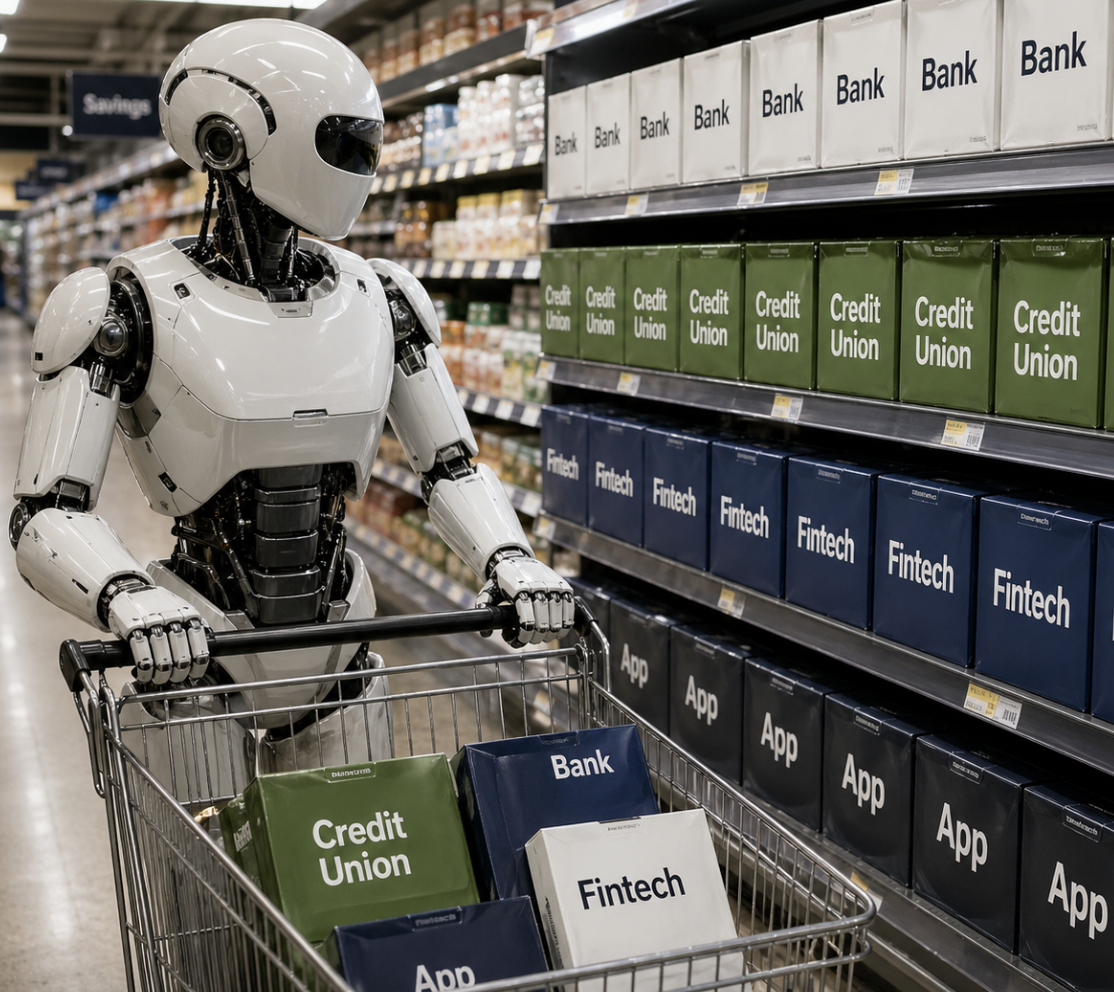
The three authors cautioned that the challenge is not a 2030 problem, as the infrastructure is “going live now.”
They noted, for example:
- Visa launched Intelligent Commerce with 100+ partners.
- Mastercard shared it’s enabled Agent Pay across every U.S. issuer and completed Europe’s first live AI agent payment on regulated banking rails with Santander.
- OpenAI and Stripe co-built the Agentic Commerce Protocol.
- Google launched a competing standard backed by Walmart, Target, Visa, and American Express, and PayPal joined both.
“Yet, consumer transaction behavior is lagging. When Walmart let shoppers buy directly inside ChatGPT, conversion was three times worse than its website, and they pulled back,” they stated in the post. “But the comparison behavior is already here; more than half of U.S. consumers used AI to shop during last year’s holiday season. Credit unions that aren’t machine-readable are already missing that traffic. The gap before transaction behavior catches up is the window to get positioned, and it won’t stay open long.”
Two Scenarios
There are two scenarios that are closer to reality than many credit union leaders realize, the authors stated, including:
- The Invisible Loan. “A member asks their AI agent for the best personal loan rate. The agent pulls rates, terms, and eligibility from every lender with machine-readable data — in seconds. If your products aren’t structured for AI discovery, you’re not in the comparison. The member keeps their checking account with you. They get their loan somewhere else.”
- The Fraud System tThat Backfires. “Your fraud detection flags a member’s AI agent as suspicious: rapid transactions, API calls, no mouse clicks. You block it and the agent learns your institution is hard to work with and routes around you next time. Experian calls this “machine-to-machine mayhem”: legitimate agents and malicious bots are getting harder to tell apart, and most fraud systems weren’t built to know the difference.”
“Both scenarios end the same way: you’re out of the conversation before your member knows a decision was made,” the three authors wrote. “The trust advantage doesn’t translate itself.”
Reason for Optimism
And yet credit unions have a reason to be optimistic, according to the authors.
“Visa’s B2AI report found consumers trust bank-backed AI more than independent agents,” the wrote. “TD Bank’s 2026 AI Insights Report found that while more than half of Americans now use AI for financial decisions (up from 10% a year ago), 55% still want human input in the recommendation. Credit unions should win this. But an AI agent doesn’t feel like a friendly loan officer or notice your local sponsorships. It reads structured data and the work ahead is translating what makes your credit union human into something a machine can evaluate.”

Three Things to Start Building
According to the authors, there are things to start building now:
- AI Legibility. “Your rates, terms, and product details need to be structured for agent discovery not just human search. Think AI Engine Optimization, not SEO. If an agent can’t parse you, you don’t exist to it.”
- Agent-Aware Fraud Models. “Your systems will need to distinguish a member’s authorized AI agent from a malicious bot. The credit unions that get this wrong won’t just block fraud, they’ll block the very member relationships they’re trying to protect.”
- Agent Permissions Infrastructure. “When a member’s AI wants to transact on their behalf, what rules apply? Spending limits, merchant categories, approval thresholds: these need to be intentional design decisions, not policies buried in terms of service.”
The Bottom Line
“The trust advantage credit unions spent decades building is about to be evaluated by machines,” the authors advised. “The institutions starting now will shape what those agents learn to value. The ones waiting for the behavior shift to be obvious will be discovering that they’re already not in the consideration set.”
They urged credit unions that are interest in building for this AI future to learn more about its FiLab initiative.