WASHINGTON–The ranks of Americans with top-tier credit scores have surged over the last six years, helping drive banks’ increasing focus on affluent consumers as lenders aggressively market premium credit cards and loans to borrowers with strong financial profiles, according to a new analysis.
The new focus by the biggest banks would also seem to indicate new opportunities with the consumers most credit unions were founded to serve.
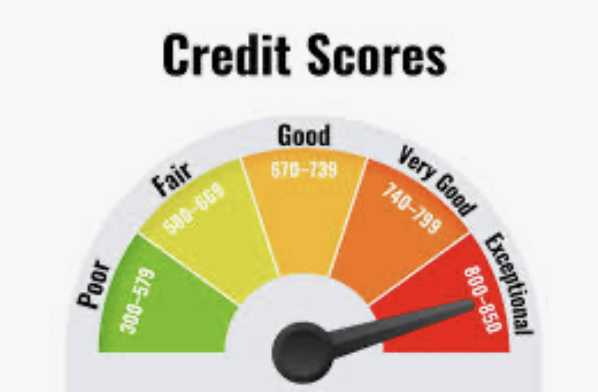
The Wall Street Journal, citing data from credit-reporting firm TransUnion, reported that more than 41% of consumers with a balance had super prime credit scores — generally above 780 — in the first quarter of 2026, up from 37% six years earlier.
The increase represents roughly 15 million additional consumers entering the super prime category since before the pandemic, according to the Journal’s analysis.
Large banks highlighted the financial strength of higher-credit borrowers during recent first-quarter earnings reports, pointing to lower delinquencies and credit losses among prime customers.
“With our portfolio heavily weighted to prime, delinquencies and credit losses declined and are well in line with expectations,” Jane Fraser, chair and chief executive of Citigroup, said during an earnings call cited by the Journal.
Citigroup said approximately 85% of its balances are extended to consumers with FICO scores of 660 or higher.
Jump During the Pandemic
The Journal reported that many consumers improved their credit standing during the pandemic through stimulus payments, reduced spending and higher savings rates. Continued wage growth, along with rising stock portfolios and home values, also contributed to stronger household balance sheets.
A significant portion of the growth in super prime borrowers has been driven by younger consumers, particularly members of Generation Z, according to the Journal and credit-reporting firms cited in the report.
The Journal said Gen Z consumers entered adulthood with heightened awareness of credit scores and financial management tools, contributing to more disciplined borrowing and repayment habits.
That trend is reshaping the customer base for premium rewards cards and other high-end financial products typically reserved for borrowers with stronger credit histories.
“The younger generation is more equipped for the changing dynamics in the world today than, in fact, maybe more middle-aged people,” Stephen Squeri, chief executive of American Express, said during an earnings call referenced by the Journal.
Gen Z and Millennials Perform Well
American Express reported that most new accounts acquired last quarter were for fee-based products, including premium credit cards. The company also said Gen Z and Millennial customers continued to outperform older generations on key credit metrics.
The Journal noted that consumer spending growth increasingly reflects the financial strength of upper-income households, whose wages and investment gains have generally outpaced inflation.
At the same time, signs of financial strain remain evident among lower-income consumers.
Credit-card debt has climbed to a record $1.3 trillion nationally, while delinquencies on credit cards, auto loans and mortgages have increased in some borrower segments, according to data cited by the Journal.
Subprime Consumers Remain Flat
The share of consumers with subprime credit scores has remained relatively unchanged over the past six years, according to TransUnion data cited in the report.
Meanwhile, Equifax reported that Gen Z consumers remain the most financially uneven generation. While many younger consumers improved their credit standing, the share of Gen Z consumers with weak financial profiles also increased by 10% between the second quarter of 2023 and the fourth quarter of 2025.
By comparison, the number of Generation X consumers with low financial-strength ratings rose 11%, the largest increase among all generations, according to Equifax data cited by the Journal.
Lenders also continue to differentiate sharply between high- and low-credit borrowers when setting credit limits.
Increase in Average Credit Lines for Some
According to TransUnion data cited by the Journal, average credit-line limits for near-prime consumers increased 5% between the third quarter of 2019 and 2025. For super prime borrowers, average limits rose 11% during the same period.
“The U.S. consumer remains resilient in the aggregate but increasingly bifurcated beneath the surface,” Charles Scharf, chief executive of Wells Fargo, said during an earnings call cited by the Journal.