
BOSTON—Rising inflation and higher energy costs are putting financial pressure on consumers across all age groups, but the specific expenses creating the greatest strain vary widely by generation, according to new research from PYMNTS Intelligence.
The report, based on a survey of 2,283 U.S. adults, found that while overall financial stress differs only modestly across generations, significant gaps exist within age groups based on how consumers manage their finances and respond to economic pressures.
PYMNTS Intelligence reported that inflation reached 3.8% in April, its highest level in nearly three years, while energy prices surged amid geopolitical tensions. Gasoline prices climbed more than 28% and diesel prices rose nearly 50% since the start of the Iran conflict, contributing to higher food, transportation and household costs.
The research found that consumers categorized as “Pressure-Driven Cutback Consumers” consistently reported higher levels of financial strain than “Selective Cutback Consumers,” regardless of age.
“How people manage their money, not their age, income or ZIP code, is what best predicts which specific costs are creating stress,” PYMNTS Intelligence said in its analysis.
Boomers Feel Grocery Price Pressure
Among baby boomers and seniors, grocery costs emerged as the most significant concern.
According to PYMNTS Intelligence, 94% of pressure-driven boomers identified groceries as a financial challenge, compared with 90% of selective cutback consumers in the same age group. The report linked rising food costs to higher transportation and agricultural input expenses.
The research also found a significant gap in spending on clothing and personal care. Approximately 39% of pressure-driven boomers cited those expenses as problematic, compared with 20% of selective cutback consumers.
Despite financial pressures, many boomers continued to prioritize discretionary spending. The study found that 84% maintained entertainment spending and 65% continued dining out.
Utilities Burden Generation X
For Generation X consumers, utility bills—not mortgage payments—were identified as the primary source of housing-related stress.
Among pressure-driven Gen X consumers facing housing challenges, 81% cited utility expenses, including electricity, gas, water and internet service, as a concern. That compared with 57% of selective cutback consumers, according to PYMNTS.
The report noted that rising energy costs have increased the expense of operating a household, creating a widening gap between financially stressed and less-stressed Gen X consumers.
Millennials Struggle With Credit Card Debt
The research found that revolving credit card debt, rather than student loans, is creating the greatest financial strain among millennials.
Among pressure-driven millennials facing debt challenges, 75% identified credit card payments as a problem, compared with 60% of selective cutback consumers.
PYMNTS Intelligence said the findings suggest higher costs for necessities such as food and fuel are driving consumers to rely more heavily on credit cards. The report also found that 42% of pressure-driven millennials saved less during the previous quarter, compared with 18% of selective cutback consumers.
Gen Z Focused on Emergency Savings
For Generation Z consumers, the primary concern was building financial security rather than managing current bills.
Among pressure-driven Gen Z consumers facing future-planning challenges, 73% cited building an emergency fund as a concern, compared with 47% of selective cutback consumers. Similarly, 54% identified retirement savings as a challenge, compared with 34% of their peers.
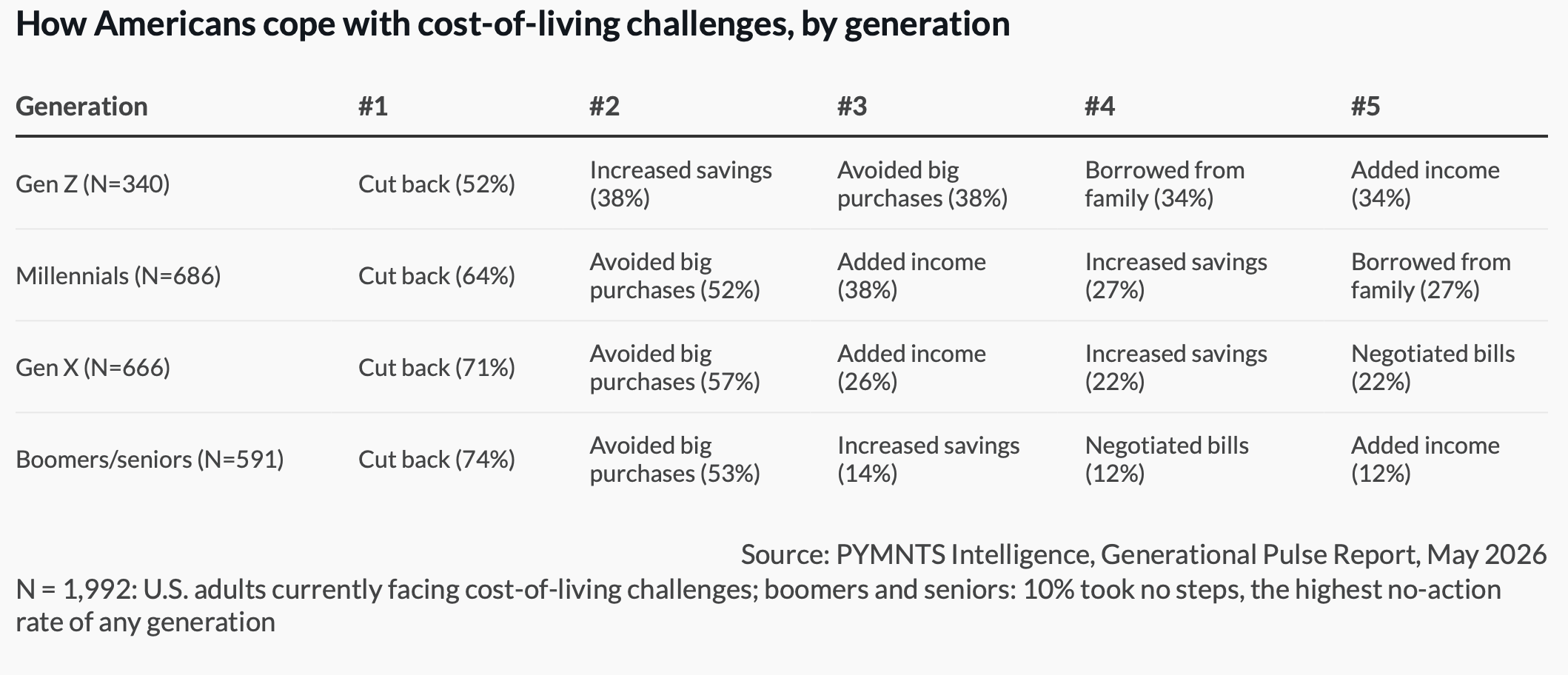
The study found Gen Z consumers were more likely than other generations to increase savings as a coping strategy, though they were also the most likely to borrow money from family members, with 34% reporting they had done so.
Financial Management Drives Outcomes
Across all generations, PYMNTS Intelligence concluded that differences in financial stress are driven less by age and more by individual spending and money-management behaviors.
The report also found that consumers across demographic groups continued to preserve spending on entertainment and social activities, even while cutting back in other areas.
“As the energy shock from the Iran war ripples into food, shipping and consumer goods, the useful question isn’t what generation someone belongs to,” PYMNTS Intelligence said. “It’s what specific costs are breaking their budget, what they refuse to give up, and how to help them hold onto both.”