
PALM DESERT, Calif.—Representatives of three of the best-known consumer brands for auto shopping, auto research and, increasingly, auto sales shared their insights with credit unions here, including why CUs need to be rethinking whether or not they are being considered when consumers turn to agentic AI to do their auto shopping and financing for them.
The conversation took place as part of a panel discussion during the Origence Lending Tech LIVE event. The discussion, which was moderated by Charie Vogelheim, principle with, Vogelheim Ventures and host of The Flying Car podcast, and featured as panelists:
- Jade Terreberry, senior director of strategic planning, Cox Automotive, Autotrader. Terreberry also has long experience working in dealerships.
- Julien Schneider, chief strategy officer, Cars Commerce, Cars.com. Worked at P&G and in consulting before joining Cars.com in 2018.
- Ian Frame, director of auto finance, Carfax for Lenders. Frame is an attorney who has been in the auto business for 18 years, having started with Enterprise. He has been with Carfax for 13 years. He said the company works with more than 1,400 credit unions.
Below is a look at what was discussed:

Vogelheim: In your experience with different auto franchises in different states, talk about the relationship with customers and credit unions?
Terreberry: The industry is finally at a place where the consumer experience is at the heart of everything that we do. We heard on that last dealer panel that deals are anytime, anywhere, any place — consumer-guided and consumer-controlled. Because of the role credit unions play in their members’ lives and their members’ finances, and the lifetime value of those funds, there’s just a massive opportunity. Dealerships are really starting to embrace that, and the dealerships that are embracing it and putting the customer experience first are the ones that are winning.
Vogelheim: Carfax is created to add additional information in this process.
Frame: Ninety-five percent of people start their auto-buying journey online, and one place they start is Carfax. We see 25 million unique visitors each month.

Consumers have an advantage that dealers don’t have. They’re looking at the Carfax report. What a consumer wants to pay for a vehicle is very reflective of the vehicle’s history. Would you pay more for a vehicle that has no accidents versus one that has had an accident? Of course you would. Having a VIN-specific value that’s really in touch with all of that specific history — the mileage, the damage and the ownership periods — is really valuable for both consumers and lenders.
Terreberry: The average consumer has 62 touchpoints between click and close, and depending on age, it may exceed 250. Not only are they reading about cars, but they are reading about dealerships and who they want to work with on the financing. As we have seen, the evolving consumer is arriving at the dealership more informed than ever. It creates a huge opportunity for dealers because they can meet the consumer at the front of that process.
Vogelheim: Is it adding some confusion to the process? It used to be just Kelley Blue Book. How does the consumer make it through just the basic information?
Terreberry: It is a lot for the consumer. The industry moved to just one price. Dealers said, “We heard you,” and took away the haggling. But we have also taken that same complexity and introduced it on the trade-in side. The average person walks into the dealership with 2.7 offers in hand, with an average $2,000 spread between them.
The consumer is now using AI. It’s about how to turn all these insights into information the consumer can use. It’s becoming a lifestyle choice. It’s up to us as an industry to help them assimilate all this information and help them land on the right vehicle.
Vogelheim: Where are we on marketplaces?
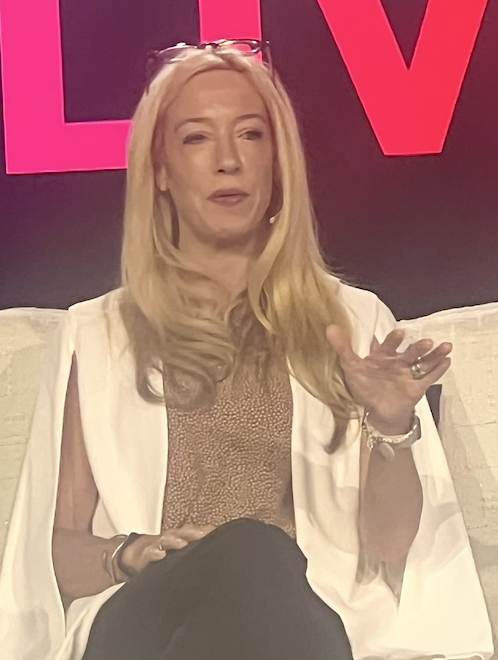
Schneider: The number of destinations for consumers is increasing. The barrier to discovery is shifting with AI, and there is a really interesting role in the marketplace for curation and information. When you look at all those interesting forces at play, it’s going to be a transformative time for marketplaces, but that’s also true across categories.
Vogelheim: You have a single product that used to be on a lot. Now it’s listed in many marketplaces. Are consumers evolving a little bit, where they are not looking for that specific car and instead are just looking for transportation?
Schneider: You have sites now with editorial content but also inventory. There’s been a shift in the inquiries. You see more zero-click queries, such as with ChatGPT. Even when those queries existed, it was hard to turn them into shopping queries. A lot of the queries we used to get on our sites now serve as authority and content inside the LLMs.
Now, in the second part, where the consumer is looking for inventory, you see more engagement when you offer more conversational exchanges. On many sites, you need a Ph.D. to click on the right boxes to get the car you want. You can now do much of that on ChatGPT, but the marketplace can fine-tune those experiences.
Vogelheim: There is overlap between all three of you. Carfax also …
Frame: We have a car-listing marketplace. The key questions are: What does the consumer want? What kind of VIN-specific information do they want? And what can they afford? We are all here to try to marry everything together to create a great consumer experience.
Vogelheim: Cars.com has a marketplace but also has …
Schneider: Cars.com is the core product. Around it is Dealer Inspire, which powers about 7,500 dealer websites. There are also all sorts of demand-generation marketing services. There is also a vehicle-acquisition aspect to the operation to help dealers acquire used cars more effectively.
Vogelheim: Cox Automotive has quite the portfolio …
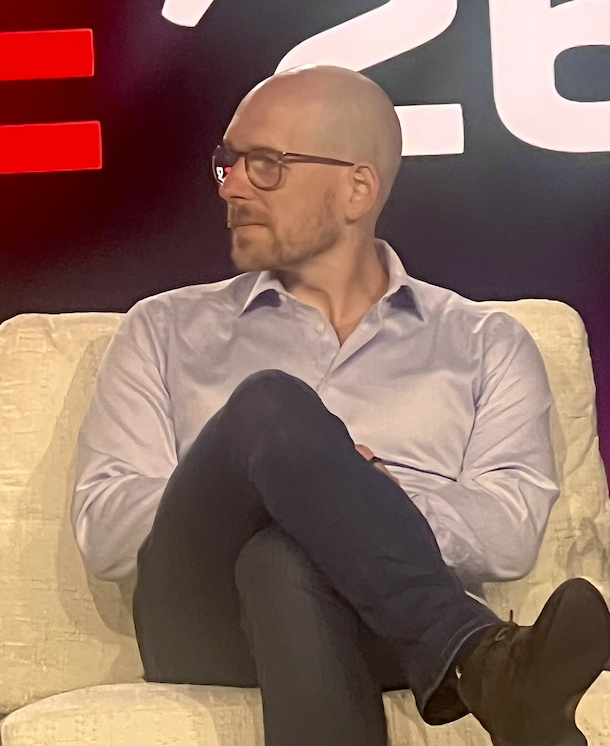
Jade: Autotrader, Kelley Blue Book, Dealer.com. The intent is to connect the consumer, the lender, the dealer and also maintenance providers. We have a core search experience, a peer-to-peer private-seller space and consumer-disposal products with instant cash offers. You name it — on the consumer buyer journey, OEM, dealer — we touch it.
It’s all powered by data from 2.9 trillion consumer signals we collect every year.
We are bringing consumers an omnichannel shopping experience. Our vision is that if you are on a credit union website, and our tools are powering what’s behind that, when you go to the store all of your information entered on the credit union website is there.
Vogelheim: When you go to make an offer to the consumer for their car, is that working out?
Terreberry: Consumers want optionality. They want to understand the spreads on offers they receive for used cars. There are so many considerations. We want to provide the context to help them make the best decision and make it easy.
For the credit unions, we want to help them facilitate the sale and provide AI tools, such as the ability to walk around the car and get a value.
Vogelheim: Does Cars.com make offers?
Schneider: Yes. You can get a guaranteed offer on your car from a dealer. We match consumers with a dealer that really wants that car in that location and in that condition.
What has happened in the past decade has been the unbundling of the trade-in. Only about the high-40% range of vehicle purchases now include a trade-in, and that’s because of transparency in the marketplace led by Carvana and CarMax.
The real question now is whether AI tools are going to set the stage for the unbundling of financing. With more processing power to understand choice, can people be more active participants because there are more tools now?
Frame: We offer wholesale, retail and private-party values. We have the Car Care app, where users can monitor the vehicles they own. Through the app, if a customer indicates they are looking to buy or sell, we can link them with dealers looking for trade-ins.
Vogelheim: What is your advice as the role of Ai grows?
Terreberry: The agentic step is take all this and do it for me. If you are connected you become less and less and less relevant. You have this incredibly unique membership that is loyal, but you have to think about how you are connected in this ecosystem so that when the consumer says, ‘Do it for me,’ you are part of that equation. The ecosystem matters more than it ever did before.