NEW YORK–A growing number of Americans are relying on credit cards to cope with rising living costs, but many remain reluctant to seek professional help managing their debt, according to a new survey.
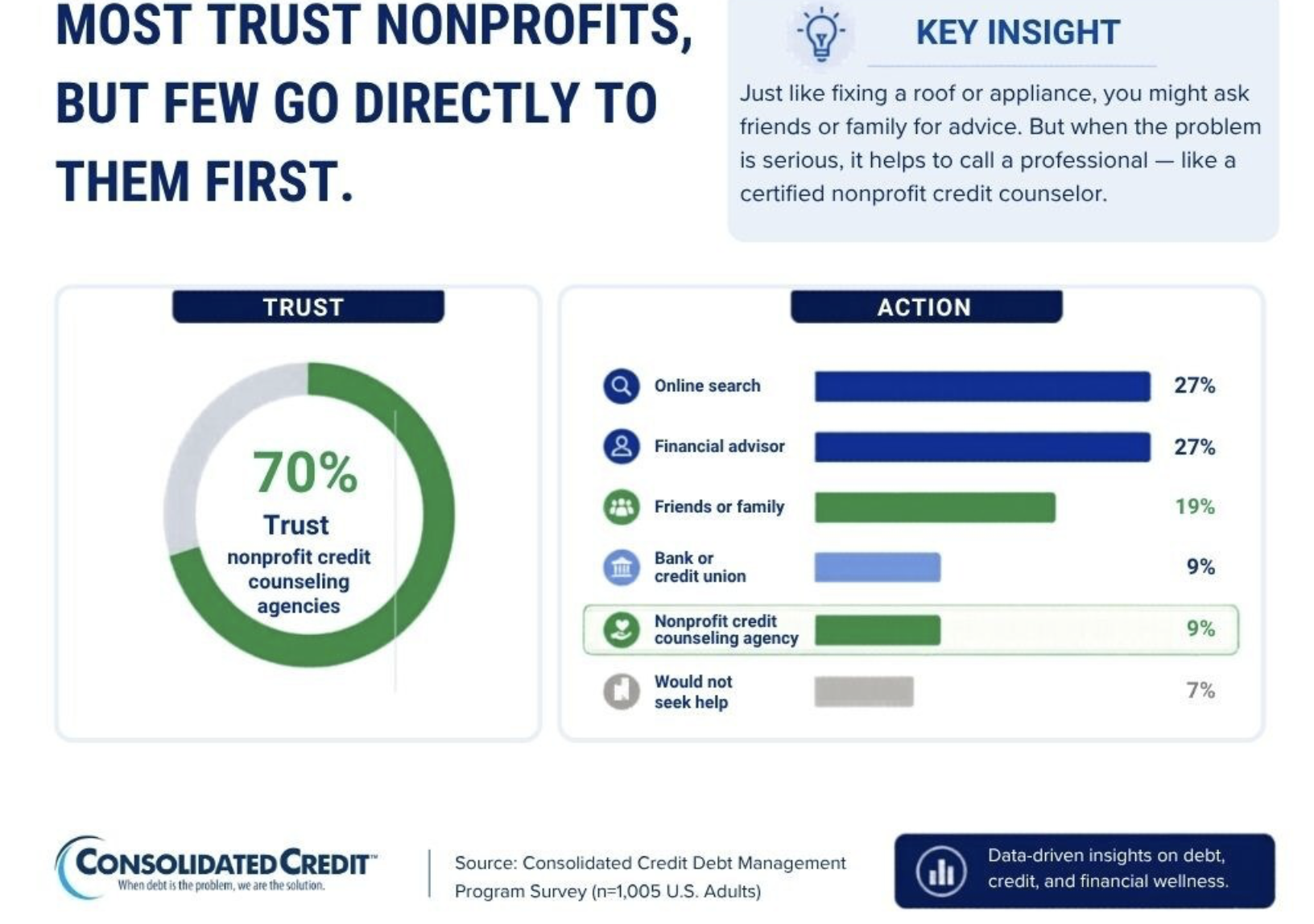
The survey conducted by credit counseling organization Consolidated Credit found that approximately 78% of Americans carry a balance on their credit cards, while 20% said they would delay seeking professional assistance with debt until it became a last resort.
The findings come as consumers continue to grapple with inflation and higher household expenses tied in part to rising energy costs. As the CU Daily reported, higher energy costs also contributed to an annual inflation rate of 3.8% in April, the highest level in a year. Prices for staples including beef and tomatoes rose by double-digit percentages between March and April, adding further strain to household budgets.
As costs have climbed, consumers have increasingly turned to credit cards to cover everyday expenses.
Additional Findings
According to Yahoo Finance, a January report from Academy Bank found that nearly three-quarters of all credit card debt—approximately $883 billion—is tied to routine spending rather than discretionary purchases.
At the same time, total U.S. credit card debt reached a record $1.3 trillion, according to data from the Federal Reserve Bank of New York. Moreover, credit card delinquency rates remained elevated in the first quarter of 2026, even as overall card balances declined from the holiday spending season, according to newly released data from the Federal Reserve Bank of New York.
Key findings cited by Yahoo Finance include:
- 78% of Americans carry a balance on their credit cards.
- 20% said they would wait until debt problems became severe before seeking professional assistance.
- Approximately $883 billion of credit card debt is linked to everyday spending needs.
- U.S. credit card debt reached a record $1.3 trillion earlier this year.
- Average credit card interest rates remain near 21%, close to record highs reached in 2024.
Good Sign? Maybe
There are signs some consumers have begun paying down balances. Yahoo Finance reported that credit card debt declined by $25 billion during the first quarter of 2026, according to Federal Reserve Bank of New York data, but it comes with a caveat. The publication cited a February analysis by Morgan Stanley suggesting the decline may have been driven in part by consumers using tax refunds to reduce outstanding balances.
Even so, many households continue to face borrowing costs that remain historically high. According to Yahoo Finance, average credit card interest rates are hovering around 21%, making it more difficult for consumers to escape debt once balances accumulate.