MADISON, Wis. — Nearly half of Americans say a salary alone is no longer enough to achieve financial stability, according to a new study from TruStage that found consumers increasingly relying on side hustles and alternative income sources while redefining what constitutes the American Dream.
The findings come from TruStage’s 2026 ” 2026 What Matters Now” study, conducted in partnership with Ipsos and based on responses from more than 8,800 consumers nationwide, along with qualitative interviews. The company said the research reveals growing financial pressures on middle-market households and a widening gap in how Americans pursue financial security.

“Behind these findings are real people doing everything they can to build a good life for themselves, their families andTruStage their future. And for many, it still doesn’t feel like enough,” Terrance Williams, president and CEO of TruStage, said in a statement.
According to TruStage, fewer than half of Americans believe they are better off financially than their parents.
American Dream Increasingly Defined by Financial Stability
TruStage said respondents were asked to select from 22 options describing their version of the American Dream. The most commonly cited aspirations were:
- Having enough money to retire comfortably (35%)
- Being debt-free (34%)
- Providing for a family (34%)
The study found significant differences among demographic groups.
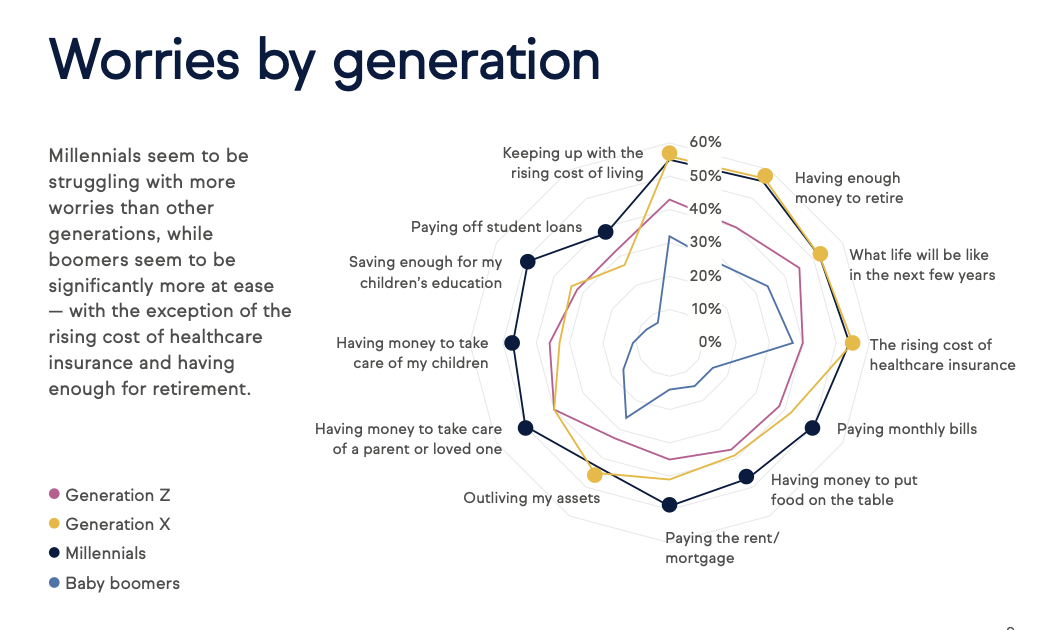
Among Baby Boomers, the American Dream is most closely associated with financial stability:
- Being debt-free (51%)
- Having emergency savings (44%)
Younger consumers were more likely to prioritize homeownership:
- 30% of Millennials included homeownership as part of their American Dream
- 28% of Gen Z respondents cited homeownership
Differences Across Groups
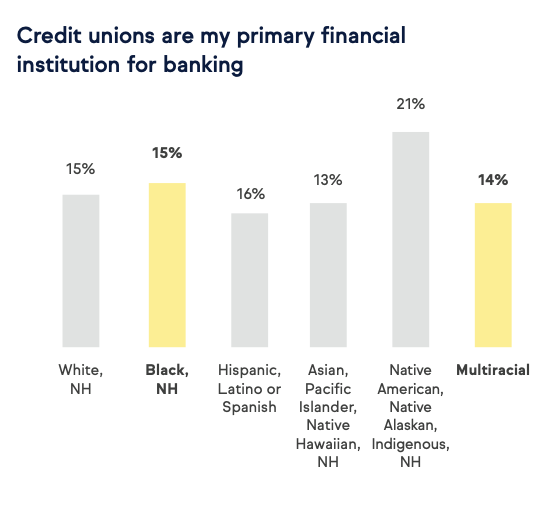
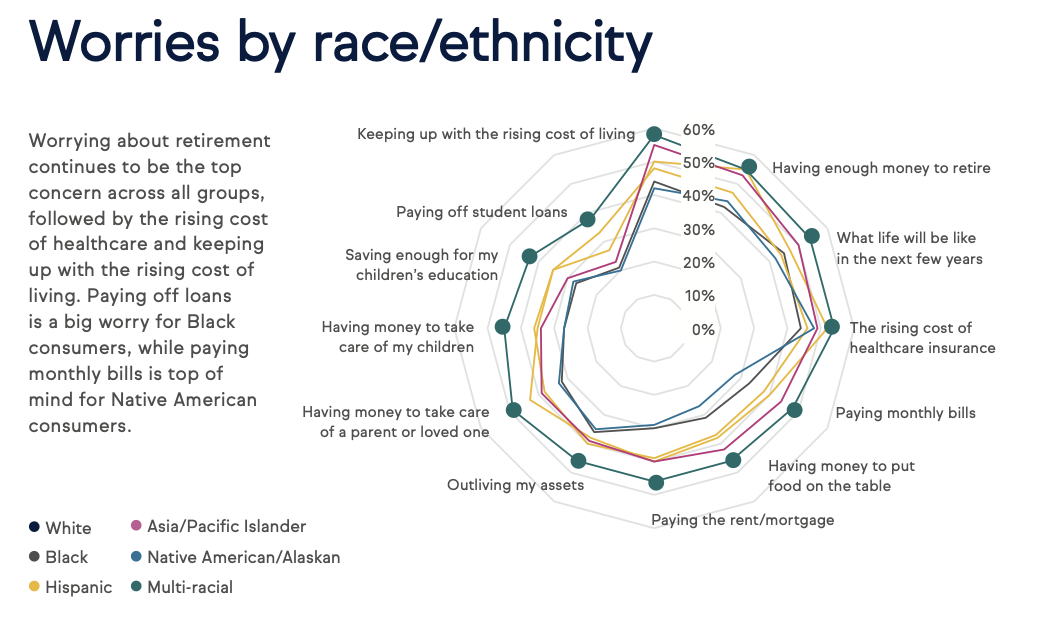
TruStage also found notable differences across racial and ethnic groups:
- Hispanic consumers were most likely to identify providing for family as a key goal (40%)
- Asian consumers most frequently cited having enough money to retire comfortably (39%)
- White non-Hispanic consumers most commonly pointed to retirement security (38%) and being debt-free (36%)
Neurodivergent Consumers Report Greater Financial Anxiety
According to TruStage, one of the study’s most significant findings involved consumers who identify as neurodivergent, representing 21% of survey participants. The analysis found:
- Approximately 75% of neurodivergent respondents were either Gen Z or Millennials
- Neurodivergence was most common among multiracial respondents (40%) and non-binary respondents (39%)
The company reported that neurodivergent consumers expressed higher levels of concern across nearly every financial category measured despite having similar incomes and higher employment rates than neurotypical consumers.
Among the findings:
- 34% of neurodivergent respondents reported anxiety about their financial situation, compared with 22% of neurotypical consumers
- 46% expressed concern about losing their jobs, compared with 34% of neurotypical peers
At the same time, TruStage found neurodivergent consumers were more entrepreneurial:
- 30% reported owning a business
- That ownership rate was nearly double that of neurotypical consumers
The study also found lower levels of satisfaction and trust among neurodivergent consumers compared with neurotypical peers.
Side Hustles Becoming More Common
The study found growing acceptance of supplemental income sources.
According to TruStage:
- 46% of Americans agreed that “these days salary isn’t enough, you have to hustle to make money in different ways”
- That figure was up from 39% in 2022
The sentiment was even stronger among several groups:
- Black consumers (58%)
- Women (50%)
- Millennials (52%)
- BIPOC consumers overall (50%)
TruStage said BIPOC and Millennial consumers were the most likely to say they would rely on a side hustle or secondary job if their primary income declined.
Business ownership also varied significantly by demographic group:
- Multiracial consumers (36%)
- Black consumers (31%)
- Gen Z cxonsumers (26%)
Financial Services Industry Facing Competitive Pressures
The study also found changing attitudes toward financial institutions and growing competition from fintech providers and money movement platforms.
Among the findings:
- Overall satisfaction with financial institutions remained relatively stable
- Satisfaction among neurodivergent consumers lagged behind others (56% versus 68%)
- LGBTQIA+ consumers reported satisfaction levels of 54%
- Non-binary consumers reported satisfaction levels of 32%
TruStage said credit unions continue to lead financial institutions in both satisfaction and trust, with a 77% rating.
However, alternative providers are gaining market share:
- Money movement and payment platforms increased from 2% to 12% of primary financial institution relationships
- Fintech providers serving as consumers’ primary financial institution increased from 13% to 17%
The company also reported that more consumers want to consolidate their financial relationships.
- 40% said they prefer one institution for all financial needs
- That figure was up from 28% in 2022
Role of Social Media
TruStage said social media and artificial intelligence are also playing increasingly important roles in how consumers research and select financial products.
“This research shows that financial security is shaped by individual circumstances, responsibilities and lived experiences,” Williams said in a statement. “That’s why it’s so important to meet people where they are and show up with solutions designed to create brighter financial futures.”
About the Study
TruStage said the research was conducted in partnership with Ipsos and surveyed 8,813 U.S. consumers online in English and Spanish. The study also included 27 one-on-one qualitative interviews.
According to the company, results were weighted to U.S. Census demographics and tested at a 95% confidence level. The sample included oversamples across racial and ethnic groups, generations, LGBTQIA+ consumers and neurodivergent consumers.