


CHICAGO — A majority of Americans remain optimistic about their household finances despite ongoing affordability pressures and concerns about inflation, according to TransUnion’s Q2 2026 Consumer Pulse Study.
The survey, conducted between April 23 and May 11 among 2,996 U.S. adults, found that 55% of consumers are optimistic about their household finances over the next 12 months, unchanged from a year earlier. Meanwhile, financial pessimism fell to 23%, down from an all-time high of 27% in the second quarter of 2025, according to TransUnion.
“Affordability has become the defining issue shaping consumer finances today, yet consumers remain remarkably resilient,” Charlie Wise, head of global research and consulting at TransUnion, said in a statement.
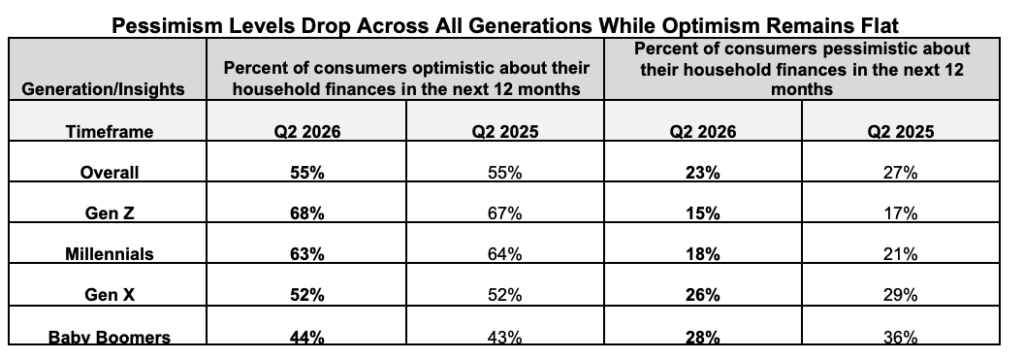
The study found younger consumers are driving much of the optimism.
By generation, financial optimism was:
- Gen Z: 68%
- Millennials: 63%
- Gen X: 53%
- Baby Boomers: 39%
Baby Boomers remained the most pessimistic generation, with 28% expressing concern about their financial future, although that represented a significant improvement from 36% a year earlier.
Inflation Remains Top Concern
Inflation continued to dominate consumers’ financial concerns, with 83% ranking it among their top three household financial worries, up from 81% a year ago.
Other leading concerns cited by consumers included:
- Inflation: 83%
- Recession: 51%
- Interest rates: 42%
- Housing prices (rent or mortgage): 42%
Gen X and Baby Boomers reported greater concern about inflation than younger generations, according to the survey.
Consumers also expressed concern about rising prices across a variety of spending categories.
Top price increase concerns included:
- Grocery prices: 80%
- Gas prices: 71%
- Other household expenses followed at lower levels
Concern over gasoline prices showed the largest increase, rising from 37% in the first quarter of 2026 and 49% a year ago to 71% in the latest survey.
Affordability Pressures Intensify
Consumers identified several spending categories as increasingly difficult to afford.
Categories most frequently cited as unaffordable were:
- Gasoline: 54%
- Travel-related purchases: 48%
- Dining out: 45%
Gen X consumers reported the greatest affordability challenges. According to TransUnion, Gen X respondents were more likely than any other generation over the past three months to describe every major spending category as unaffordable.
Only 63% of Gen X consumers said their household finances were meeting or exceeding expectations this year, compared with:
- 74% of Gen Z
- 71% of Millennials
Wise said Gen X’s financial strain may be linked to its position as the “sandwich generation,” often balancing the costs of supporting children while caring for aging parents.

Demand for New Credit Softens
While consumers continue to view access to credit as important for achieving financial goals, fewer plan to seek new credit or refinance existing debt.
The survey found 28% of consumers plan to apply for new credit or refinance within the next year, down from 33% a year ago.
The decline was evident across all generations, though it was most pronounced among Gen Z and Millennials, where intentions to apply for credit each fell by five percentage points year over year.
Even so, younger consumers remained the most likely to seek new credit.
Consumers planning to apply for credit:
- Gen Z: 45%
- Millennials: 45%
- Gen X: Lower than younger generations
- Baby Boomers: Lowest among all generations
Among consumers planning to seek credit, 65% of Gen X respondents said they intended to apply for a new credit card, seven percentage points higher than the overall population.
Interest rates continued to influence borrowing decisions. Among consumers who ranked interest rates among their top three financial concerns, 31% said they planned to apply for or refinance credit during the next year, compared with 27% of all other consumers.
Despite the decline in stated borrowing intentions, Wise said TransUnion’s lending data indicates credit demand remains relatively healthy.
“While consumers report less interest in applying for or refinancing credit, our proprietary data shows demand remains healthy,” Wise said. “At the same time, consumers often take on more credit during periods of economic pressure as a safeguard against potential shocks such as job loss. Encouragingly, many still report optimism about their financial outlook.”



