
ST. PAUL, Minn. — With loan volume slowing for many CUs, and with account balances up, revenue pressures have put a new premium on non-interest income, including debt protection and loan protection products. Now, credit unions are being offered some ideas and strategies for effectively adjusting to a changing consumer mindset to better drive sales of both solutions.
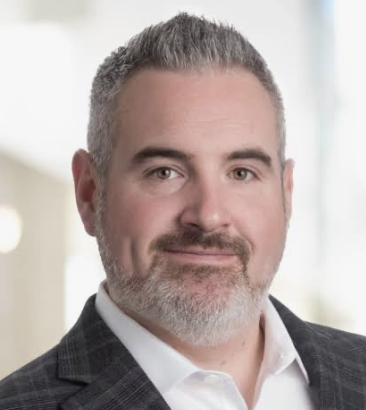
Below, Graham Adams, senior vice president, Affinity Solutions with Securian Financial, shares his insights into those areas and others as part of the CU Daily’s Profitability Imperative Series.

The CU Daily: First, provide some background on Securian Financial and what it offers to credit unions?
Adams: Securian Financial is a mutual insurance and financial services company based in St. Paul, Minnesota. In the credit union space, we provide financial protection solutions through our subsidiaries, Minnesota Life Insurance Company, Securian Life Insurance Company, and Securian Casualty Company.
Securian also supports credit unions with technology, claims administration and other tools that help deliver services to members.
The CU Daily: Is there a particular product offering or solution that has seen growing interest? And why?
Adams: One area that has seen growing interest is payment protection, and in particular, debt protection and related loan protection products. As economic uncertainty, inflation and concerns about job stability increase, many borrowers are looking for ways to protect themselves if they experience unexpected life events.
At the same time, credit unions are focused on supporting member financial wellness while managing loan risk, making these solutions relevant to the credit union and the member.
The CU Daily: Is there a particular product offering or solution that is perhaps not being leveraged as fully as it could be by credit unions? If so, why might that be?
Adams: The biggest opportunity in payment protection today is integration, specifically self-service options for those members who prefer a fully digital experience.
While the product is familiar, it’s often not fully embedded into the loan process, which can create friction or reduce adoption. As member expectations shift toward digital first experiences, this becomes a more important gap to address.
The CU Daily: The CU Daily has focused part of its coverage in 2026 on its “Profitability Imperative” series. Some credit unions can underutilize non-interest-income options. Have you seen an evolution in that mindset, and where do you encounter road bumps?
Adams: Many credit unions we work with are seeing the same trends: Loan volumes are down and average account balances are up, which puts more focus on non-interest income.
We are seeing a shift in mindset, but there are still some common roadblocks. In many cases it comes down to execution. Credit unions tend to see better results when they step back and access a few key areas:
- Do they offer a fully digital experience where members can easily select and purchase products, like debt protection, guaranteed asset protection (GAP) or warranties
- Is the program designed to balance competitive rates with strong income performance
- When was the program last evaluated against current market offerings
- Is there a clear, top-down support and a training approach that equips staff to consistently present these options.
The CU Daily: It’s one thing to have NII solutions available, but they must be part of a larger strategic approach by the credit union. What type of guidance does Securian provide when it comes to setting strategic plans and, just as importantly, executing on them?
Adams: It starts with alignment at the top. The most successful credit union programs tend to have strong C-suite support, which helps with consistency across the organization.
From there, execution becomes just as important. That typically includes building clear tracking and accountability into the program, so performance is visible and measurable, along with ongoing training to ensure staff are comfortable presenting these solutions to members.
Our role is to help guide our strategic partners though both sides, aligning on strategy upfront and supporting the tools and processes needed to execute effectively over time.
The CU Daily: Similarly, it’s one thing to offer NII solutions, but another to have front-line and call center staff adept at selling them. What types of people fit best in these roles, what kind of education/training is most effective? Role playing? Some of the new VR tools available, etc?
Adams: Staff readiness is one of the biggest factors in whether these programs succeed. Many credit unions are dealing with turnover in front line and call center roles, so it’s important to build a consistent approach to training, support and incentives.
The most effective programs tend to focus on a few key areas:
- Creating clear incentives and recognition, whether that is compensation, contests or team-based rewards
- Building consistency through call monitoring and regular coaching
- Developing confidence through real examples, using storytelling to show how these products have helped members during difficult situations
When staff understand the value and feel supported, they are much more comfortable having these conversations with members.
The CU Daily: And speaking of education, lack of understanding or misunderstandings around various products can be difficult to overcome? Which products/offerings are most often misunderstood, and how can a credit union effectively educate the member in a practical way that works?
Adams: Products like debt protection, GAP and similar loan protection options are often misunderstood or overlooked. In many cases, members default to the lowest cost or the path of least resistance, especially if the value isn’t clearly explained.
Credit unions can bridge the gap by keeping education simple and practical:
- Use open-ended questions during the loan process, like, “If you lost your job or couldn’t work, how would you manage your payments?”
- Incorporate storytelling to help members see how these products have helped others in real situations
- Make it easy for the member to enroll, whether that’s in person or virtually.
The CU Daily: In the back office, where have you found the best opportunities to either cut costs or drive growth?
Adams: In the back office, some of the biggest opportunities come from stepping back and evaluating how the program is currently structured. In many cases, programs have not been revisited in some time, which can lead to outdated financial models or missed opportunities.
Credit unions can often uncover both cost savings and growth opportunities by:
- Reviewing their current program and exploring alternative structures or options in the market
- Investing in digital capabilities that allow members to easily purchase non-interest income products
- Aligning internal teams through training, incentives and accountability to improve consistency.
As member expectations continue to shift, especially toward digital experiences, modernizing both the program and the supporting processes can have a meaningful impact.
The CU Daily: As you look out to the horizon to the credit union market and the solutions you offer, where do you think future growth is going to come from, and how is the market changing/evolving in ways credit unions must respond to?
Adams: We can’t predict the future, but there are clear signals. Across the market, there is a shift toward digital lending environments where protection products and other ancillary offerings are embedded directly into the borrower experience.
Historically, these products have often been treated as add-ons. But as lending becomes more digital, that approach is changing. There is increasing demand for solutions that are integrated, easy to access and part of the natural flow of the loan process.
Future growth will likely come from credit unions that can align technology, product design and experience to meet those expectations.
(Disclosures: Insurance products are issued by Minnesota Life Insurance Company or Securian Life Insurance Company, a New York authorized insurer. Minnesota Life is not an authorized New York insurer and does not do insurance business in New York. Both companies are headquartered in St. Paul, MN. Property and casualty insurance products are issued by Securian Casualty Company, a New York authorized insurer. Each insurer is solely responsible for the financial obligations under the policies or contracts it issues. Product availability and features may vary by state.
Securian Financial is the marketing name for Securian Financial Group, Inc., and its subsidiaries.)