


WASHINGTON, N.J.—Four CU CEOs shared some strong advice, opinions, lessons learned and more during a spirited CU Daily webinar where everything from finding new growth opportunities to eliminating “crap” vendors was discussed.
The webinar, “Size Isn’t Destiny: Four CEOs on Building the Next Great Era for Credit Unions,” had a special focus on smaller and midsize CUs and how they can ensure they are part of that “next great era” rather than being merged out.

The webinar, which was sponsored by TFD Consulting and co-presented by the CU Daily and Laskos Communications, was part of the CU Daily’s Profitability Imperative series in 2026.
Participating as panelists were:
- Scott Pryor, president and CEO of Connection Credit Union in Washington State, which has about $40 million in assets.
- Joshua Urbick, CEO of IBEW26 Federal Credit Union in Maryland, which has about $30 million in assets.
- Doug Wadsworth, president and CEO of Tri-Cities Community Credit Union, also in Washington state, which has about $76 million in assets.
- Ed Speed, retired CEO of Texas Dow Employees Credit Union (TDECU) in Houston, which today has about just over $5 billion in assets in Houston.
The webinar was moderated by Frank J. Diekmann, cooperator in chief at the CU Daily. Here’s an overview of just some of what was discussed:
Diekmann: You’re confident that you are competitive and viable in your asset size when many in credit unions believe smaller CUs can’t be competitive. Why are you confident in your viability and in the viability of smaller credit unions?
Wadsworth: First of all, there was an article, Frank, in your own CU Daily, a few months ago about profitable credit unions. And apparently somebody did a study and they looked at…the most profitable credit unions in the nation. The ones who were the most profitable were among them were the smallest credit unions.
So, I think there’s this narrative, and I don’t know where it’s coming from, saying that if you’re small, you can’t be profitable and you can’t be successful in giving back to your members. But the opposite appears to be true. How do I know? Well, we can look at our own numbers. In my community I’m the only small credit union and there are five of the big ones. And across the board, we’re extremely competitive. In many ways, we are even better. I’m usually higher on ROA. My net worth ratio is usually higher. And we’re able to give back in meaningful ways, as well.

So, I’d like to counter this narrative about being small; it has nothing to do with your profitability.
Prior: For me, it’s the understanding that as small credit unions we have the ability to collaborate and cooperate unlike anyone else. I’ve been CEO here for 16 years, and the more I lean into the collaboration with other credit unions–I provide help and they provide help for me–it gives us a competitive advantage. As an industry, I don’t think we are tapping into collaboration nearly enough, which is why I started a CUSO (CU Unite) to really focus on that credit union collaboration and how we can do more things together. To me, that’s how we win, we do it together, kind of like how credit unions used to do it back in the day.
Diekmann: Joshua, you formed the National Association of Small Credit Unions. What is it that you’re hearing from credit unions that have joined and why form the group?
Urbick: We definitely saw a need in the country and in the industry for what NASCU is designed to do, and that is help small credit unions, the ones that are struggling, to get back on the right track, to become profitable again. And for the ones that are doing great, to survive, thrive, and have access to the modern tools they need to continue being relevant and viable in the future.
Some of the common trends and concerns we see from our member credit union, which at this point is close to 50 members scattered across the country are a succession planning–CEOs are about ready to retire and there’s no identified leader in place–and then they want access to modern tools. They’re interested in AI; they’re interested in growing their loan portfolios.
Wadsworth: I want to make sure to point out that the whole purpose of this webinar is not to say anything bad about any certain credit unions, large or small, because we’re all vital to the movement. We need big ones, we need small ones. Big ones make an impact in ways we never could because we’re little, but our small ones have a significant impact at the local level that we think is irreplaceable.
Diekmann: Ed, you believe that when it comes to small credit unions, often we’re asking the wrong question. What do you think the question should be, and what’s the answer?
Speed: I think that we may be focusing on the wrong question of can small credit unions survive? The question we should be asking is around how the entire environment has come full circle and it now favors the strengths of small credit unions.

Let’s think back to Edward Filene and our courageous founding stories. We all have our origin stories and Filene always comes up writ large. But Filene wasn’t trying to create smaller, more friendly banks. He wanted to create a different kind of financial institution. And in the world of Filene, the large banks found ordinary working people too small, too risky, too expensive, and too impersonal to serve well. Well, the credit unions won, and from that came the credit union movement that I experienced in the 1980s, and it was at its peak.
What is happening today with the larger credit unions, and, I think, most of the credit union movement, is that scale has changed behavior. Bureaucracy, standardization, distance from members are all outgrowths of size and scale. They just can’t do it. I think the marketplace is, again, going to reward trusted relationships, local knowledge, and speed, human judgment. And I think that all of those consumer-adverse retail conditions that gave rise to the great credit unions are back and thriving in credit union land and in the smaller credit unions.
Our larger credit unions have become larger, more centralized, more automated, more sterile. And a lot of a lot of CEOS have ego-driven factors and they live in a world of algorithms and processes. I just think the world has come back to where small credit unions have their most fertile field, just like our origin stories.
A friend of mine who is in the community banking space ns told me that there are 475 banks under $100 million that continue to function successfully, all while facing the same regulatory, technology, cybersecurity, and competitive issues. I think it’s been proven small credit unions are viable,
Diekmann: Doug or Scott, how do you look at that? Do you think a lot about growth or have growth targets? How do you view growth? Is it a priority for you?
Wadsworth: For our credit union, we don’t really care about growth as long as we’re not shrinking. Shrinking is not sustainable. But as long as we’re stable with our membership and loans, that’s an opportunity to give all of our profits back to the members. So, I really don’t care about growth. As long as healthy, we can get back to our members. That’s why we exist.
Prior: I focus on membership growth and loan growth. And if I’m growing those two things, at least on a consistent basis, then I still deserve to be here and I should (prosper). But as I say every year in our planning session, I don’t care about assets. But I want to grow loans, and I want to grow members at least on some level consistently. And if I’m not doing that, I’ve got to figure out how to do that because otherwise, what’s the point? We might as well just merge out.
Diekmann: The name of this webinar is ‘Size isn’t Destiny.’ Where do you consider your size to be an advantage, if you see one? And where do you find the greatest limitation?
Prior: I don’t use it as a limitation because I can move quickly and I can be more responsive and I can do things that I know others aren’t interested in doing, especially some of the underserved populations that we serve. No one wants to tackle that. But to me, that’s where the opportunities are; all the easy stuff is taken.

The limitation comes in with vendors and negotiating with vendors and getting treated like crap from the big vendors. And we’re trying to figure out how to fight back and find better vendor partners for smaller credit unions, because some of the legacy vendors that we’ve relied on for years, ever since COVID, the prices have gone up and the service levels have gone down and we need to find better options.
Wadsworth: When I was at GAC several months ago, Chairman (Kyle) Hauptman got up and talked about small credit unions and the special sauce that we offer. I think small size can be a real advantage because, generally speaking, the larger you get, the more generic you get, and the more difficult it is to be flexible at the local level with small communities or small memberships.
The other half of how being small can be an advantage is speed. At my little credit union, we can launch a new loan product in a few weeks, from concept to actually launching it to our members. There are only a few people I have to talk to. I can set it up myself, there’s not a huge investment of time or money to do so, because I just have one office, and there’s only like a dozen employees here. So that’s huge.
We try new things all the time until something sticks in trying to fill niche needs within our membership and within our community.
Diekmann: Before we move on, can you tell us more about the CUSO you formed, CU Unite?
Prior: We’re trying to really focus on the group negotiation. Group buying is something that is prevalent in other industries, where when you have more volume, you get better pricing. We’re just trying to do that with the smaller vendors that are interested in that business model and reaching a larger swath of credit unions. We’re just trying to kind of aggregate as many credit unions as we can.
There’s value for the vendors there, and there’s value for us in finding those vendor partners that are really interested in our business rather than being an annoyance to them. We need really true vendor partners, not just vendors.
Diekmann: Ed, you authored a very well-read piece on the CU Daily on your approach to dealing with vendors while at TDECU. Could you share a bit more about that?
Speed: Since I’m wearing my First Calvary shirt, I’m going to use the term that vendors were my ‘force-multipliers.’ …I think it’s very important to differentiate between transactional vendors and relational vendors. Transactional vendors, fine, you get together, you beat them up on their price. You do the best buying job you can do. But I would never let transactional vendors touch my members.
They had to be relational. That means they had to have a relationship with me. They had to have a relationship with my team. I gave those vendors a seat at the table when we were going to be involved in a new product or strategy. I remember one specific one where we were going to do a big, huge mortgage refi play. And into the conference room we brought in my team, the mortgage processing and mortgage servicing vendors, an outside market agency, ALM First for ALM and a vendor related to insurance products. And we all sat down and we had them help us build the products.
But, most importantly, I would tell the vendors in front of my management team, ‘You cannot be a great vendor if we’re not a great client for you.’ And I would say that in front of my team to the vendor’s most senior person. And I said, ‘You have an obligation to tell me where you think we can be a better client. Where are we causing friction? And you must also inform me if you’re running into silos or staff protecting territory. My team and I will leave our egos at the door. But we have got to become a great client, and then you can be a great vendor.’
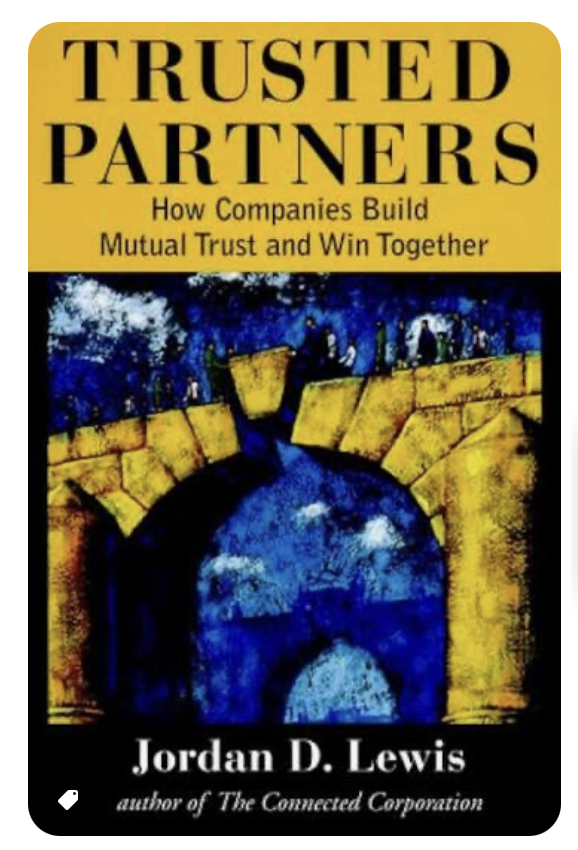
The definitive text on this is a book called ‘Trusted Partners’ by Dr. Jordan Lewis, who put together some of the best partnerships that you can imagine. I brought him in as a consultant. And I love vendors. I mean, I think they can be really healthy, highly productive relationships. But I worry about what I hear, reducing it to transactions and the lowest price to bid.
Diekmann: Doug or Josh or Scott, what has your experience been with the vendors? Have they been decent partners or where would you like to see improvement or where have you seen some benefit?
Prior: I’ll just say I’ve dumped all the bad ones years ago, and the ones I have now are really true partners; we have long-term relationships with all of them, but the first five years of my tenure was getting the crap out. and getting those that, to Ed’s point, that are relationship vendors. It’s not all about price. And to your point, Ed, yeah, we want to be a great client, too. So, we’re providing feedback and we’re helping and we’re referring people for them. And that’s one of the values of the group buying is if you do a good job with us as a small credit union, we’re going to share our experiences with others. We’re very open about that and we will help you sell your product to others if you take good care of us.
Wadsworth: Scott does a great deal with his CUSO. He does like a weekly phone call with a bunch of CEOs in our area and some across the nation, and we get to compare notes on vendors. So, yeah, CEOs get together and talk, which is really helpful and hopefully will move the needle a little bit with vendors.
Urbick: Vendors play a huge role of what NASCU is all about. I’ve experienced it firsthand here in my own credit union where you get the wrong vendor, it can break your credit union. You can be hemorrhaging money. And next thing you know you’re operating in the red for years. And so, one of the primary objectives when I came to this credit union, it was struggling just a little bit, was to review all the vendors, review all the relationships. And I can tell you I’ve met some incredible ones that have really helped us succeed. And in turn, I’ve also met some horrible ones that we’re going to be getting rid of.

That is a huge part of a credit union, especially a small credit union. But the right vendor in the right place can help you as a small credit union to make sure that you are viable and you have access to the tools that you need to be successful.
One of the things we’re doing with NASCU is we’re vetting these vendors. We’re making sure that they’re not predatory. We make them fill out a form and then we meet with them. There have been some…that are huge and they just want access to small credit unions. And in turn, they’ve offered a ton of money. And I’ve told them right to their face, ‘No, we’re not going to do that because this is not about that. And you don’t genuinely have the best interest of these small credit unions in your sight.’
We’re making sure that we do have the right people. And I can tell you, I’m very optimistic about the future of these small credit unions because I have met with so many incredible vendor partners out there that do genuinely care, that great CUSOs, people that want to see small credit unions succeed and that offer phenomenal pricing, and give you access to the tools that a lot of these larger ones are operating with, but at a fraction of the cost.
For the full discussion and numerous other fascinating insights and experiences shared by the CEOs, go here for the full webinar, which is free courtesy of TFD Consulting, Laskos Communications and the CU Daily.





9 Responses
Interesting that there is a commonly expressed point of view that large credit unions are bank-like and then as a small CU brag about how profitable you are.
Well, the difference is that a CU’s profitability results in lower borrowing rates for members, whereas a bank’s profitability results in fatter pockets for shareholders, customers be damned.
You may have missed the point: that small CUs gave “give back” more money when they are healthy, and to refute the false narrative that small CUs can’t do both.
Except it’s not given back when capital ratios are 14%.
When a CU’s ROA and capital ratio is way too high, and loan and membership growth are negative, that could be a hint that borrowing rates are too high.
Thank you for hosting this and the recap. I have amazing respect for Wadsworth and Pryor. CUsUnite is incredible!
CUWLA is also an amazing resource. Women lead nearly two-thirds (65.4%) of credit unions with less than $100 million in assets according to NCUA.
100% agree that CUWLA is a fantastic resource!
Thank you for hosting—this was a terrific gathering, and would love to see a quarterly version.
Liked the proactive thinking these gentlemen discussed. Not sure what value the retired fellow brought to the conversation beside rambling