WASHINGTON—U.S. consumer bankruptcy filings continued to climb during the first half of 2026, rising nearly 13% from a year earlier as higher interest rates, persistent inflation and mounting debt burdens pushed more households into financial distress, according to a new report from G2 Risk Solutions.
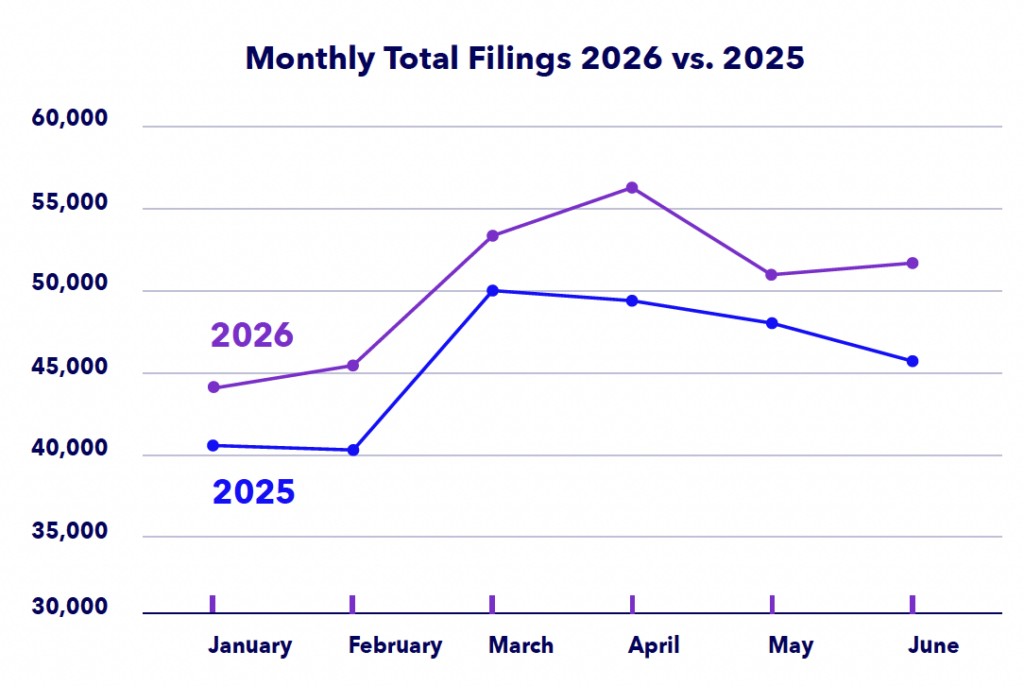
The Bankruptcy Risk Outlook report found 310,529 bankruptcy filings were recorded through June, a 12.9% increase from the same period in 2025. Consumer filings topped 50,000 in each of the last four months through June, which G2 Risk Solutions said suggests bankruptcy activity has become part of a longer-term trend rather than a temporary spike.
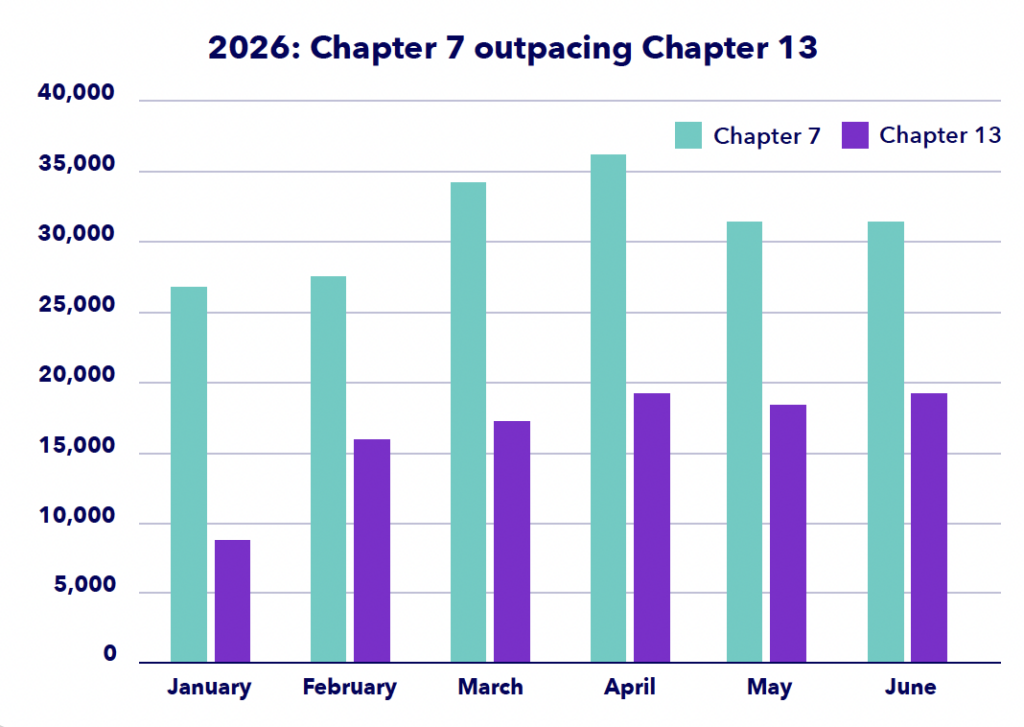
A key finding was the widening gap between Chapter 7 liquidation filings and Chapter 13 repayment-plan filings. Chapter 7 bankruptcies increased 15.7% during the first six months of the year, compared with an 8.4% rise in Chapter 13 cases.
What Filings Indicate
The company said the faster growth in Chapter 7 filings indicates more consumers are reaching the point where they are unable to repay debts through structured payment plans, reflecting worsening financial strain.
Bankruptcy filings rose steadily throughout the first half of the year despite seasonal fluctuations. April recorded 56,421 filings, the highest monthly total since March 2020. Filings eased to 51,715 in May before climbing again to 52,279 in June, a 13.2% increase from June 2025.
According to the report, the increase is being driven by persistent economic pressures rather than a single recessionary shock. Elevated interest rates, cumulative inflation and sustained debt-servicing costs continue to strain household finances, while a relatively stable labor market has produced a slower but more prolonged rise in bankruptcy filings.
The Implications
The report said the trend has implications across the bankruptcy system, including for financial institutions, courts, trustees and attorneys. For credit unions, higher filing volumes could affect member accounts, collections operations, loss mitigation efforts and servicing capacity. The company said organizations will need greater automation, improved data visibility and more scalable workflows to manage what it described as a higher long-term level of bankruptcy activity.
Looking ahead, G2 Risk Solutions said it expects bankruptcy filings to remain elevated through the second half of 2026, with normal month-to-month fluctuations. The report said the central question is no longer whether filings will continue to rise, but whether today’s higher volume will become the new operating baseline for creditors and other participants in the bankruptcy system.