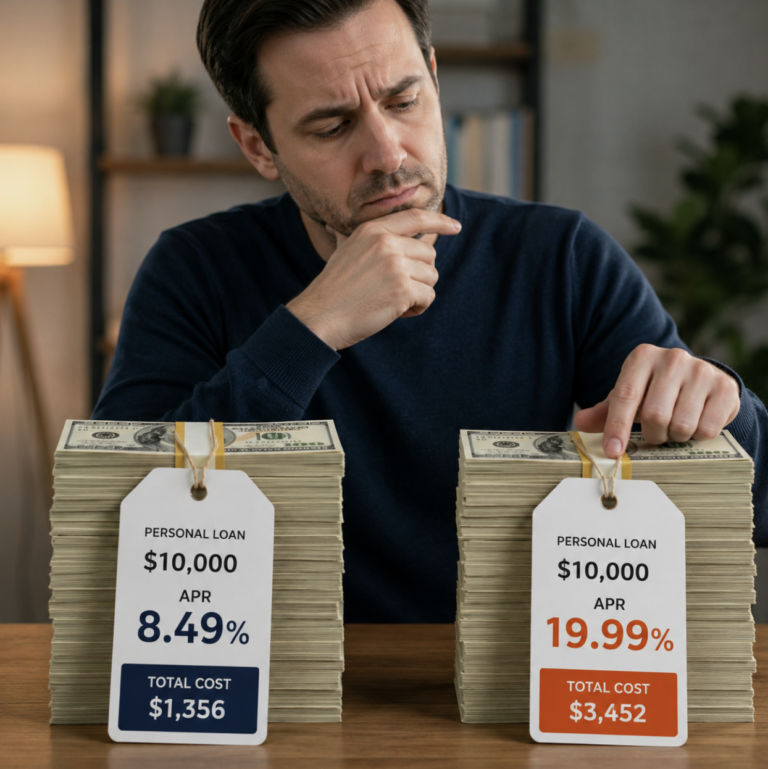
COSTA MESA, Calif. — U.S. consumers are increasingly turning to personal loans as credit card interest rates remain near record highs, but new Experian data suggests borrowers who fail to shop around could be leaving hundreds or even thousands of dollars on the table.
Personal loan originations increased 16% in 2025, according to Experian, which said the growth may reflect both high annual percentage rates on credit card balances and declining rates on fixed-rate personal loans. Experian said personal loans could become even more popular in 2026 if rates remain relatively low and consumers maintain good credit.
But an analysis published by Experian found significant differences among the personal loan offers available to individual borrowers.
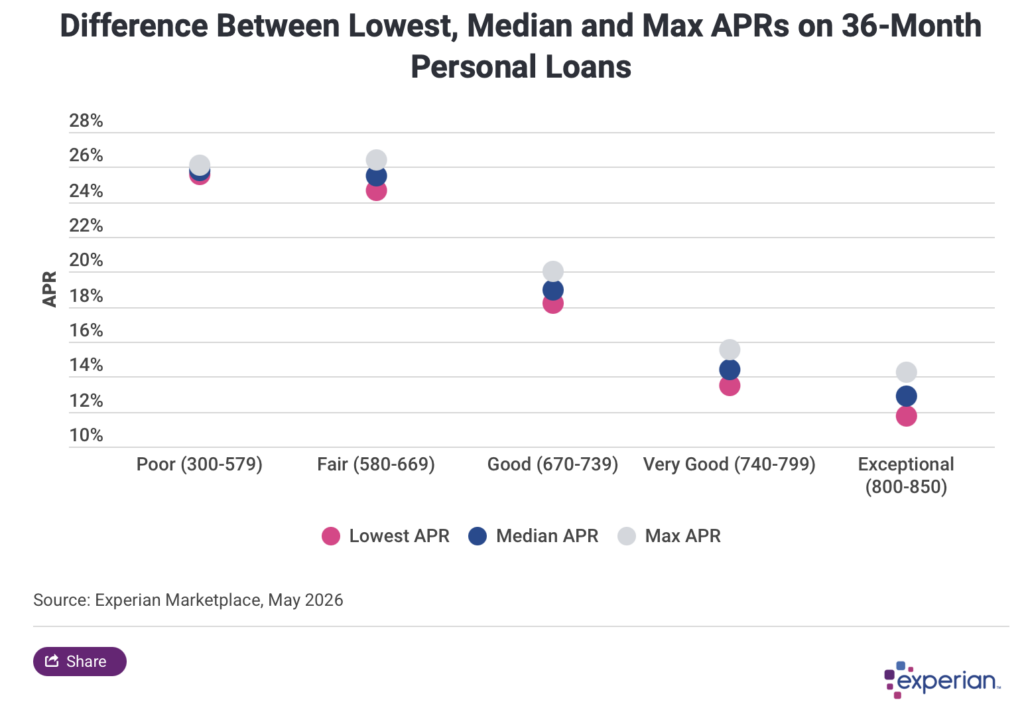
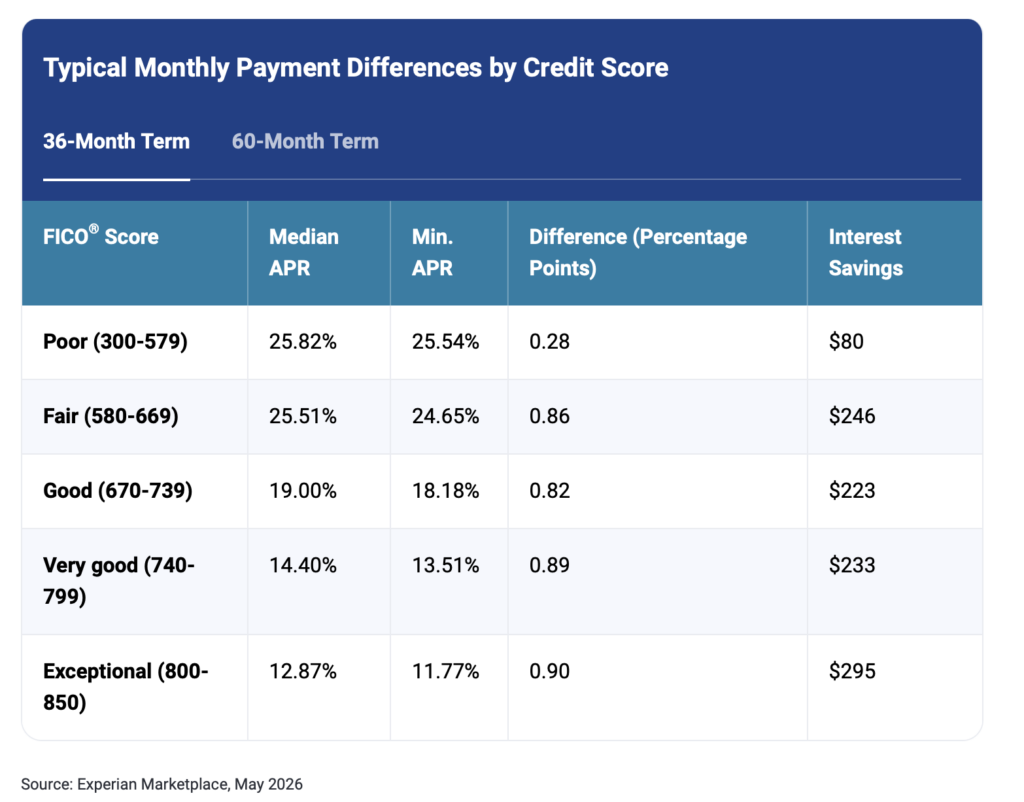
Based on a recent sample of offers, the lowest APR available on a 36-month personal loan was as much as 1.1 percentage points below the median offer and as much as 2.5 percentage points below the highest-rate offer.
What Survey Found
A July 2026 Experian survey of 972 personal loan borrowers found most consumers comparison shop, although a significant share do not.
Among respondents:
- 42% said they compared offers from multiple lenders on a single website or marketplace.
- 40% said they compared offers across multiple websites.
- About one in six said they did not compare multiple personal loan offers the last time they considered taking out a loan.
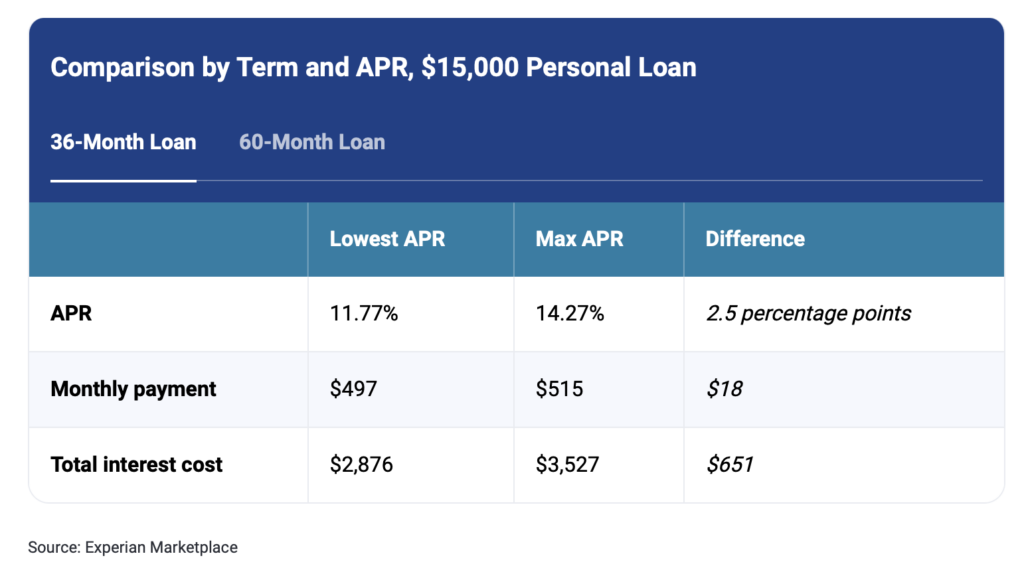
Experian said seemingly small differences in APRs can have a substantial impact on borrowing costs. For a consumer with a good FICO score borrowing $15,000 over 36 months, reducing the APR by 2.5 percentage points could save nearly $650 in total interest, according to the company.
What Internal Analysis Revealed
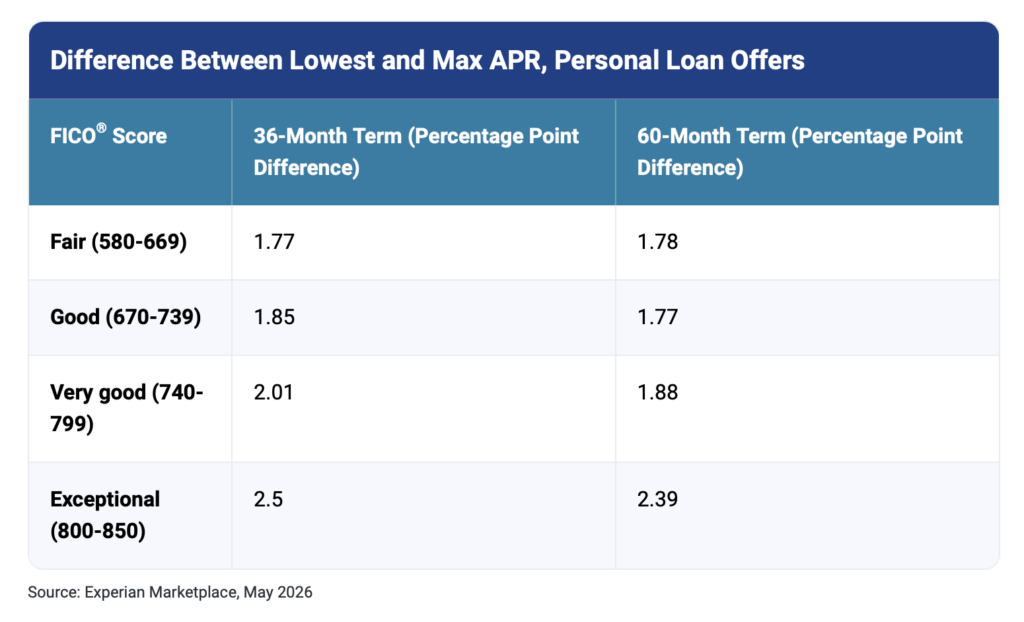
An analysis of more than 26 million offers made through Experian’s personal loan marketplace in May 2026 showed a 2.5-percentage-point difference between the average lowest-rate and average highest-rate offers. Experian said that difference could translate into more than $1,100 in interest savings on a $15,000 loan.
Consumers with good credit generally receive lower-rate offers than those with lower credit scores, but Experian said even borrowers with good credit can encounter substantial differences among offers.
Experian said consumers do not necessarily choose the loan carrying the lowest APR. Reasons borrowers may select a higher-rate loan include:
- A previous positive experience with a lender.
- An offer for a larger loan amount, despite a higher APR.
- Faster disbursement of loan proceeds.
- A repayment term or monthly payment that better fits the borrower’s needs.
Significant Differences
The trade-off between monthly payments and total interest costs can be particularly significant when comparing shorter- and longer-term loans.
Experian broadly divided personal loan shoppers into two groups: those seeking lower monthly payments and those focused on obtaining the lowest APR.
Borrowers prioritizing monthly payments are more likely to select a longer repayment period. Experian said the most competitive 60-month loan in its example carried a monthly payment of $338 on a $15,000 loan, more than $150 less per month than the most competitive shorter-term loan.
Borrowers seeking the lowest possible APR, meanwhile, may favor shorter repayment periods because longer-term loans typically carry higher interest rates. Experian said a shopper choosing a low APR of 11.77% on a shorter-term loan could beat the APR on a longer-term loan by more than 3 percentage points in some cases.
Even Larger Differences
The financial differences become even larger when comparing the full range of offers available to a borrower. Experian calculated that a borrower could save $177 per month by selecting a low-rate, longer-term loan instead of a higher-rate, shorter-term loan.
Conversely, choosing a low-rate, short-term loan instead of a higher-rate, long-term loan could save $3,502 in total interest.
Higher Scores, More Choices
Not surprisingly, Experian said stronger credit scores generally provide borrowers with two advantages: lower interest rates and more choices.
A prospective borrower with a good or better FICO score who receives multiple offers will typically receive dozens of them through Experian Marketplace, according to the company’s data.
Consumers who receive one personal loan offer will also often receive offers from several other lenders, with differences in APRs, repayment terms and borrowing limits. The offers available to any two consumers, however, are rarely identical.
Although credit scores provide lenders with information about an applicant’s creditworthiness, Experian said lenders can also consider income, debt-to-income ratios and other factors when determining loan terms.
Even a good or excellent FICO score does not guarantee that a borrower will receive numerous offers. Experian said high outstanding loan balances, income insufficient to support repayment and previous borrowing activity can limit the number of offers available.
Interest Costs are Top Concern
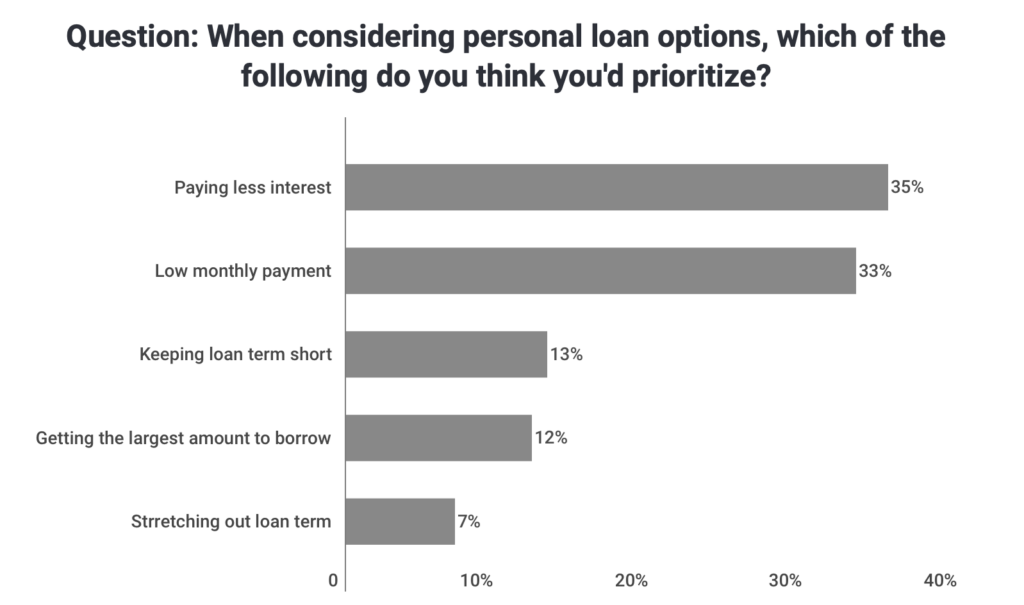
Experian’s survey found that low interest rates and low monthly payments are the two leading considerations for most personal loan borrowers. Slightly more respondents said minimizing total interest was their most important consideration than said obtaining the lowest monthly payment was their top priority.
Experian said consumers can potentially save hundreds or thousands of dollars by comparing personal loan offers, much as they would when shopping for credit cards or mortgages.
The company said its Experian personal loan comparison platform allows applicants to review offers from multiple lenders and compare APRs, monthly payments, repayment terms, funding speeds and loan amounts before deciding whether to apply.
Experian emphasized that its marketplace matches consumers with loans suited to their credit profiles, but borrowers ultimately decide which loan to pursue. The company said evaluating both borrowing costs and other loan features can help consumers select the offer that best meets their needs.