

ASHEVILLE, N.C. — In remarks in which the words “credit union” could have been substituted for “community bank,” Treasury Secretary Scott Bessent used a gathering of G20 finance officials and business leaders Monday to argue for lighter financial regulation, saying rules adopted after the 2008 financial crisis have disproportionately burdened community banks.
Bessent told executives attending the U.S.-led G20 gathering that smaller financial institutions should have the same opportunity to compete as the nation’s largest banks.
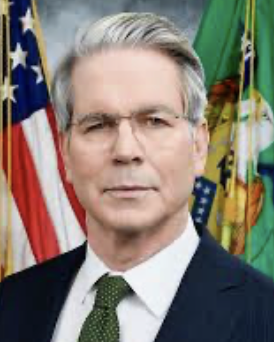
“To expand opportunity for all Americans, the banks that serve Main Street must have the same chance to succeed as those that serve Wall Street,” Bessent said in prepared remarks first shared with Axios.
Bessent pointed to a recent easing of capital requirements for qualifying community banks, saying the change could free tens of billions of dollars for small-business and consumer lending.
Bessent Blames Regulation for Decline in Small Banks
According to Axios, Bessent argued that regulations imposed following the financial crisis contributed to the disappearance of about half of the nation’s small and community banks.
He also questioned whether the increased regulation and supervision had accomplished its intended goals, pointing to the major regional bank failures of 2023.
“Yet in 2023, all that supervision did little to spare our country from suffering three of the largest bank failures in its history,” Bessent said, according to Axios. “Dodd-Frank was supposed to end ‘too big to fail.’ Instead, it created ‘too small to succeed.’”
The Trump administration has moved to loosen financial regulations, including capital requirements adopted after the 2008 financial crisis, Axios reported.
Regulators have proposed broader changes that would modestly reduce capital requirements for large banks while producing larger reductions for smaller institutions.
Private Sector Given Larger G20 Role
The administration also is using the G20 gathering to give business leaders a larger role in discussions traditionally dominated by finance ministers and central bankers, Axios reported.
JPMorgan Chase CEO Jamie Dimon and Goldman Sachs CEO David Solomon were among the business leaders participating in the gathering.
Other attendees included incoming Truist CEO Michael Lyons, Circle President Heath Tarbert, Citibank Global Head of Digital Assets Ryan Rugg, 3M CEO Bill Brown, Eli Lilly CEO David Ricks and Deere CEO John May.
“Participants have … emphasized the importance of soliciting input as policymakers shape decisions, not after businesses absorb their effects,” Bessent said.
New Bank Applications Cited as Evidence
Bessent also pointed to an increase in applications for new, or de novo, bank charters as evidence that financial companies are responding to the administration’s regulatory approach.
The trendline is similar to that in credit unions, where applications for de novo CUs remain relatively scarce.
“Confidence in the direction of travel under President Trump led to more applicants for new bank charters in the first year of his second term than those of the last administration combined,” Bessent said, according to Axios.
Axios noted, however, that much of the increase has come from fintech and digital asset companies, including Coinbase and Ripple, seeking charters that would allow them to operate more like traditional financial institutions and reduce their dependence on partner banks.
Bessent said the administration views financial deregulation as part of a broader strategy aimed at increasing investment, lending and economic growth.






One Response
He is EXACTLY correct, which is why I started the Endangered Small Credit Union Defense (www.endangeredsmallCUdefense.org).
-Doug Wadsworth