
WASHINGTON — The Defense Credit Union Council is pressing Congress to advance a series of legislative and regulatory changes it says would expand credit union lending, improve access to financial services and provide greater regulatory certainty, particularly for military families, veterans and rural communities.
In three separate communications with House committees, DCUC called for changes involving interstate lending, veteran-owned small businesses, rural financial access and regulation of credit unions and the Consumer Financial Protection Bureau.
The council’s recommendations include changes to CFPB oversight, clarification of state interest-rate rules for interstate lending, relief from the credit union member business lending cap for loans to veteran-owned businesses and modernization of field-of-membership rules.
DCUC Backs Broad CFPB Overhaul
DCUC endorsed the Consumer Financial Protection Accountability and Reform Act of 2026, introduced by House Financial Services Committee Chairman French Hill (R-R) and Financial Institutions Subcommittee Chairman Andy Barr, R-Ky.
The legislation would make several changes to the CFPB, including:
- Bringing the bureau under the regular congressional appropriations process.
- Requiring additional cost-benefit analyses and retrospective reviews of regulations.
- Establishing a dedicated inspector general.
- Raising the threshold for direct CFPB supervision from $10 billion to $30 billion in assets.
- Allowing eligible credit unions to elect supervision by their prudential regulator.
- Requiring greater coordination with the National Credit Union Administration and state regulators.
- Establishing a voluntary safe harbor for qualifying small-dollar loans.
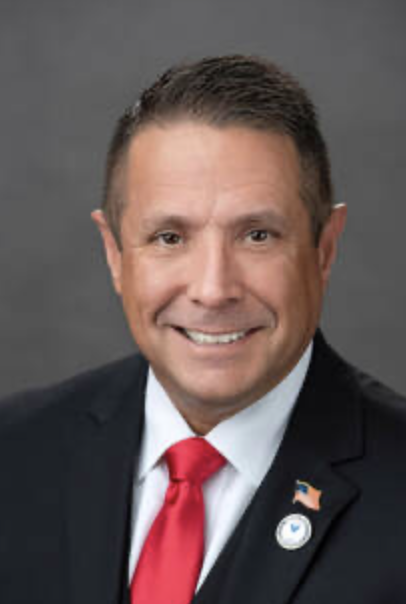
“Chairmen Hill and Barr have produced serious legislation that recognizes consumer protection and regulatory accountability are not competing objectives,” DCUC President and CEO Anthony Hernandez said.
Hernandez, a retired U.S. Air Force colonel, said the changes would help preserve access to affordable financial services for servicemembers, veterans and military families.
DCUC also urged lawmakers to go further by replacing the CFPB’s single-director structure with a bipartisan, five-member commission. The council proposed Senate-confirmed commissioners serving staggered terms, with no more than three members belonging to the same political party.
“A bipartisan commission is the missing piece,” DCUC Chief Advocacy Officer Jason Stverak said.
Interstate Lending Rules Targeted
In separate comments to Hill and House Financial Services Committee ranking member Maxine Waters, D-Calif., DCUC urged lawmakers to advance H.R. 7866, the American Lending Fairness Act of 2026.
DCUC said the legislation would clarify how state interest-rate opt-outs under the Depository Institutions Deregulation and Monetary Control Act apply to interstate lending. The council urged lawmakers to preserve the bill’s application to federally insured, state-chartered credit unions.
Recent state opt-out laws and litigation have created uncertainty about which state’s interest-rate laws govern loans that cross state lines, potentially creating a state-by-state compliance patchwork, DCUC said.
“For military families, mobility is a fact of life,” Hernandez said. “Their access to a trusted credit union and responsible financial services should not change simply because a service member receives orders to relocate.”
DCUC urged lawmakers to:
- Support H.R. 7866 and report it favorably.
- Maintain its application to federally insured, state-chartered credit unions.
- Reject amendments creating different or less favorable interstate lending rules for credit unions.
- Continue enforcement against predatory lending and sham partnerships without undermining responsible credit unions or the dual-chartering system.
Veteran Business Lending Cap Targeted
DCUC also submitted comments for a House Small Business subcommittee hearing examining future resource needs and small-business opportunities.
The council called for greater access to capital for veteran-owned and rural small businesses, targeted regulatory relief and modernization of credit union field-of-membership rules.
DCUC said about 1.76 million veteran-owned businesses employ 5.3 million Americans and generate nearly $963 billion in annual revenue.
One focus is the federal member business lending cap, which generally limits a credit union’s aggregate member business loans to 12.25% of assets.
DCUC supports the Veterans Member Business Loan Act, H.R. 507 and S. 110, which would exclude loans to veteran-owned businesses from that calculation. The legislation would leave underwriting, regulatory supervision, capital and safety-and-soundness requirements in place.
“No veteran with a sound business plan should be denied a responsible loan because the credit union prepared to serve that veteran has reached an outdated statutory ceiling,” Hernandez said.
Rural Access, SBA Lending Also Addressed
DCUC also urged Congress and federal regulators to reduce duplicative reporting and examination requirements, provide clearer compliance expectations and reasonable implementation periods, and more regularly review regulations for requirements that no longer address material risks.
The council supports targeted changes to the Dodd-Frank Act’s Section 1071 small-business lending requirements to reduce what it called disproportionate compliance burdens on smaller financial institutions while retaining fair-lending and community-development objectives.
DCUC also recommended modernizing credit union participation in the Small Business Administration’s 7(a) loan program by simplifying requirements, improving technical assistance and eliminating administrative barriers.
The council said regulatory relief alone would not address financial access problems in rural and underserved areas because field-of-membership restrictions can prevent credit unions from serving communities even when they have the resources to do so.
DCUC called on Congress to revive legislation modeled on previous proposals to expand credit union access in underserved communities and banking deserts, including areas surrounding military installations, National Guard facilities and defense-related employers.
“Access to capital and access to financial institutions are fundamental to economic opportunity,” Hernandez said. “Credit unions are ready to serve more veteran entrepreneurs, rural businesses, and underserved communities. Congress can help make that possible by removing outdated barriers while preserving the accountability and protections that borrowers and communities deserve.”