

By Doug Wadsworth

Good directors do not quit over money (especially because there isn’t a stipend at small credit unions). They quit because the job got miserable and/or stopped meaning anything.
You are the paid professional. They are unpaid officials. Their job should probably only take about 20 hours a year: a meeting of an hour or two, an annual meeting, and a short planning session. If you make them do your job after dinner, they probably won’t stick around.
Feed Them, and Get Them Home
I suggest you hold the meeting at a nice restaurant, and the credit union pays. Find a quiet corner. Start at 5:30 and be done by 7:00. I tried basement meetings with takeout when I first became CEO–it was weird, the meetings went to long, and it was stressful, So, for the past 18 years we have met over dinner. They show up, enjoy eating and chatting, run though a brief meeting, and they get home at a decent hour.
Likewise, try to keep the packet around 30 pages, never more than 40. Put the income statement next to the budget, and have several colorful graphs. When it comes to policies or discussion, bring a clear recommendation, not a half-baked idea for seven unpaid people to debate until the waiter wants the table. Five or seven directors is enough and when a topic starts running long, the chairman should table it. The weeds should be yours (again, since you are the one getting paid).
Stay at 30,000 Feet
Directors should not be critiquing the newspaper ad, setting a teller’s pay, or second-guessing loan decisions. A typical feature of failing credit unions is a board that micro-manages the CEO. The other typical feature is a board that has checked out.
They belong on the high ground: the plan, the budget, policies (not procedures), rates and fees, your salary, and your bonus.
1% ROA is Not the Mission
Should a not-for-profit be profitable? Yes. Losing money every month is a red flag. The industry treats a 1% ROA as the holy grail, so congratulations if you get there. However, that’s not the point.
When net worth is strong, we are supposed to start handing the extra back to members–that is the whole point! Lower fees, better loan rates, special dividends. Be prepared for that to knock ROA down. Ours dropped below 0.50% for the first time in almost 20 years when we really started giving more back to our members this past year. After two decades getting those ratios off the floor, it wasn’t easy – but it was great for our volunteers to really see us healthy enough to put the mission into action.
Put it in the Minutes
When you are healthy enough to start really giving back to members, be sure and write it in the minutes so examiners know it was intentional, because they will not love a lower ROA. But you don’t exist for examiners. Their job is protecting the insurance fund and regulatory compliance, not member value. A credit union sitting on a 13% or 14% net worth ratio with no plan to return the excess is probably missing the point – especially if we expect to keep our tax-exempt charter?
Hopefully, your directors did not join to help you win a ratio contest; they joined to help community neighbors with few other options. Keep the meetings short. Keep them out of the weeds (the best you can). Give the money back. That is how you hold onto good directors.
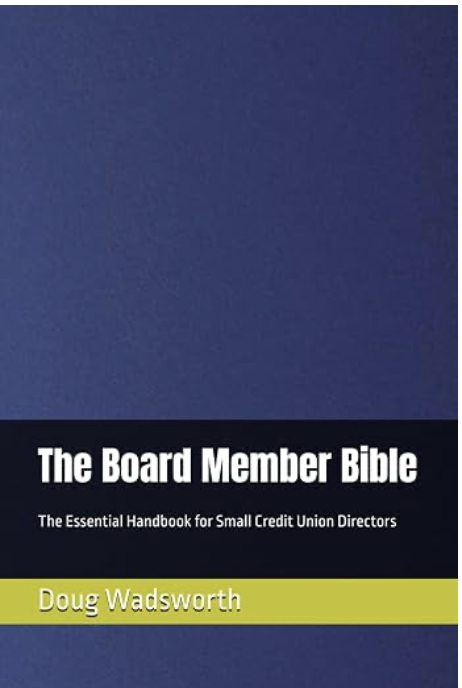
Doug Wadsworth is president of Tri-CU Union in Kennewick, Wash., and president/founder of the Endangered Small Credit Union Defense. His handbook for small credit union officials, The Board Member Bible, is available on Amazon.




One Response
Doug-
I don’t necessarily disagree with the need to “feed” directors. That said, how does the amount spent on such meals scale…it it one thing at a $75 million CU such as yours…what about a $7.5 million CU…or $750,000 CU? Interested in your thoughts!!