WASHINGTON — Auto loan debt is equal to at least half of residents’ annual income in 170 U.S. cities, according to a WalletHub analysis that highlights the growing affordability challenges facing vehicle buyers.
WalletHub said it compared median auto loan balances with median incomes in more than 2,500 cities and found some communities where vehicle debt approaches an entire year’s income.
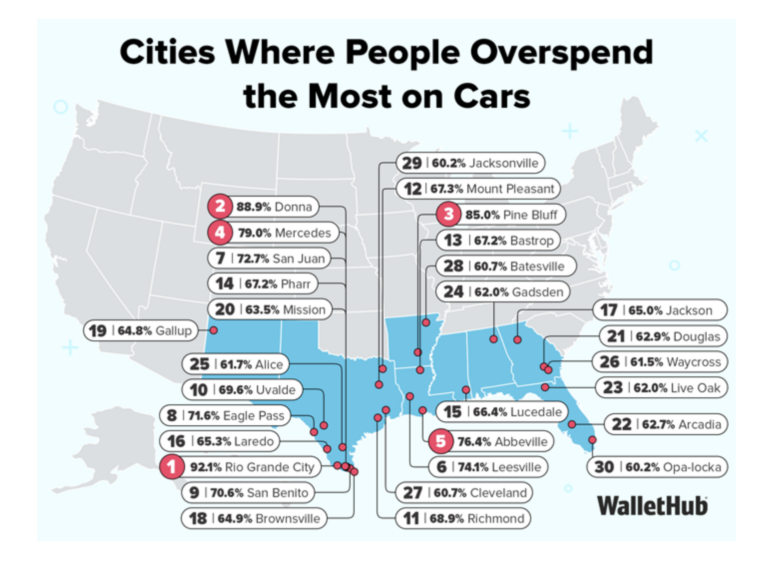
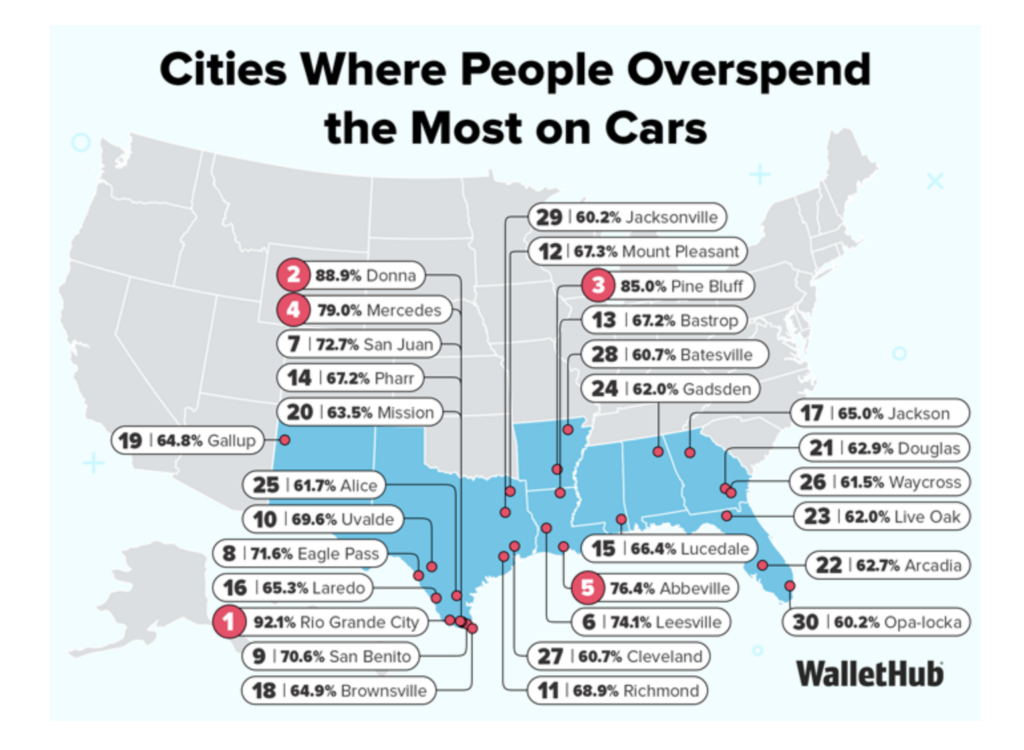
Rio Grande City, Texas, topped the rankings, with a median auto loan balance of $33,802, equal to 92% of the city’s median income.
Donna, Texas, ranked second at 89%, followed by Pine Bluff, Arkansas, at 85%.
Other cities with particularly high auto-debt-to-income ratios included Mercedes, Texas, at 79%; Abbeville, Louisiana, at 76%; Leesville, Louisiana, at 74%; and San Juan, Texas, at 73%.
Risk of Falling Behind
WalletHub analyst Chip Lupo said in a statement that high auto debt can become particularly difficult for consumers who are also carrying credit card, personal loan, student loan and mortgage debt.
“Many Americans are overspending on cars; in 170 cities, the average resident’s auto loan debt is the equivalent of half or more of their yearly income,” Lupo said.
Consumers dealing with high vehicle debt alongside other financial obligations could face an increased risk of missing payments and having their vehicles repossessed, he said.
Lupo said consumers can reduce that risk by purchasing less expensive used vehicles or making larger down payments to reduce the amount they need to borrow.
Auto Loan Balances Reach $1.71 Trillion
The WalletHub findings come as Americans continue to carry historically high levels of auto debt.
Outstanding U.S. auto loan balances increased by $28 billion during the second quarter to $1.71 trillion, according to Federal Reserve Bank of New York data cited by WalletHub.
The increase follows strong vehicle sales in 2025. Auto sales rose nearly 2% last year to their highest annual volume since 2019.
The market is expected to weaken this year, however. Cox Automotive has forecast a 2.9% decline in new-vehicle sales during 2026.
WalletHub’s analysis suggests that even if vehicle sales slow, borrowers in many communities are already carrying auto loan balances that consume a significant share of their annual income.