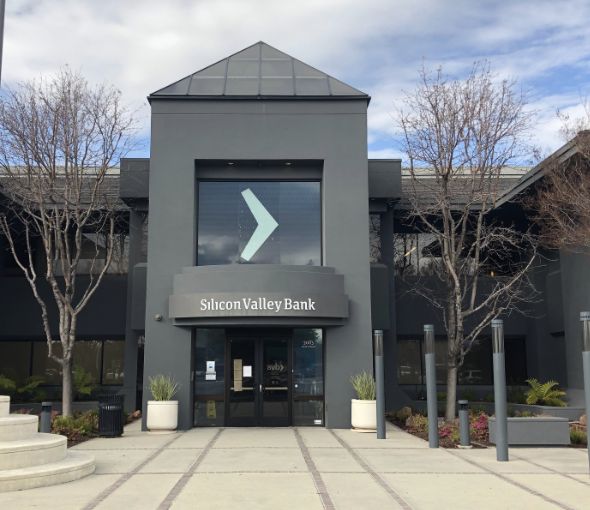
WASHINGTON — A new Federal Reserve inquiry into the 2023 collapse of Silicon Valley Bank concluded that supervisors could have anticipated and prevented the bank’s failure, challenging parts of an earlier review led by former Fed banking regulator Michael Barr, a new report states.
Michelle Bowman, the Fed’s vice chair for supervision, disclosed the preliminary findings Friday during remarks in London, according the Wall Street Journal. She said the inquiry found that, as early as a year before SVB failed, Fed supervisors “knew, or should have known” about risks developing at the bank but failed to intervene promptly.
The conclusions triggered sharply partisan reactions even though the full report has not been released and Bowman did not say when it would become public, the Journal reported.
White House spokesperson Kush Desai blamed Barr, Bowman’s predecessor, for the failure, telling the Journal that Barr “failed to do his job throughout this debacle.” Desai described Barr’s own 2023 review as “politicized and self-serving.”
‘Wasted Taxpayer Resources’
Sen. Elizabeth Warren of Massachusetts, the ranking Democrat on the Senate Banking Committee, criticized Bowman’s inquiry, saying she had “wasted taxpayer resources” on an “autopsy that magically and conveniently exonerates her.”
Bowman, who was appointed to the Fed’s Board of Governors by President Donald Trump in 2018, voted for a 2019 rule that eased capital and liquidity requirements for banks of SVB’s size. The rule implemented a 2018 law signed by Trump that rolled back portions of the Dodd-Frank financial overhaul adopted after the 2008 financial crisis.
Barr, a Biden appointee who favored stronger bank regulation, was the Fed’s top banking regulator when SVB failed in March 2023. Fed Chair Jerome Powell directed Barr to conduct a review of the collapse shortly afterward, the Journal said.
Execs are Faulted
Barr’s report faulted SVB executives for failing to manage the bank’s interest-rate and liquidity risks but also identified shortcomings in Fed supervision. It cited the 2019 regulatory changes as one reason oversight of SVB proved inadequate.
Bowman said the new third-party review rejected the conclusion that regulatory changes were responsible for the supervisory failures.
Despite those differences, the two reviews reached some similar conclusions, the Journal reported. Both found that SVB was destabilized by unrealized losses on its securities portfolio and that its executives were unprepared to manage the resulting financial stress.
Both also identified a risk-averse culture among Fed supervisors.
Better to ‘Take No Action’
Bowman said employees believed “it was personally safer to take no action unless they were certain the action was exactly right.” Barr’s 2023 review similarly found that supervisors waited “to form ironclad assessments,” creating a “hesitancy to move decisively.”
Bowman also challenged assertions that social media played a central role in accelerating the bank run. She said the new review found that 96% of social-media discussion about SVB occurred after the bank’s failure had become inevitable, according to the Journal.
The dispute over the reports has renewed concerns among some Fed officials that the new findings could be used by the White House as grounds to seek Barr’s removal from the central bank’s seven-member governing board.
Barr stepped down as vice chair for supervision in 2025, shortly before Trump returned to office, to avoid a potential legal dispute over whether a president could remove him from that leadership position. He remains a Fed governor.
Trump appointed Bowman to succeed Barr as the central bank’s top banking regulator last year.