DETROIT — Nearly one in four homeowners is making extra payments toward mortgage principal each year, but new research from Rocket Mortgage finds borrowers with the lowest interest rates are the most likely to accelerate repayment — even though homeowners with higher rates stand to save substantially more by doing so.
Rocket Mortgage said its analysis of nearly 3 million loans across all 50 states over five years found that roughly 25% of borrowers make at least one additional principal payment annually. Among borrowers who pay extra, the average additional amount is equivalent to about one monthly mortgage payment each year.
The findings suggest that decisions about paying down a mortgage are being shaped by household cash flow and the psychological appeal of eliminating debt, rather than strictly by which borrowers would receive the greatest financial benefit.
“To have a quarter of your entire book of business making extra payments suggests that it’s not just math, it’s psychology,” Bill Banfield, chief business officer at Rocket Mortgage, said.
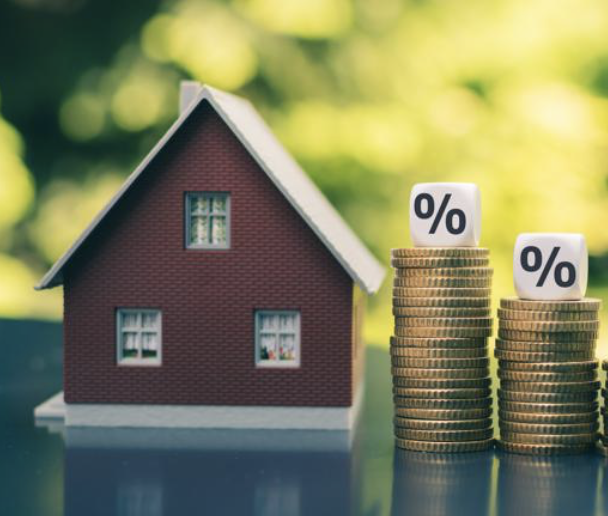
One Extra Payment Can Save $68,000
The potential savings from accelerated payments can be substantial, particularly at current mortgage rates.
Rocket Mortgage calculated that a borrower with a newly originated 30-year fixed-rate mortgage of $221,977 — the company’s median loan amount — at 6.67% could save approximately $68,000 in interest and repay the mortgage nearly six years early by making the equivalent of one additional monthly payment each year.
A borrower making slightly more than two additional monthly payments annually could eliminate the mortgage a full decade ahead of schedule, according to Rocket Mortgage.
But the company’s analysis found that the borrowers most likely to make extra payments aren’t necessarily those with the most to gain financially.
Low-Rate Borrowers More Likely to Pay Extra
Homeowners who obtained mortgages during the ultra-low-rate environment of 2020 through 2022 are more likely to make extra principal payments than borrowers who purchased homes after rates increased, Rocket Mortgage found.
The company said the pattern appears to be driven at least partly by household budgets.
Borrowers with lower mortgage rates generally have smaller required monthly payments, potentially leaving them with greater capacity to put additional money toward principal. Homeowners with higher-rate mortgages face larger monthly housing payments as well as higher costs for other household expenses, making additional mortgage payments more difficult.
When higher-rate borrowers do make additional payments, however, Rocket Mortgage found they tend to make significantly larger lump-sum contributions.
Those payments are particularly common shortly after a mortgage is originated, suggesting some borrowers place greater emphasis on reducing debt and building equity during the early years of homeownership.
Paying Mortgage Early Isn’t Always Best Option
Accelerating mortgage payments may not always be the best use of a homeowner’s available cash, particularly for borrowers who locked in historically low rates and have other, more expensive debt.
About one-fifth of current mortgage holders have interest rates below 3%, according to information cited in the analysis.
For those borrowers, paying additional principal may provide less financial benefit than eliminating credit card balances, personal loans or other higher-cost debt.
Credit card interest rates, for example, commonly run into the double digits, meaning borrowers carrying both a low-rate mortgage and revolving credit card debt could potentially save more by directing additional money toward the credit card balance.
“For a lot of people, even if their mortgage is their largest debt, dollar-wise, it also tends to be their debt with the lowest interest rate,” NerdWallet lending expert Kate Wood said.
The trade-off has become particularly pronounced because many homeowners who bought or refinanced during the low-rate period remain locked into mortgages well below prevailing rates.
For those homeowners, investing surplus funds or paying down higher-interest obligations could potentially produce a better long-term financial result than accelerating repayment of a mortgage carrying a rate below 4%.
Psychology Also Influences Decision
Rocket Mortgage’s findings also point to a longstanding tension between financial optimization and the emotional appeal of owning a home without a mortgage.
Older homeowners tend to place greater emphasis on eliminating debt, while younger borrowers may be more inclined to invest surplus funds rather than use them to accelerate mortgage payments, according to the analysis.
For some borrowers, paying off a home early also provides a benefit that is difficult to quantify: the security of eliminating what is typically a household’s largest monthly obligation.