LOST PINES, Texas–Three credit union CFOs are sharing what they are doing on both sides of the balance sheet, how they’re preparing for rising rates, and offering views on what they see ahead.
The perspectives were shared during Catalyst Corporate’s Strategic Summit meeting here during a panel discussion.
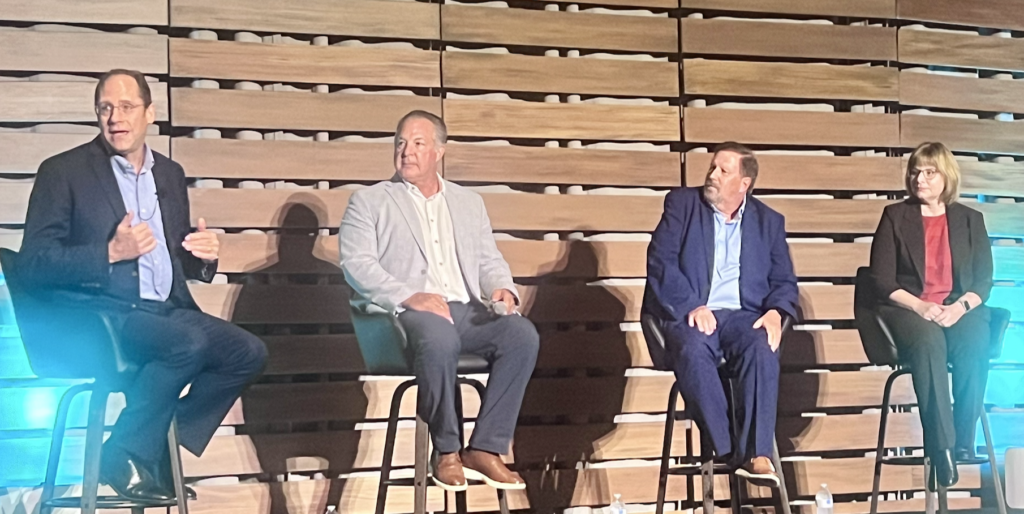
The panelists included:
- Jody Caraccioli. CFO, Neighbors FCU, Baton Rouge, La.
- Bob Bogart, EVP/CFO, Georgia United Credit Union, Duluth
- Martha Prestin, CFO, O Bee Credit Union, Olympia, Wash.
The panel was moderated by Mike McGinnis, SVP/CIO with Catalyst Corporate.
Here is a look at some of what was discussed:
McGinnis: First, tell us about your credit union and where you are focused.
Caraccioli: We are at about $1.4 billion in assets. We are focused on deposit growth like everyone
Bogart: We’re about $2.6 billion in assets. Wes started as a teachers credit union and now have a community charter across about two-thirds of Georgia. From a balance sheet perspective, like everyone else deposits are king and will be our toughest challenge for next year.
Prestin: The Olympia Brewery was our original sponsor—the credit union was founded by my great-grandfather. I had been on the board and then became CFO. We also have a low-income designation. We are strong on loan growth but struggle with deposits, so balance will be important.
McGinnis: How will lending change in 2027?
Bogart: We really looked at our mortgage department, and it was really on fire when it came to home equity credit lines; the first mortgages were just really dogging it. So, what we decided to do was implement a strategy of dropping the pricing on our first mortgages. We made a clear decision that we’re going to hold them in portfolio.
The nice thing is that when you’re when you’ve got almost equal (balances) in your home equity lines and your first mortgages, they almost become a natural hedge against each other. You’ve got long term asset at a fixed rate, and you’ve got a much shorter, variable rate and they work very well in tandem together. We’ve been doing this now for about 7-8 months and we’ve been really focused on this. Our mortgage volume is higher than it was back in 2021 and 2022 over the last six months. So, we’re getting strong growth from the mortgage side, and I think the strategy works very well when we do our asset liability.
Prestin: We are taking a different approach. We don’t hold any 30-year mortgages on our books. We have focused on indirect and consumer lending products, home equity loans, and really keep things short on our balance sheet. We are also looking at increasing our commercial lending portfolio.
Caraccioli: We have capacity for more first mortgages, and we plan on putting on more of those. We are also looking at niches like mobile home lending. And with rates going up we are seeing runoff from our indirect lending and expect to be more profitable next year.
Bogart: We have been asking the what if? As part of our rollout, we have been developing new products for our mortgage lenders, such as first-time homebuyer programs. We have a 2/20 product, a two-year adjustable, which is for first time homebuyers, many of whom are looking to get over that initial hurdle. The other product is a 20/20 loan product. It’s a 40-year amortization with one reset after 20 years. Longer terms are becoming the norm on auto loans on an asset that depreciates. So, we are using a longer term on an asset that appreciates. You have to start thinking outside the box.
We also have a pretty large foundation, and we are really starting to reevaluate that and take some of the $750,000 we put into it each year and refocus on our members, such as with some downpayment assistance grants.
McGinnis: Tell us about your expansion on the commercial side.
Prestin: In 2020 we hired a team from a local commercial bank. It was a slow start, but we’ve seen a lot of growth. We were one of the first to offer accounts to the cannabis industry, so we have beer and now cannabis. We focused on commercial real estate, and it has been very solid for us. We get a decent premium from our cannabis members, but it takes some special knowledge of how the cannabis business operates. It’s all direct, in-house, and they reprice every five years. We’re starting to hit our cap and we are a LICU. The rules say you should have no cap, but that’s misleading. During our last exam the Washington DFI and NCUA spent a lot of time on it. We now have an exemption of 2.5x our cap.
McGinnis: What are you anticipating with credit expectations?
Caraccioli: We are forecasting it to be consistent with where we are now and hopefully improving.
Bogart: We’re in that same boat. We are not an indirect lender. Our volume on direct lending is almost at the same level as an indirect shop. One thing we’re struggling with going into next year is trying to compete with some of the captives. New car lending is trailing but we’re making it up with used car lending. We’re also getting quite a bit of demand for credit cards. We’ve never had a huge portfolio so we’re just now really starting to focus on it. But most of our loan volume is from mortgages and HELCs.
Prestin: We are a big indirect lender, and we are seeing some fraud and credit problems. We are using AI to help reduce first payment loss. We start the repo process now at 75 days rather than 90, which we have found helps members stay in their vehicles.
McGinnis: On the deposit side, talk to us about all things liquidity.
Bogart: I will go back to last time rates spiked in 2022-23. Our goal when we saw rates spike was how to keep the deposits. One thing we looked at was, we had over $600 million in our money market product. Rather than trying to reprice the existing money markets. we created a whole new product and went out with a 4.5% rate (rather than 5) and we were able to grow into it. Now, money markets is almost down to $100 million, but we’ve been growing at 7-10% in deposits in a higher-end savings account, where we are around 3.15% on the rate. We are looking at some strategies to reinvigorate the old money market in a new way. We’re trying to be inventive rather than being reactive. Keeping it stable is where we have been focused.
Prestin: We run about 105%-110% on the loan to share. So, we have been participating in Catalyst’s’ Loan Exchange. You have to make sure you are pricing them appropriately so you can make money on the sale. Our last participation sale was about $20 million. It offers great liquidity for us but also allows smaller credit unions to buy a smaller piece of that. We retain the servicing.
McGinnis: What else are you doing with your balance sheets?
Bogart: One thing people looked at with the banks that failed in 2023 was liquidity. We went back and looked at who has our collateral and who controls it. Most of you have a line with the Federal Home Loan Bank and it’s probably collateralized with your (lending). We were getting dinged by the regulators, because as soon as you pledge it it’s considered off-balance sheet It caused us to look at our collateral. We have the lines with the FHLB, and then a line with Catalyst for the excess left on the balance sheet. We had Catalyst take a look at our portfolio and we decided to specifically collateralize using all of our new car portfolio, and we actually got a bump of 50 or 60 basis points by pledging the specific collateral. We pledged our used car portfolio to the FHLB and probably got about $250 million extra in collateral as a result.
Bu the big caveat is you don’t wait until there is a crisis to seek this collateral coverage. If you are going to use the Federal Reserve, get it in place now.