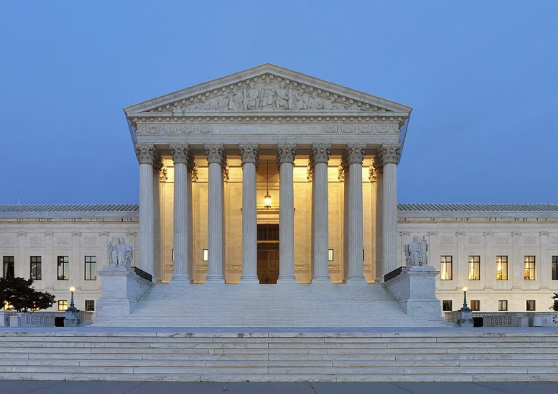
WASHINGTON— The Supreme Court is scheduled to hear oral arguments today in Trump v. Slaughter — the high-stakes case challenging whether a president may fire commissioners of independent agencies without cause. The outcome could reshape the landscape for nearly two dozen agencies, including NCUA, where two former board members are challenging their firings.
The case centers on the 1935 decision Humphrey’s Executor v. United States, which long has protected leaders of independent, multi-member agencies from being dismissed by the president solely for political or policy reasons. As the CU Daily has reported, under that precedent, commissioners could be removed only for “inefficiency, neglect of duty or malfeasance.”
The Supreme Court under Chief Justice John Roberts has been steadily chipping away at agency independence and congressional authority, and analysts have noted that as a young staffer in the Reagan Administration Roberts belonged to a group of lawyers who pushed for more White House control over independent government agencies.
The “time may be ripe to reconsider the existence of such entities, and take action to bring them back within the executive branch,” the future chief justice of the United States advised the White House counsel in a 1983 memo. Independent agencies, he wrote, were a “Constitutional anomaly.”
Origins of Current Case
In March 2025, Rebecca Slaughter — a Democratic appointee to the Federal Trade Commission (FTC) — was dismissed without cause by Donald Trump, prompting her to sue. Lower courts directed her reinstatement as the removals appeared to violate statutory protections. But in September, the Supreme Court let the firing stand while agreeing to hear arguments.
A month after Slaughter’s removal the president fired NCUA board members and Democratic appointees Todd Harper and Tanya Otsuka, who then filed suit in a case that has drawn parallels to that of Rebecca Slaughter
Shifting ‘Whims’
Numerous legal analysts, including in credit unions, have posited that a decision overturning Humphrey’s Executor would dramatically expand presidential control over independent agencies, with critics raising concerns that regulatory bodies once insulated from politics could become subject to shifting policy whims every time a new administration takes over.
All of that makes today’s hearing particularly important for credit unions and NCUA. As reported by Credit Union Daily, the court’s refusal last month to consider the separate lawsuit by the ousted NCUA board members means their fate now likely rides on the outcome of Slaughter.
Indeed, legal analysts have further suggested that the very future of NCUA itself could hinge on how the nine justices rule.
One Viewpoint
Supporters of agency autonomy say a ruling upholding for-cause protections is essential for preserving stability and protecting financial-institution regulators from partisan interference. For the NCUA, such a ruling would safeguard its independence, helping ensure consistent oversight and regulatory clarity, both America’s Credit Unions and The Defense Credit Union Council have said.
A Different Viewpoint
On the other hand, a decision granting the president unfettered removal authority could upend decades of governance norms, making bodies like the FTC, NCUA, the Federal Deposit Insurance Corporation (FDIC), and others more directly subject to political swings, injecting greater uncertainty for credit unions, their members and the broader financial-regulation landscape as new presidents appoint new board members and commissioners with vastly different regulatory viewpoints.
A decision in the case is not expected until the Spring of 2026.
The CU Daily will have full coverage of the arguments made before the court today.