
FORT LAUDERDALE, Fla. — More than half of U.S. adults are now relying on credit cards to cover basic necessities such as groceries, rent and utilities, underscoring a widening “survival gap” in household finances, according to a 2026 survey released by Debt.com that also found many consumer don’t pursue debt relief opportunities.
The findings in the Debt.com 2026 Credit Card survey suggests a shift in how Americans use credit cards — from convenience spending to a financial lifeline. The survey found that 55% of adults are using credit cards to cover essential expenses, while rising inflation and interest rates are pushing many deeper into debt.
Nearly half of respondents said they have already maxed out at least one credit card, and a growing number report carrying larger balances than they did a year ago, according to Debt.com.
‘Mounting Financial Strain’
Howard Dvorkin, a certified public accountant and chairman of Debt.com, said the numbers point to a mounting financial strain among consumers.
“When nearly half of those who have maxed out their cards owe more than $10,000 and a staggering 15% are carrying balances over $30,000, we aren’t just looking at a budgeting issue; we’re looking at a financial emergency,” Dvorkin said. “At these levels, the interest alone can become a barrier to financial stability.”
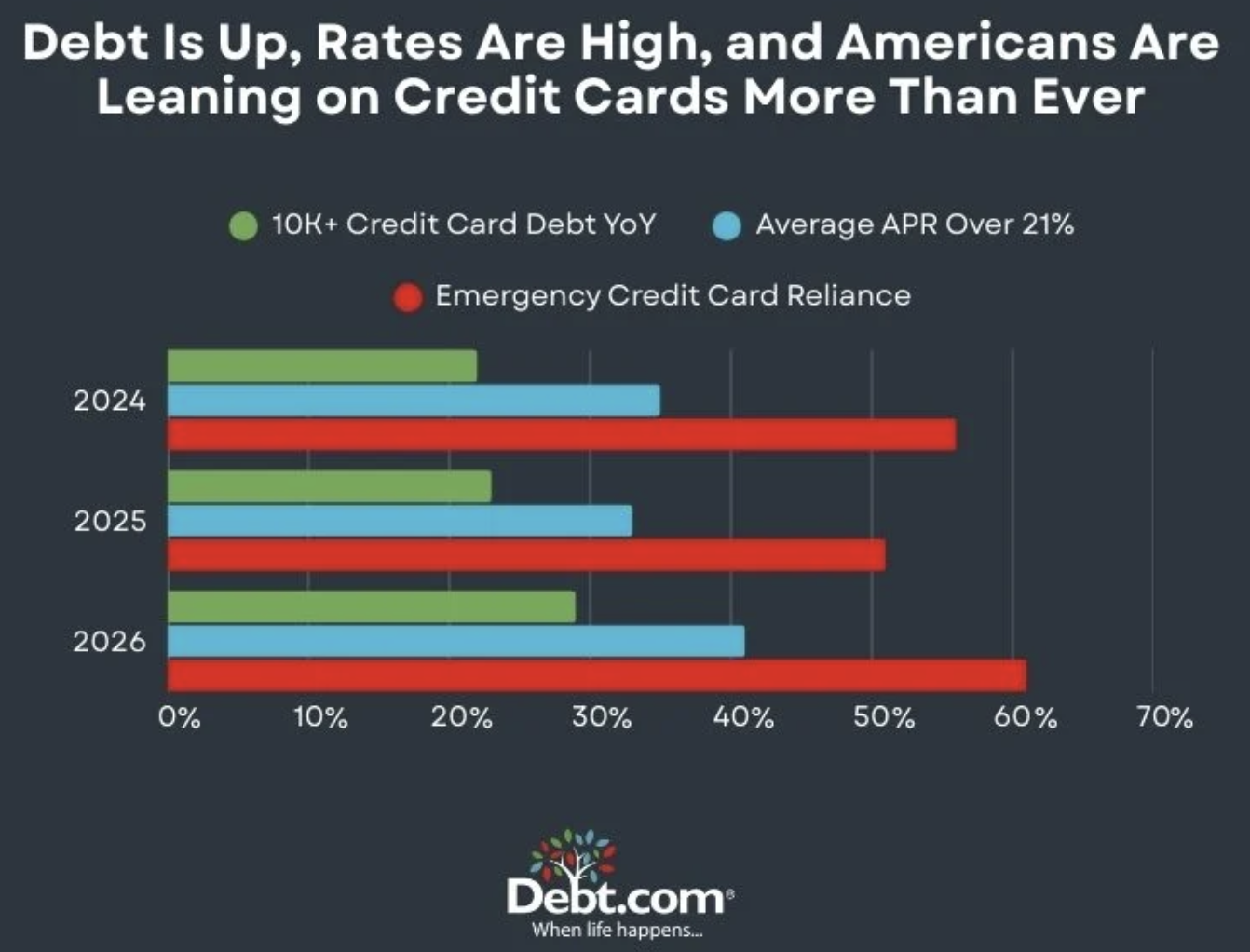
The survey also found a significant rise in Americans carrying five-figure credit card balances. The share of respondents with $10,000 or more in credit card debt rose from 23% in 2025 to 29% in 2026, the largest year-over-year increase in three years.
At the same time, interest rates are adding to the burden. The survey found 41% of respondents report an average annual percentage rate (APR) above 21%, up from 33% a year earlier. Meanwhile, 22% said they do not know their current APR, even as average credit card interest rates exceed 24%.
The Debt Spiral
Debt.com warned that such gaps in awareness can accelerate what it described as a “debt spiral,” where interest charges grow faster than borrowers can pay down principal.
Key Findings
Key survey findings
According to the Debt.com survey:
- 55% of Americans use credit cards to pay for basic necessities such as groceries, rent or utilities
- 46% have completely maxed out at least one credit card
- 57% say persistent inflation has forced them to carry larger monthly balances than a year ago
- 15% of those with maxed-out cards report balances above $30,000
- 80% of respondents who are already maxed out said they would still rely on credit cards if faced with a sudden financial emergency
Emergency Help
The survey also found reliance on credit cards during emergencies rising sharply. After dipping in 2025, the share of Americans who say they would turn to credit cards in an emergency climbed to 61% this year, the highest level in three years, Debt.com reported.
Debate Over Rate Cap
The survey results come amid renewed debate in Washington over credit card interest rates. As the CU Daily has reported, on Jan. 20, President Donald Trump called on banks to cap credit card interest rates at 10% for one year and urged Congress to draft legislation to implement the proposal. The proposal has been strongly opposed by credit unions.
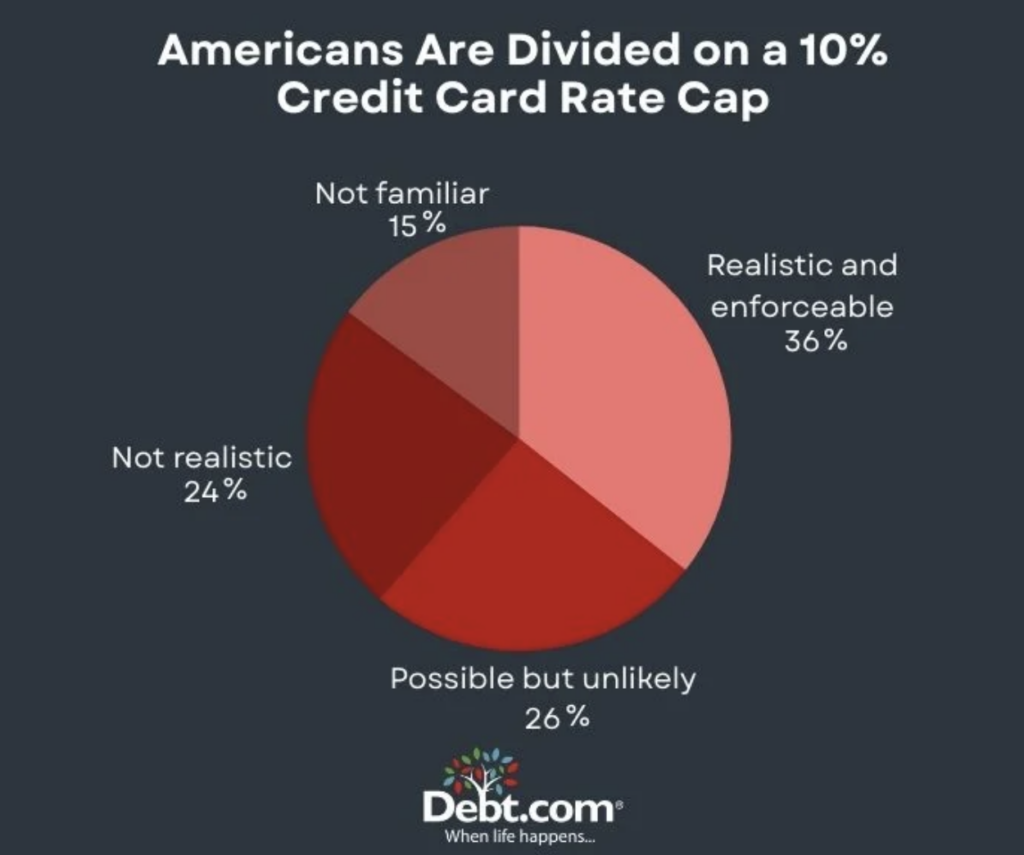
Debt.com said its survey found Americans appear divided on whether the proposal would succeed, but many believe it could provide financial relief.
According to the Debt.com survey:
- 36% believe a 10% interest rate cap is realistic and would personally benefit them
- 35% say such a cap would significantly reduce their debt
- 24% say the proposal is unrealistic
- 6% worry it could make credit harder to access
Generational Differences
Younger and middle-aged Americans are reporting the greatest reliance on credit cards.
Debt.com found:
- Gen X (39%) and Millennials (42%) are maxing out credit cards at far higher rates than Baby Boomers (14%)
- 56% of Gen Z say rising prices have forced them to use credit cards to make ends meet
- 66% of Millennials say they rely on credit cards to get through the month
- 62% of Gen X say inflation has pushed them to rely more heavily on credit
- Millennials and Gen X are also more likely to carry large balances. The survey found 35% of Millennials and 31% of Gen X report credit card debt exceeding $10,000.
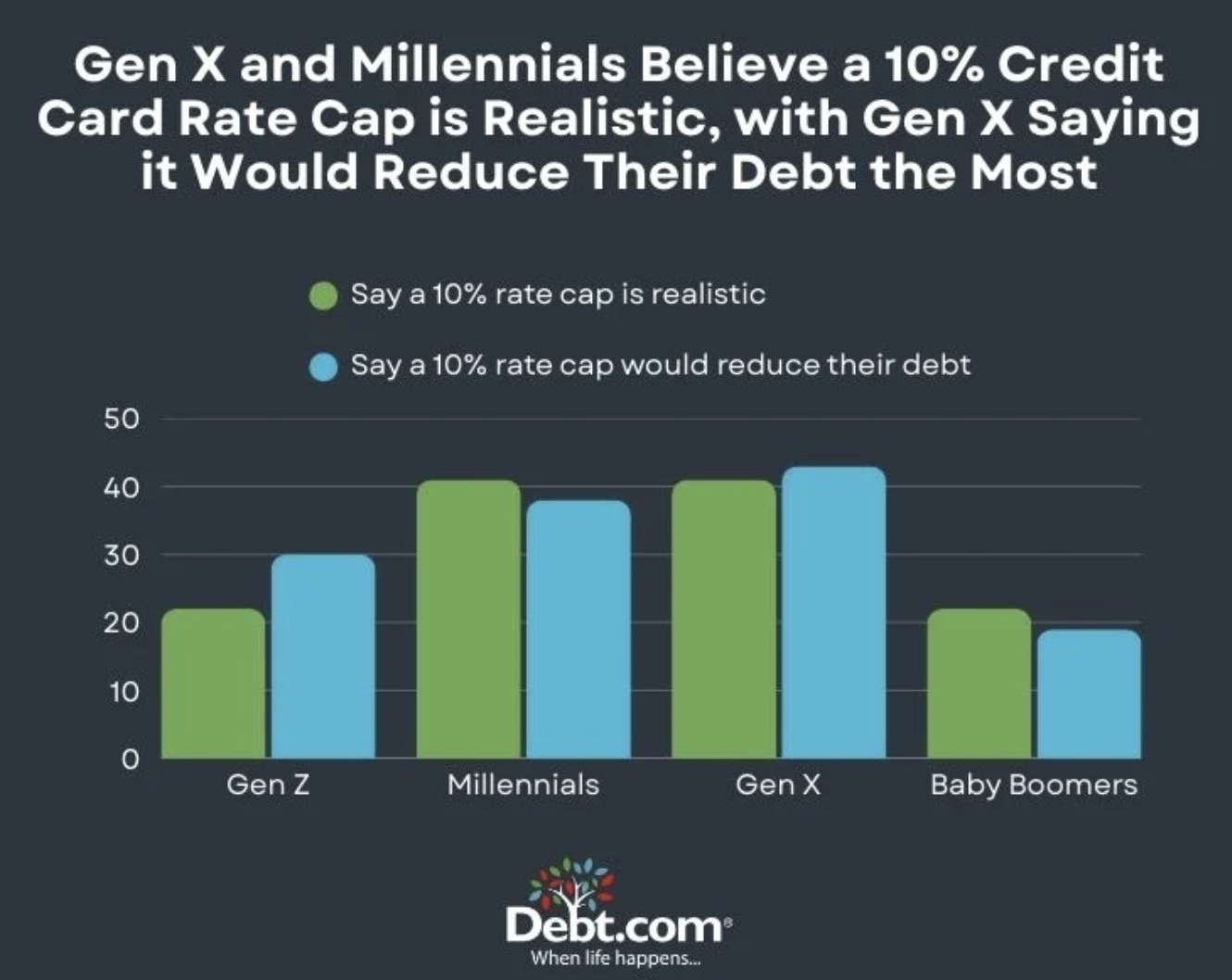
- Gen X respondents were also the most likely to say an interest rate cap would significantly reduce their debt burden, at 43%, followed by Millennials (38%), Gen Z (30%), and Baby Boomers (19%).
Debt Relief Options Often Unexplored
Despite rising balances and high interest rates, many consumers have not explored professional debt relief options, Debt.com reported.
According to the survey:
- 57% have never explored professional debt relief options such as credit counseling or debt management plans
- 46% say they have not pursued structured debt solutions at all