CHICAGO — U.S. credit card balances in 2026 are expected to rise at their slowest pace in more than a decade next year as economic uncertainty weighs on consumers and lenders keep tighter controls on borrowing, TransUnion said in its new 2026 Consumer Credit Forecast.
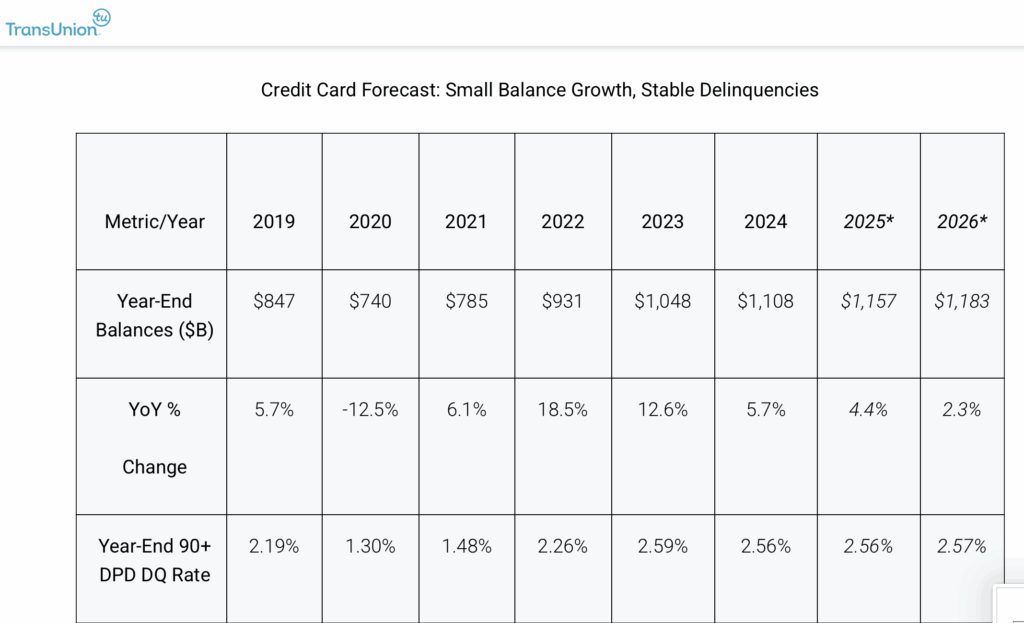
Balances are projected to increase 2.3% year over year to $1.18 trillion by the end of 2026, up slightly from $1.16 trillion in 2025. Aside from a pandemic-related decline in 2020, that would mark the smallest annual gain since 2013, according to TransUnion. The slowdown follows the double-digit growth seen in 2022 and 2023, when inflation and soaring prices pushed more households to rely on credit.
Lenders are cautiously widening access for higher-risk borrowers but are leaning heavily on account-management strategies to prevent delinquencies, TransUnion said.
Delinquencies to be Stable
The report predicts serious credit card delinquencies are expected to remain stable. The share of consumers 90 or more days past due is forecast to edge up by just one basis point to 2.57% in 2026, reflecting tighter underwriting and more active risk management even as households face elevated inflation and shifting interest rates.
The credit outlook comes amid a mixed economic picture. Inflation is projected to hover near 2.45%, and unemployment is expected to rise to 4.5% by late 2026. But anticipated Federal Reserve rate cuts could lower borrowing costs and offer some financial relief.
Trends by Categories
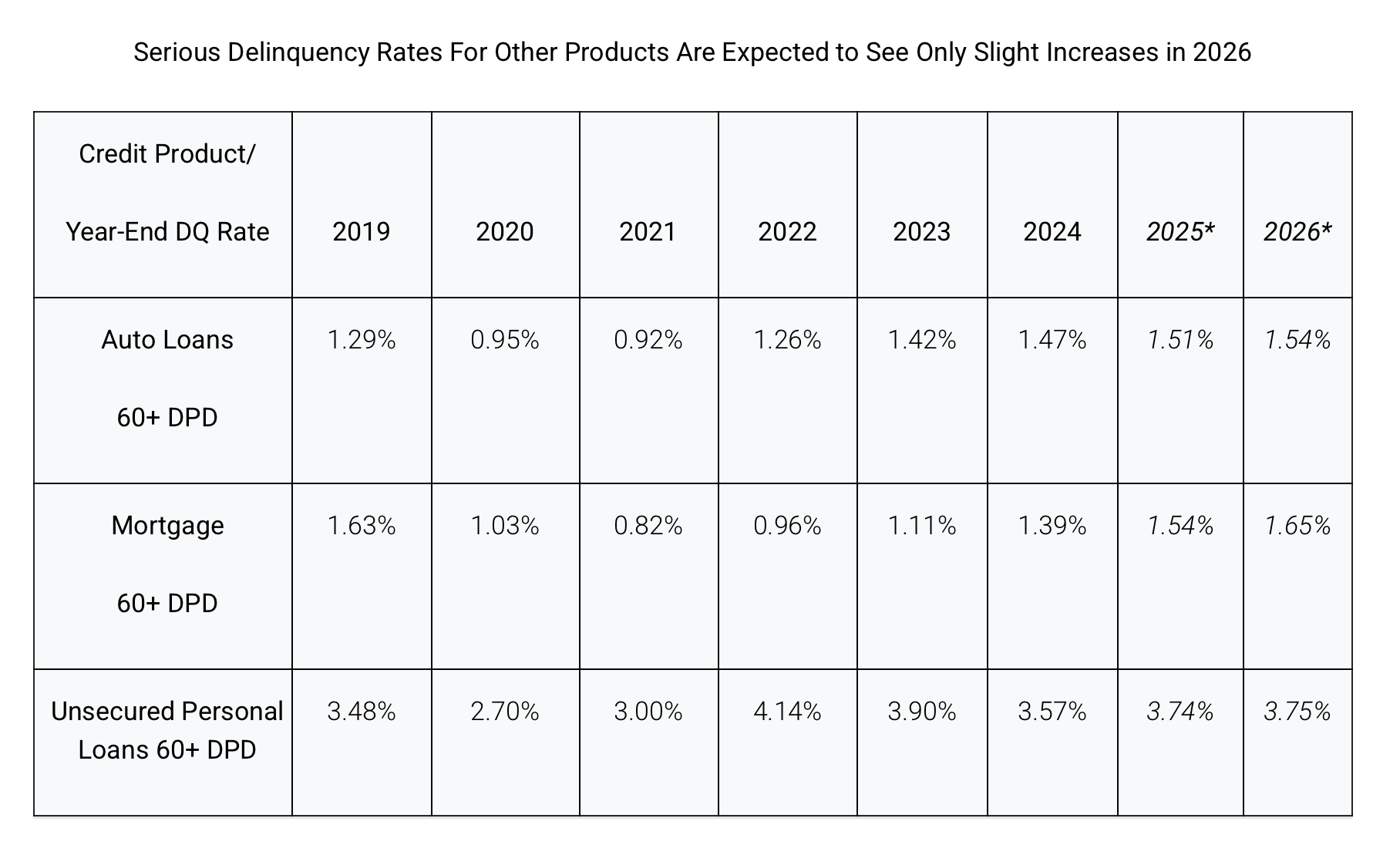
The report shows delinquency trends in other loan categories include:
- Auto loans: Accounts 60 days or more past due are forecast to reach 1.54%, up three basis points, marking the fifth consecutive annual increase.
- Mortgages: Serious delinquencies are expected to rise to 1.65%, an 11-basis-point increase, partly due to higher joblessness.
- Unsecured personal loans: Delinquencies are projected at 3.75%, up one basis point, driven by broader economic pressures and growth in non-prime lending.
“Delinquency rates across most credit products are expected to see slight increases, which is not surprising given the unsettled economic environment,” Michele Raneri, TransUnion’s vice president and head of U.S. research and consulting, said in a statement.
How Consumers Are Managing
Still, she said consumers appear to be managing their finances “reasonably well.”
Jason Laky, executive vice president and head of financial services, said the modest card-balance growth and stable delinquency levels underscore “the relative strength and resilience of consumer credit behavior.”
TransUnion said its forecast could shift if the economy diverges from expectations, noting that stronger-than-anticipated gains in GDP or disposable income could change the outlook.