WASHINGTON — A credit union representative joined with representatives from other financial institutions and law firms during a House Financial Services subcommittee hearing on fraud and scams to say the threat is rapidly escalating and to call for passage of several pieces of legislation and recommending other steps be taken.
During the hearing, titled “Fighting Fraud on the Front Lines: Challenges and Opportunities for Financial Institutions,” members of Congress and industry witnesses said banks and credit unions are often the final line of defense against scams that originate largely outside the financial sector, including on social media platforms, through impersonation schemes and through emerging technologies such as artificial intelligence.
‘Not Abstract Statistics’
Subcommittee Chairman Andy Barr (R-KY) opened the hearing by highlighting the scale of financial losses tied to fraud and cybercrime.
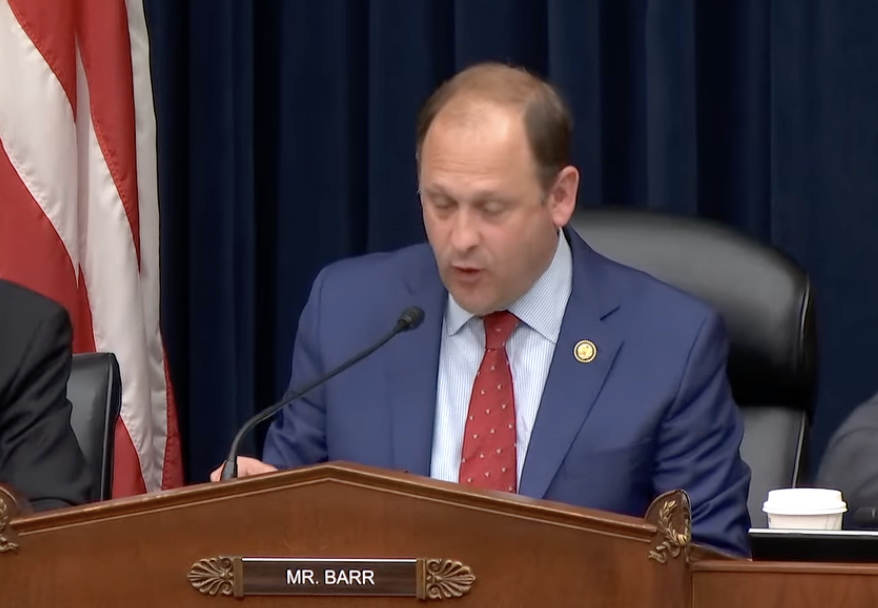
“Fraud and scam losses are not abstract statistics,” Barr said. “They represent retirement savings wiped out, college funds drained and small-business savings accounts emptied overnight.”
Barr said that according to the Federal Bureau of Investigation, Americans reported $16.6 billion in cybercrime losses in 2024, a 33% increase from the previous year.
Criminal networks are increasingly sophisticated, he said, using artificial intelligence, voice cloning, spoofed caller IDs, fake investment platforms and coordinated money-mule networks to deceive victims. Many scams originate on social media platforms or through international criminal networks but ultimately involve transfers through the U.S. financial system.
As a result, banks and credit unions often become the final checkpoint before funds are lost.
Credit Union Rep Testifies
Testifying on behalf of America’s Credit Unions, Kate McKune, general counsel at Park Community Credit Union in Kentucky, said financial institutions face a rapidly evolving fraud landscape.
“Fraud and scams are becoming increasingly more prevalent,” McKune told lawmakers. “Credit unions like mine must contend with an environment where a large share of fraud originates outside the financial sector and criminal sophistication continues to grow.”
Credit unions, she said, invest heavily in fraud detection technology, consumer education and cybersecurity, but the nature of scams often makes them difficult to prevent.
“Sometimes the only viable defense against fraud is preventing it before it occurs,” McKune said. “That process can be technologically demanding, expensive and dependent on timely information sharing between law enforcement, regulators and payment system stakeholders.”
Because credit unions operate as not-for-profit financial cooperatives, she warned that regulatory changes that shift greater liability for fraud losses onto institutions could ultimately be borne by members.
“Any significant fraud loss could impact the financial health of smaller credit unions,” she said.
The Many Faces of Fraud
In what would be no surprise to credit unions on the front lines, witnesses described a wide array of scams targeting consumers, including romance scams, fraudulent online marketplaces, cryptocurrency investment schemes and business impersonation scams.
Romance scams in particular are difficult for financial institutions to stop, McKune said, because manipulation can occur over months or even years.
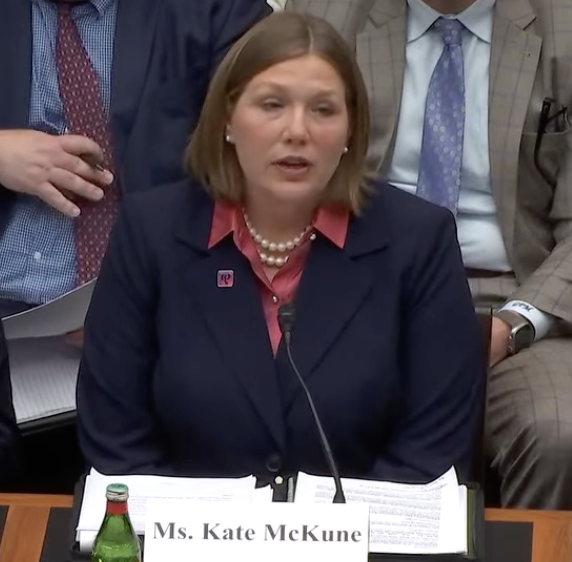
“Victims genuinely believe that their online friend is someone they can trust,” she said. “No amount of circumstantial evidence will change their mind.”
Check fraud has also increased significantly in recent years, she added, suggesting policymakers consider modernizing funds availability rules under Regulation CC to give institutions more flexibility to hold suspicious checks longer.
Financial institutions often have little control over many fraud vectors, McKune said, especially when scams originate through online advertisements or social media platforms.
“As a result, we must resort to warning consumers that anonymous online purchases of goods may mean losing their money,” she said.
Calls for a National Strategy
McKune urged Congress to pursue a coordinated national approach to combating fraud that includes stronger information-sharing frameworks between financial institutions, regulators and law enforcement.
She highlighted several policy priorities supported by the credit union industry, including:
- Expanded authority for interagency information sharing through legislation such as the TRAPS Act and TRACE Act
- A federal consumer education campaign in partnership with industry
- Modernization of funds availability rules, including provisions in the STOP Fraud Act
- Greater use of artificial intelligence and advanced technology to detect fraud
She also called for grant and technical assistance programs to help smaller financial institutions adopt advanced fraud-prevention tools.
“There is no magic bullet to stop fraud and scams,” McKune said. “Criminals manipulate the system and prey on human nature. What is needed is a federal commitment to work with financial institutions in an all-of-government approach.”
Lawmakers Debate Policy Responses
Barr said policymakers must address structural barriers that make it difficult for financial institutions to share information about emerging fraud networks.
“Fraud today is networked across institutions and occurs in real time,” he said. “Yet outdated privacy statutes, antitrust concerns and uncertainty under consumer reporting laws limit the ability of financial institutions to share data.”
He also said funds availability rules were written for an earlier era when the primary concern was banks holding checks too long, rather than criminals exploiting rapid access to funds.
Barr cautioned against proposals that would shift greater liability for scams onto financial institutions when consumers authorize transfers under fraudulent pretenses.
Such policies, he said, could unintentionally encourage additional scams and impose financial strain on smaller community banks and credit unions.
Democrat Flags Concerns Over ID Fraud
Rep. Bill Foster (D-IL), the panel’s ranking member, agreed that fraud losses are escalating and said identity impersonation is a growing concern.
Scammers increasingly rely on artificial intelligence tools, deepfakes and fabricated online identities to deceive victims, Foster said.
During the COVID-19 pandemic, he noted, U.S. taxpayers lost more than $100 billion to fraud and identity scams tied to government relief programs.
A report from the Financial Crimes Enforcement Network identified more than 1.6 million suspicious activity reports linked to identity verification concerns involving more than $212 billion in transactions, Foster said.
Foster highlighted legislation he introduced with Rep. Pete Sessions that would allow states to offer voluntary digital identification tools designed to improve online identity verification.
“Digital identity tools are proven to be more secure and privacy preserving than physical documents,” Foster said.
He also stressed the role of the Consumer Financial Protection Bureau in assisting victims and tracking fraud patterns through its consumer complaint database, particularly for service members and older Americans.
“That work is important,” Foster said. “This committee should put pressure to restore the CFPB so it can continue providing those resources.”

Additional Witnesses
In addition to McKune, other witnesses testifying before the subcommittee included:
- Gay Dempsey, CEO of Bank of Lincoln County, representing the Independent Community Bankers of America
- Patrick McDade, senior vice president for fraud and technology risk management at EverBank, representing the Consumer Bankers Association
- Joseph J. Schuster, partner at Ballard Spahr LLP
- Adam Rust, director of financial services at the Consumer Federation of America
Lawmakers said the testimony will inform potential legislative steps aimed at improving coordination between financial institutions, regulators and law enforcement while modernizing rules governing fraud detection and prevention.
As Barr concluded, the central question facing policymakers is how to give financial institutions stronger tools to fight fraud while avoiding unintended consequences.
“Our goal,” he said, “is to empower financial institutions to deter, detect and mitigate fraud without creating new vulnerabilities or incentives for abuse.”