SAN DIEGO–In a world in which nearly half of CEOs say they and their organizations can’t stay on the same path and remain viable 10 years from now, how does a leader change paths amid so much upheaval — and do so effectively?
One person is offering some answers.

Dr. Mark DeVolder, a change-management expert, told the CUES Directors Conference there are three types of leaders attempting to respond to three different aspects of change.
“We know that leadership around the world is in crisis,” DeVolder said. “Eighty-one percent of leaders feel overwhelmed right now by the speed and scale of change, and 45% of CEOs say their company will not be viable if they stay on the same path over the next 10 years. But how do we change paths? How do we actually lead change? How do we thrive in the unknown? How do we turn the challenges that are in front of us today and make them into opportunities?”
DeVolder offered some answers to all those questions and more.
The Good News, The Bad News
DeVolder, who has consulted with companies around the world, said change typically doesn’t happen with news about a disruption, and that news is often both good and bad.
“The bad news is that most disruption has already happened and you’re not going to stop it,” he said. “But the good news is you have a choice in how you’re going to respond. Will you be future-ready or not? Many people embrace uncertainty, they learn from disruption and they adapt to new realities. Many people who are future-ready think differently about disruption than everyone else. They see opportunities, not obstacles. This is an opportunity to reimagine and reinvent ourselves, because the world has changed.”
On the flip side, DeVolder said, organizations and leaders can’t keep going in the same direction and doing the same things. People unprepared for change perceive disruption as preventing them from doing what they need to do.
Advice From Albert Einstein
“Einstein said, ‘You can’t use an old map to explore a new world,’” DeVolder related, adding that there are opportunities for creating new maps.
Creating new maps and adjusting effectively to change isn’t easy, he acknowledged, especially now in what he called a VUKA world.
VUKA stands for volatility, uncertainty, complexity and ambiguity.
“The question is, in a VUKA world how do we adapt well?” DeVolder asked. “A lot of it really comes down to, quite simply, the person that you are and the person that you’re willing to become.”
Three Types of People
To that end, there are three types of people, according to DeVolder:
• Those who, when faced with change, are the first to step forward and say “Bring it on.”
• Those who aren’t resistant to change, but don’t want change all the time.
• Those who say “No change.”

“We all ask the same question when disrupted: ‘What’s in it for me?’ It may sound self-serving, but it’s not,” DeVolder said. “It’s actually a question about buy-in. How does this affect me, my team, my family? We want to buy in.”
One key to buying in and handling disruption, he told the meeting, is managing emotions, which can include fear, denial and even paralysis.
“Disruption turns our lives upside down, but when we face it, we start changing,” DeVolder said.
Three Stages
DeVolder said there are three stages to disruption.
• Stage One: Crisis. This can include anxiety and even panic. The work here is to accept and let go of the past.
• Stage Two: Limbo. In stage two an organization or individual is on hold and stuck between the past and the future. The work in stage two is to learn what needs to be done and to unlearn the right skills and competencies. DeVolder stressed that “information does not equal understanding and knowledge does not equal ability.” Stage two takes a long time, unlike stage three, which is fast.
• Stage Three: New Start. This stage is all about the “Do. It’s mobilize now and accelerate.”
DeVolder told his audience that the biggest risk their organizations can take is not taking a risk.
Faster Than an Oil Change
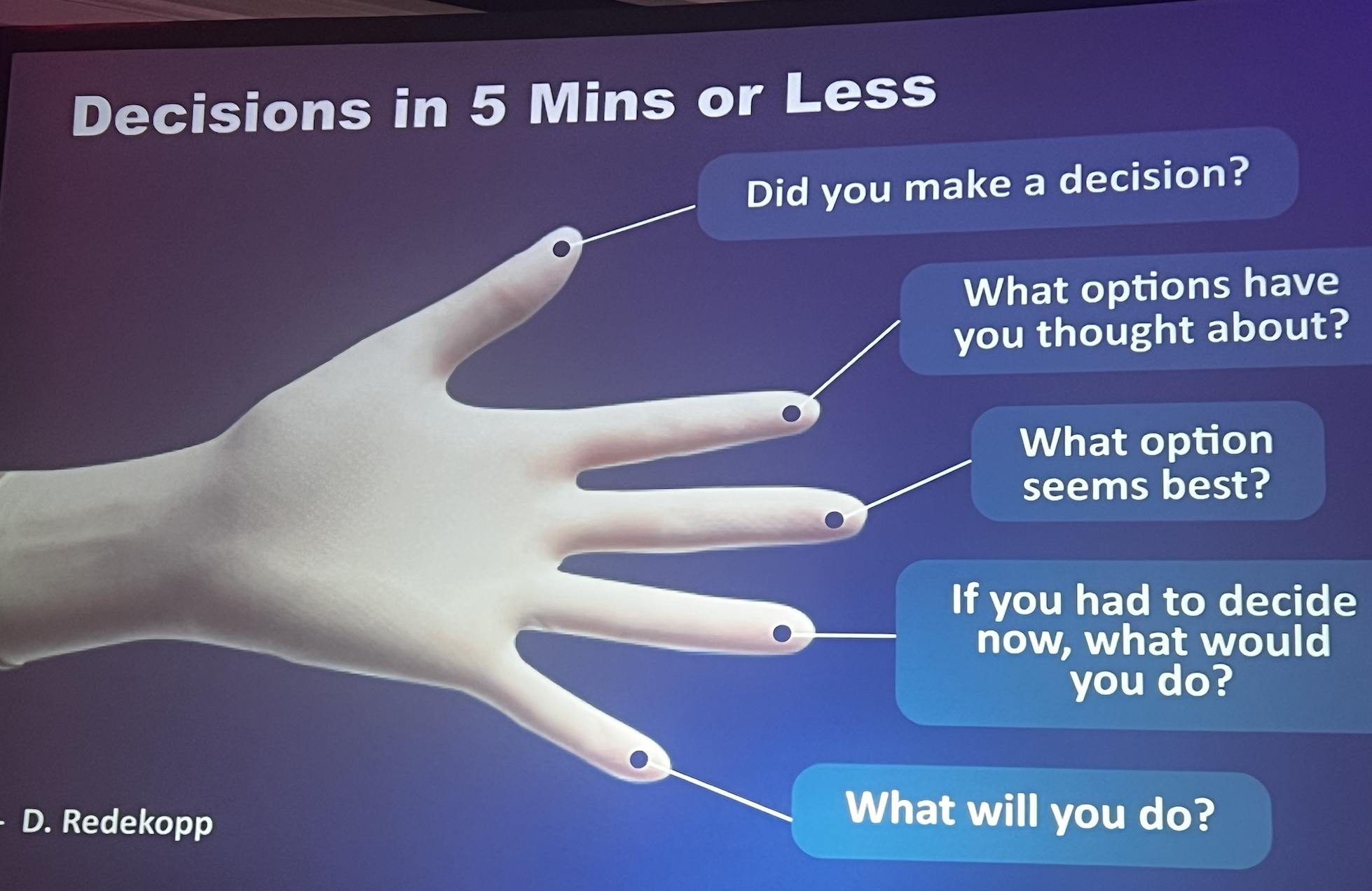
DeVolder shared the story of one leader he knows who makes all decisions in five minutes or less once he has all the information he needs. He said he has found that most leaders already have the information they need and simply procrastinate on pulling the cord as they wait for even more data.
“What is knocking softly at your door? What idea? What dream has been waiting for you to walk toward it?” he asked. “The future doesn’t reward certainty. It rewards bravery — the curious, the open-minded; the ones who turn endings into beginnings.”