NEW YORK — Fewer than half of Americans say they could cover a $1,000 emergency expense with cash on hand, highlighting the financial strain many households continue to face amid persistent inflation and a cooling job market, according to a new Bankrate survey.
The national poll found that just 47% of U.S. adults have enough savings or access to funds to handle an unexpected $1,000 cost, such as a medical bill or car repair. The remainder would need to rely on debt, spending cutbacks or other measures — a vulnerability that can compound the impact of job losses or other financial shocks.
Paycheck to Paycheck
“Most folks in America live paycheck-to-paycheck,” Mark Hamrick, Bankrate’s senior economic analyst, said in a statement. “This either results in, or coincides with, a lack of liquidity and lack of ability to achieve success with other key financial goals such as paying down debt or saving for emergencies and retirement.”
The findings are drawn from Bankrate’s Emergency Savings Report, an annual survey of U.S. adults conducted since 2011 with polling partners SSRS and YouGov Plc. The most recent data were collected in December 2025.
How Americans Would Cover a $1,000 Emergency
When asked how they would pay for a $1,000 or larger unexpected expense, respondents said they would turn to a mix of savings, income and borrowing:
- 30% would pay from savings.
- 17% would cover the cost from regular income or cash flow.
- 33% would go into debt, including:
- 17% using a credit card,
- 12% borrowing from family or friends,
- 3% taking out a personal loan.
- 10% would reduce other spending to pay the expense.
Inflation Continues to Erode Saving Capacity
According to Bankrate, the survey found more than half of U.S. adults said inflation is limiting their ability to build emergency savings, even as price growth has eased from its 2022 peak.
- 54% said rising prices are causing them to save less for emergencies.
- 26% cited changing income or unemployment.
- 17% pointed to recent interest rate cuts.
Consumer prices are about 26% higher than they were in December 2019, according to data from the Bureau of Labor Statistics.
“Inflation, and the resulting affordability challenges, clearly rules the roost when it comes to hampering the ability to save more money,” Hamrick said in a statement.
Widespread Anxiety Over Income Loss
Concern about financial resilience runs high if income were to disappear suddenly.
- 68% said they would be worried about covering living expenses if they lost their primary source of income:
- 43% said they would be very worried,
- 25% said somewhat worried.
- By contrast, 17% said they would be not too worried, and 12% said not at all worried.
Savings Gains Tied Closely to Income Growth
Not surprisingly. Bankrate reported the survey found that rising earnings, more than spending restraint, drove improvements in emergency savings.
- Respondents who increased savings in 2025 were nearly four times more likely to report higher household income than those whose savings declined (47% vs. 13%).
- Those who saw savings fall were similarly more likely to report declining earnings.
Some demographic groups were more successful than others at building reserves, according to Bankrate.
- 21% of men reported higher emergency savings in 2025, compared with 16% of women.
- 28% of Gen Z adults saw increases, versus 19% of millennials, 14% of Gen Xers and 15% of baby boomers.
- 26% of adults with a four-year college degree grew savings, compared with 13% of those without college education.
- 27% of households earning at least $100,000 increased savings, compared with 11% of those earning under $50,000.
Only 1 in 5 Boosted Emergency Savings Last Year
Looking at changes over the year, the Bankrate survey found:
- 19% reported having more emergency savings than at the start of 2025.
- 31% said their savings were about the same.
- 32% said they had less.
- 18% reported having no emergency savings at the start of the year and still having none.
Nearly one-in-four Americans (24%) now report having no emergency savings at all.
Debt Still Rivals Savings for Many
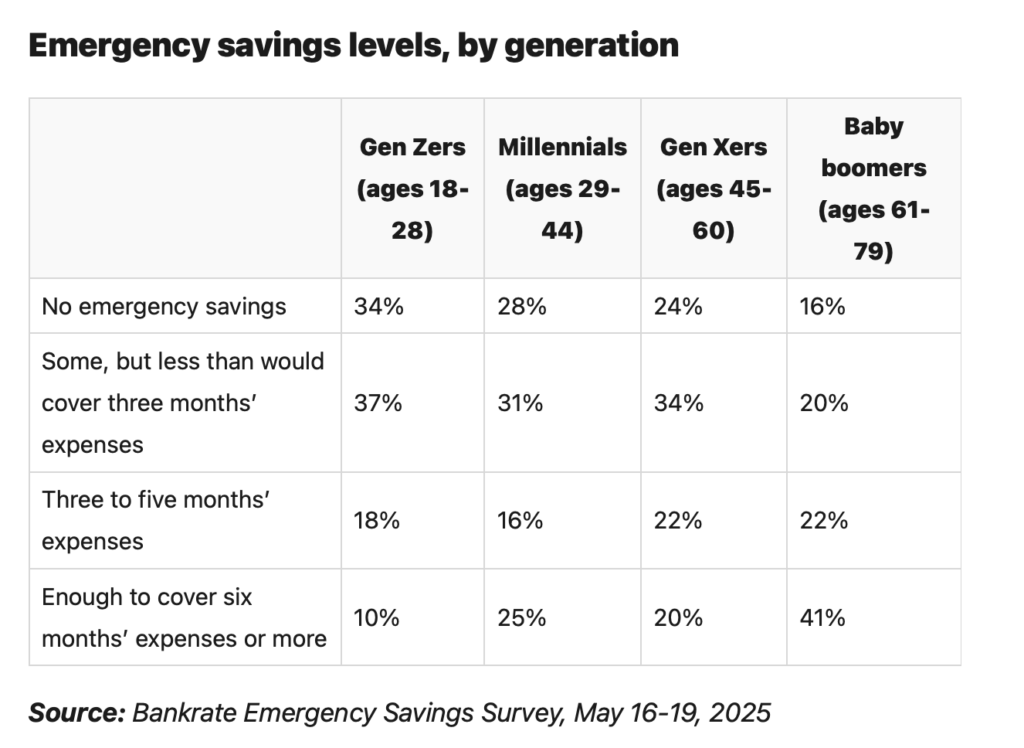
According to Bankrate, the gap between savings and debt remains narrow for a significant share of households.
- 33% of Americans have more credit card debt than emergency savings.
- 53% have more emergency savings than card debt.
- 13% report having neither.
While that represents an improvement from 2023 and 2024, when the share with more debt than savings reached 36%, it remains well above pre-2023 levels, Bankrate said.
Discomfort with Savings Remains Widespread
Bankrate reported that its analysis found that even after years of focus on financial resilience:
- 60% of Americans said they are uncomfortable with their level of emergency savings.
- Only 40% said they feel comfortable.
A majority of respondents said they would need far more savings to feel secure:
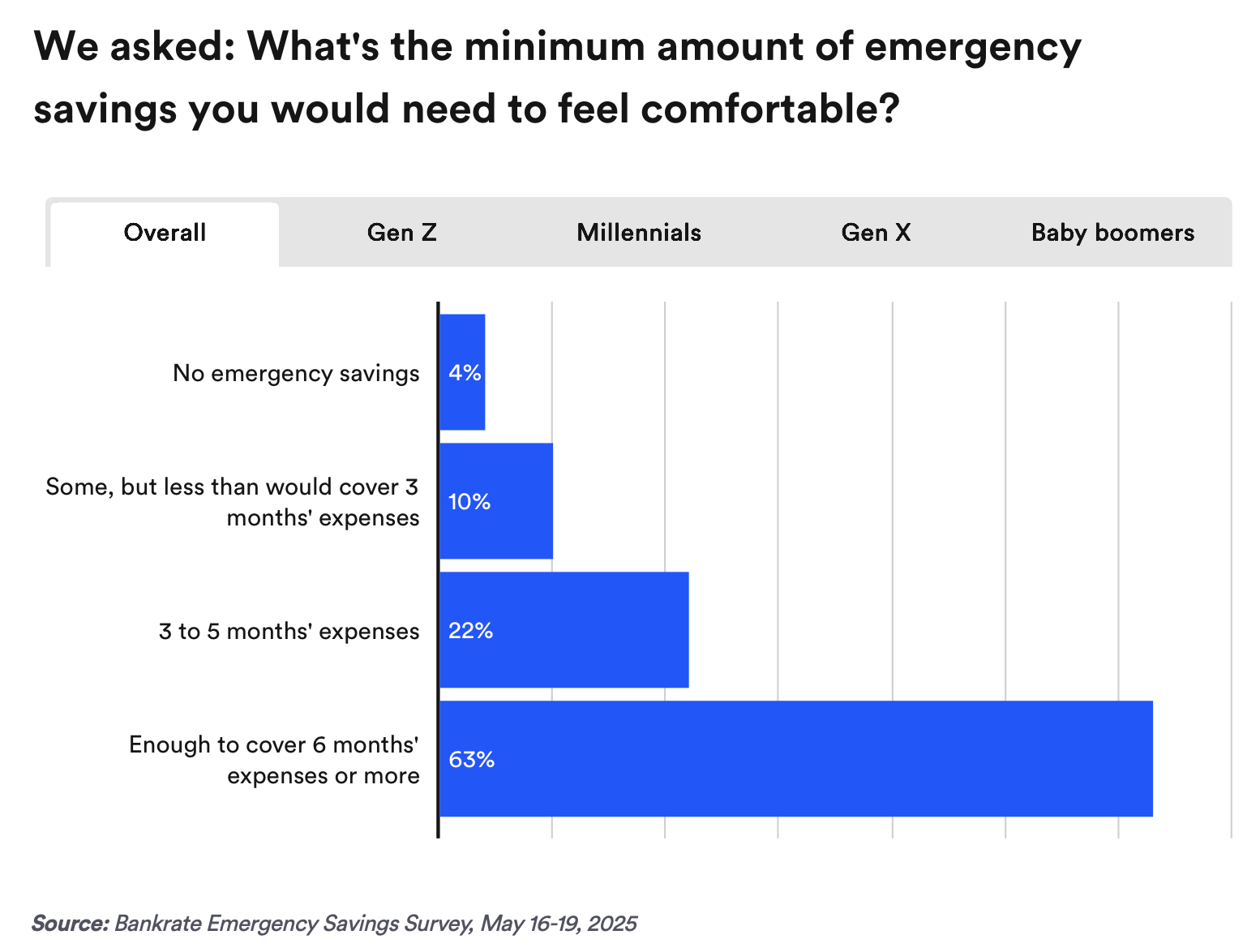
- 85% said they would need at least three months of expenses saved, but only 46% have that much.
- 63% said they would need at least six months’ worth, compared with just 27% who currently do.