
TROY, Mich.–The financial health of U.S consumers has dropped to a 12-month low in a new survey conducted by J.D. Power.
The company said its newest Banking and Payments Intelligence Report found:
- Total share of financially unhealthy consumers in the U.S. hit 72%, a 12-month high
- Consumers say entertainment subscriptions or memberships; internet or mobile phone bills and credit card payments are what they are most likely to defer in the event of financial hardship
- A knowledge gap exists between younger and older consumers on how to obtain financial assistance from their providers
The “stubbornly high cost of consumer goods” continues to be a drain on consumers in the United States,” J.D. Power said in releasing its findings. “As their struggles continue, consumers are prioritizing their payments and coming up with strategies for what bills would go to the back of the line should that become a necessity. While consumers plan for the worst, there are provider programs and banking tools that may be able to help, but a knowledge gap exists, particularly among those that stand to benefit from assistance the most.”

Financial Health Shows Strain
According to JD Power, financial health has been on a steady decline since October. In January, the proportion of consumers who are financially vulnerable rose to 46%. That increase brings the total share of financially unhealthy consumers, defined as vulnerable, overextended or stressed, to 72%: its highest mark in 12 months, the company said.
JD Power added that holiday spending may have had an impact, and if so, the company said it would expect to see a correction within the next month.
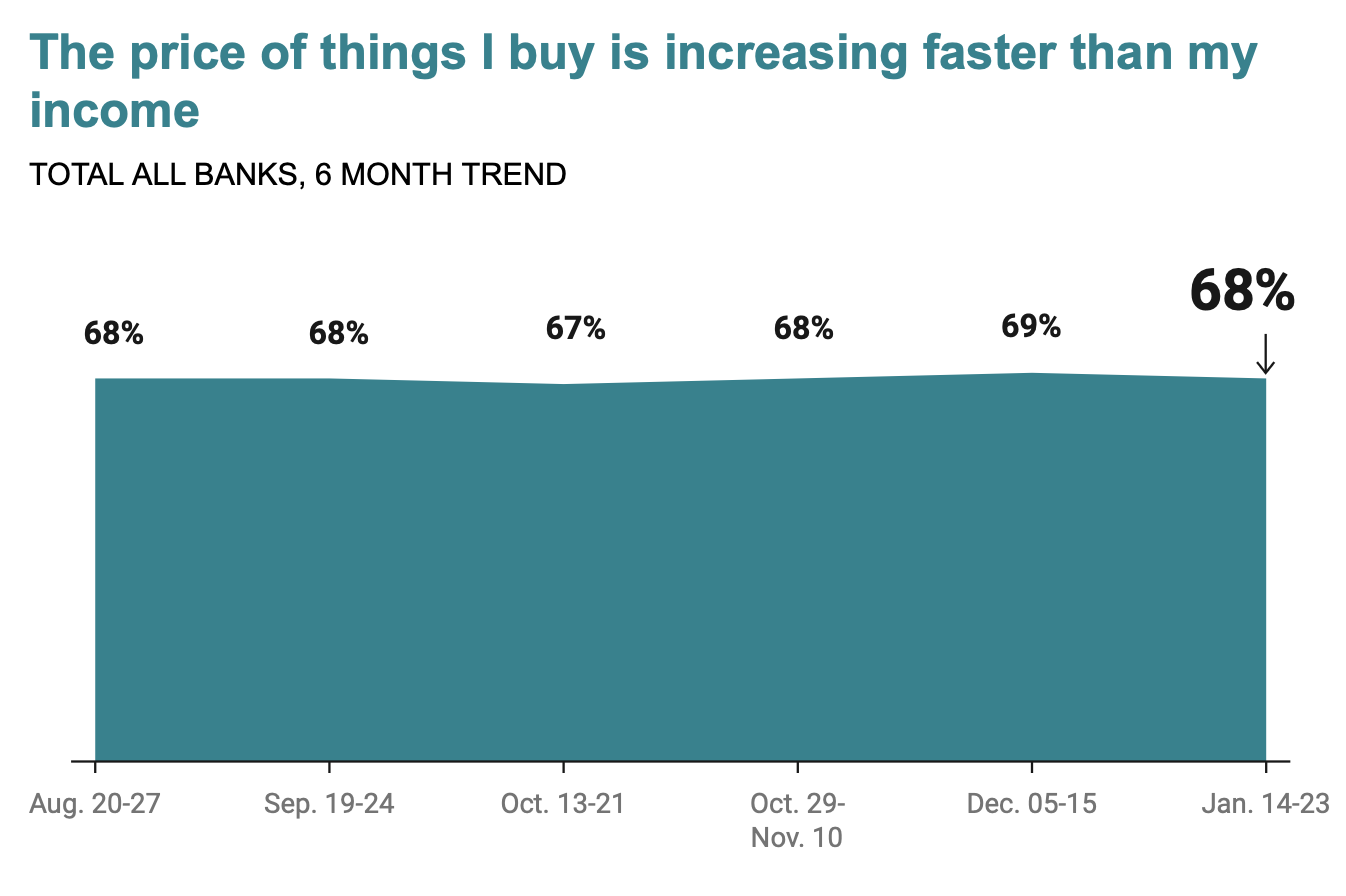
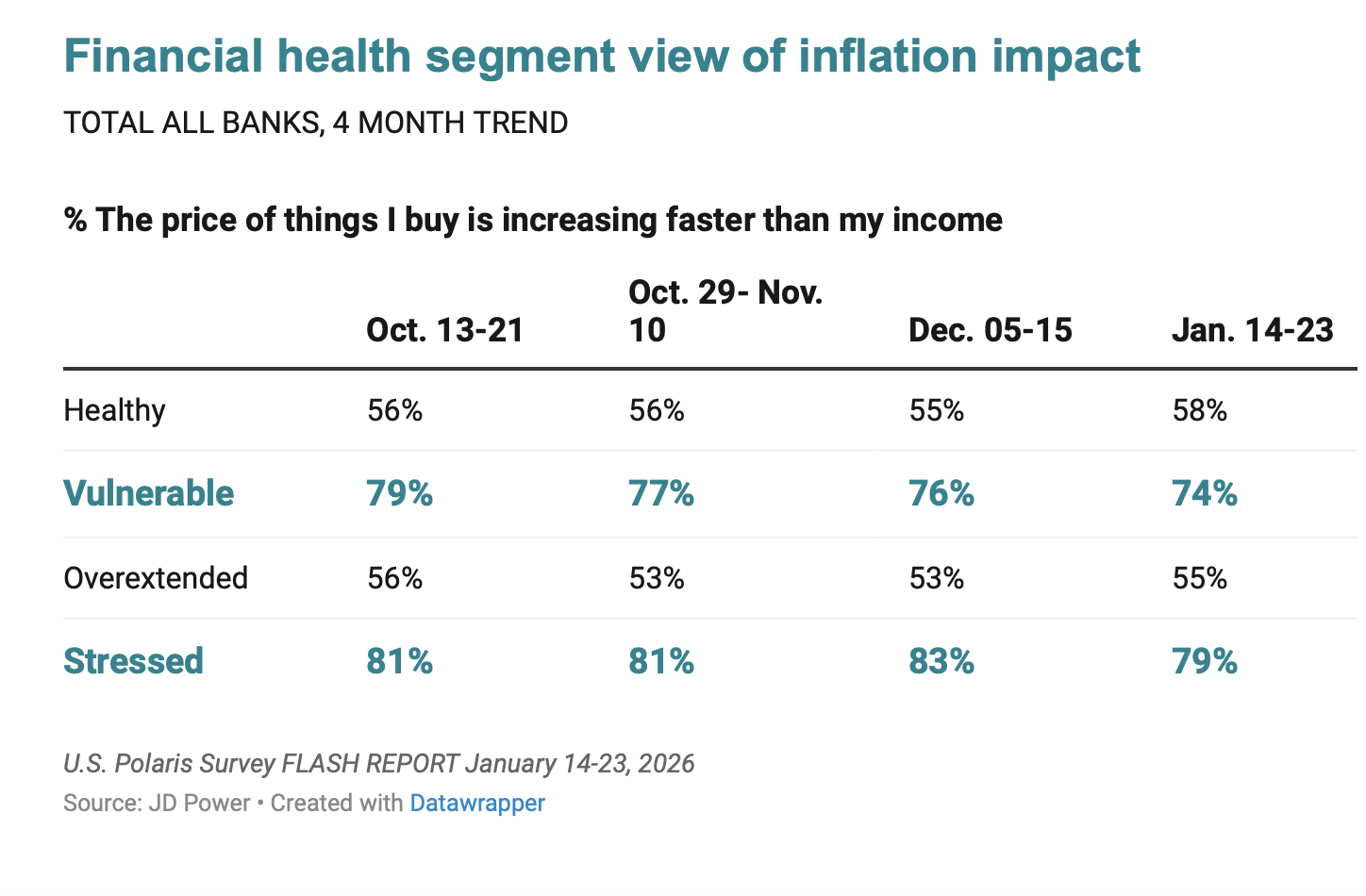
“The persistently high price of consumer goods has become an accepted reality,” it said in its analysis. “Overall, 68% of consumers say the price of goods is increasing faster than their income in January, largely in line with the rate of the past six months. This could be an indication that prices have had a snowball effect, and consumers are finally reaching a tipping point. Vulnerable (74%) and stressed (79%) consumers have notably higher levels of concern regarding inflation.”
Forced into Difficult Choices
With financial health slipping, some consumers are making difficult choices on what bills need to be paid in a timely manner, JD Power reported. It said its survey found 56% say that if they could not pay their bills on time, they would skip or delay entertainment subscriptions or other memberships. That includes 62% of healthy consumers and 61% of those over the age of 40.
“Interestingly, 29% say that they would skip their internet or mobile phone bill, followed by a credit card payment (28%),” JD Power said.
Options! What Options?
In the event of financial hardship, JD Power noted consumers have options to contact their provider for a grace period, payment assistance or inclusion in a hardship program. But according to the company’s data, there is a gap in provider-contact knowledge.
“While 73% of consumers say they know how to contact their internet or mobile phone provider, just 42% say they know how to do the same for a personal or student loan provider,” JD Power reported. “What’s more, knowledge on how to contact these providers is notably higher among healthy consumers and those over the age of 40 – the populations that are less likely to need help.”

How Fis Can Help Stave off Hardship
JD Power said one way financial institutions may consider intervening is a huge engagement push around digital tools. More than one-third (37%) of consumers say they are willing to use digital banking tools, such as budgeting and spend management tool, more, including 61% of overextended consumers and 54% of consumers under the age of 40.
“If banks can find a way to expand the reach of these tools, it could mitigate some of the financial risk exposure that consumers face,” JD Power said.