BOSTON–A “surprising” finding in new research is that most consumers who live paycheck to paycheck once enjoyed greater financial stability and that history shapes whether they believe they can escape it again, according to the survey’s analysts.
The findings come from the PYMNTS Intelligence report “Financial Fragility in the Middle: How Income and History Shape Consumer Risk,” the latest installment of the New Reality Check: The Paycheck-to-Paycheck Report.
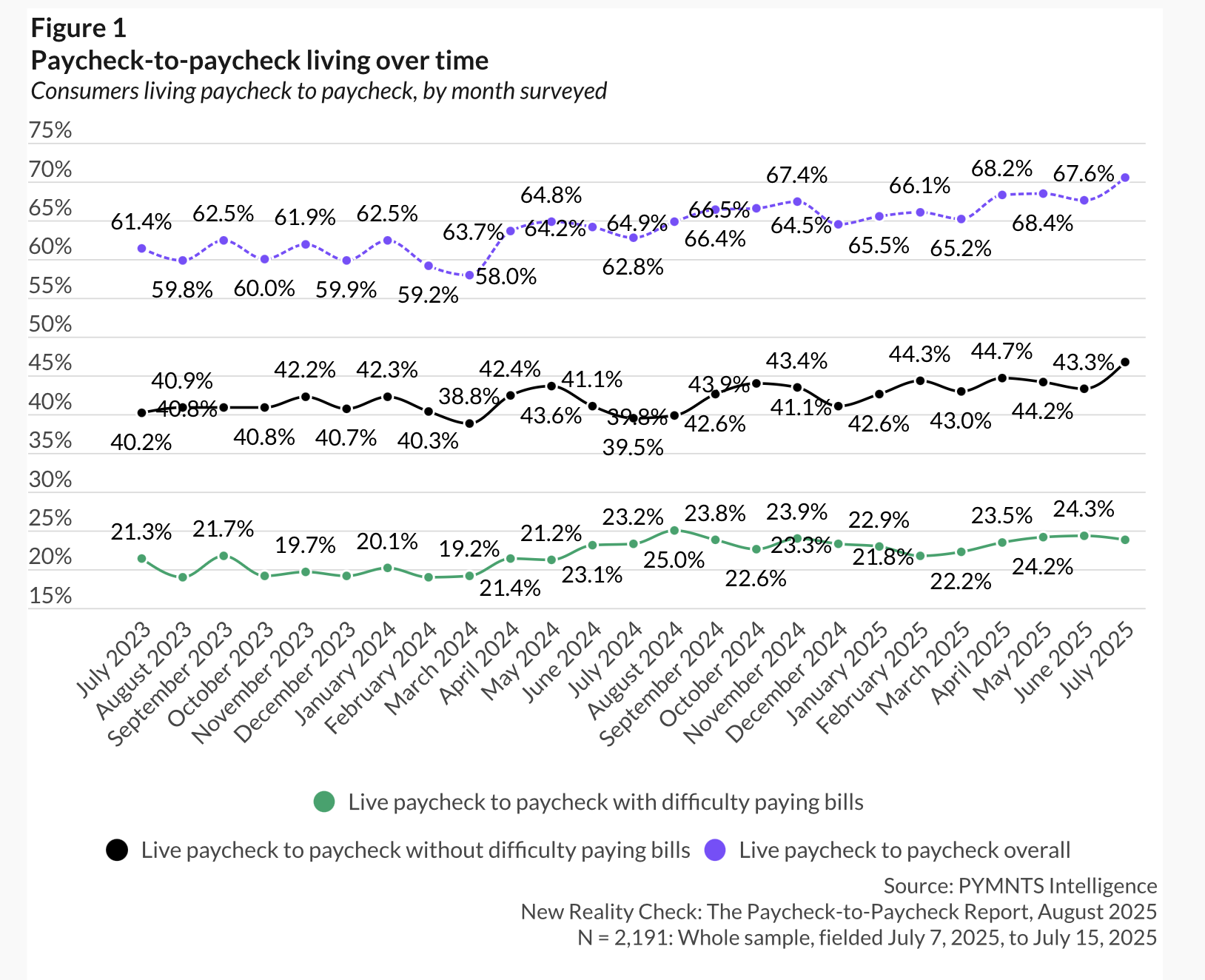
Based on a July survey of 2,191 U.S. consumers, the report shows that more than seven in 10 adults now live paycheck to paycheck, up three percentage points in a single month, according to PYMNTS.
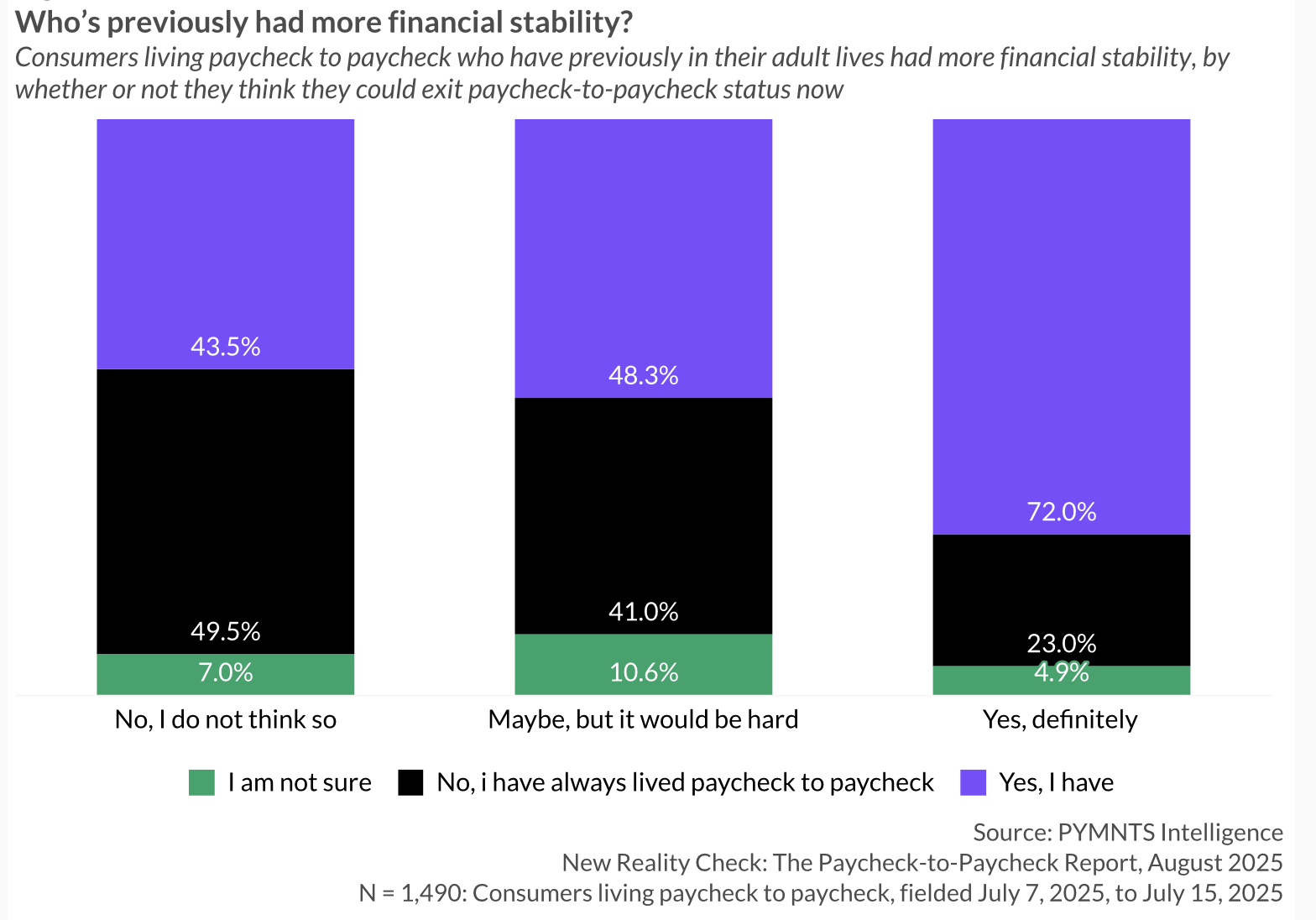
“Yet the more revealing story lies in the past,” the analysis observes. “Nearly three-quarters of those constrained by bills today recall a time when they had a financial cushion. That memory helps determine their confidence about clawing their way back.”
The Findings

According to PYMENTS Intelligence, its survey found:
- 53% of paycheck-to-paycheck consumers said they have had savings to lean on at some point in their adult lives. “This prior stability makes them more likely to believe they can regain their footing.”
- 46% of “Shifted Stuck” consumers, or those who once had financial breathing room but no longer do, say they feel overwhelmed by their current situation. “That rate is higher than among consumers who have always been financially constrained.”
- 66% of consumers who escaped paycheck-to-paycheck living credit higher income as the decisive factor, but timing matters. “Those who exited within the past year were more likely to point to careful budgeting, while those free for five years or more cite better jobs and bigger paychecks.”
What Patterns Uncover
“These patterns suggest that confidence, memory and life stage weigh heavily in how consumers experience financial fragility,” PYMNTS Intelligence said. “A Baby Boomer who recalls decades of comfort but has been stuck since the pandemic may feel more demoralized than a young consumer who only recently slipped into a tighter lifestyle. Conversely, millennials and Generation Z consumers who once had stability mostly began living paycheck to paycheck in the past two years, hinting at inflation and housing costs as key triggers.”
According to PYMNTS, the report reinforces the scale and fluidity of the issue.
“Living paycheck to paycheck isn’t confined to low earners; middle-income households earning $50,000 to $100,000 and even high-income households are increasingly caught in the cycle,” PYMNTS Intelligence said in releasing its findings. “Many move in and out of the category, sometimes by choice. Households generally need to earn at least $90,000 to $95,000 annually before paycheck-to-paycheck living reflects discretionary spending decisions rather than necessity.”
Remaining Stuck
PYMNTS reported that the survey found consumers also differ in how long they remain stuck.
“Nearly 30% lost their safety net before July 2020 and have struggled ever since, while a similar share only began living this way in the past year,” the company said. “The surest exit strategy remains more income, but the report shows that other tactics, like moving into affordable housing, paying down major debts, and tapping family or government support, play roles depending on timing.
“The fact that so many consumers once had greater financial freedom underscores that paycheck-to-paycheck living is less a permanent identity than a precarious stage,” the analysis added. “For policymakers, lenders and employers, the lesson may be that history and perception matter as much as present paychecks in shaping financial resilience.”