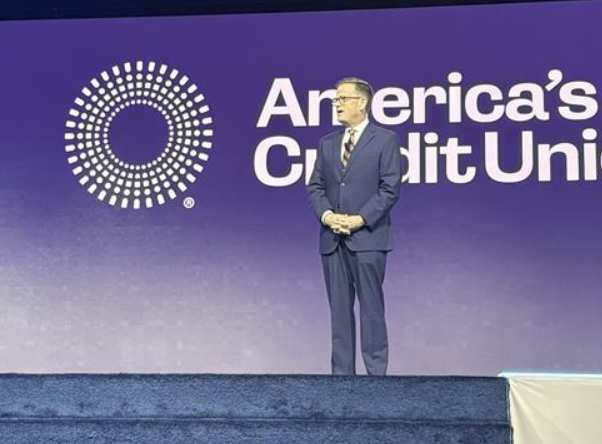
WASHINGTON — The head of America’s Credit Unions told thousands of industry advocates gathered here that the credit union system represents “one of the most successful social movements in the history of America,” urging attendees to defend the sector’s tax status and policy priorities amid what he described as renewed competitive and legislative threats.
Speaking at the Governmental Affairs Conference, which the trade group said drew a record crowd of more than 6,000, President and CEO Scott Simpson said the event’s size was not about scale alone but about the mission behind cooperative finance.
“I hope that you take a minute to breathe in the significance of what calls us here,” Simpson said. “This is, in fact, more than just a business model.”
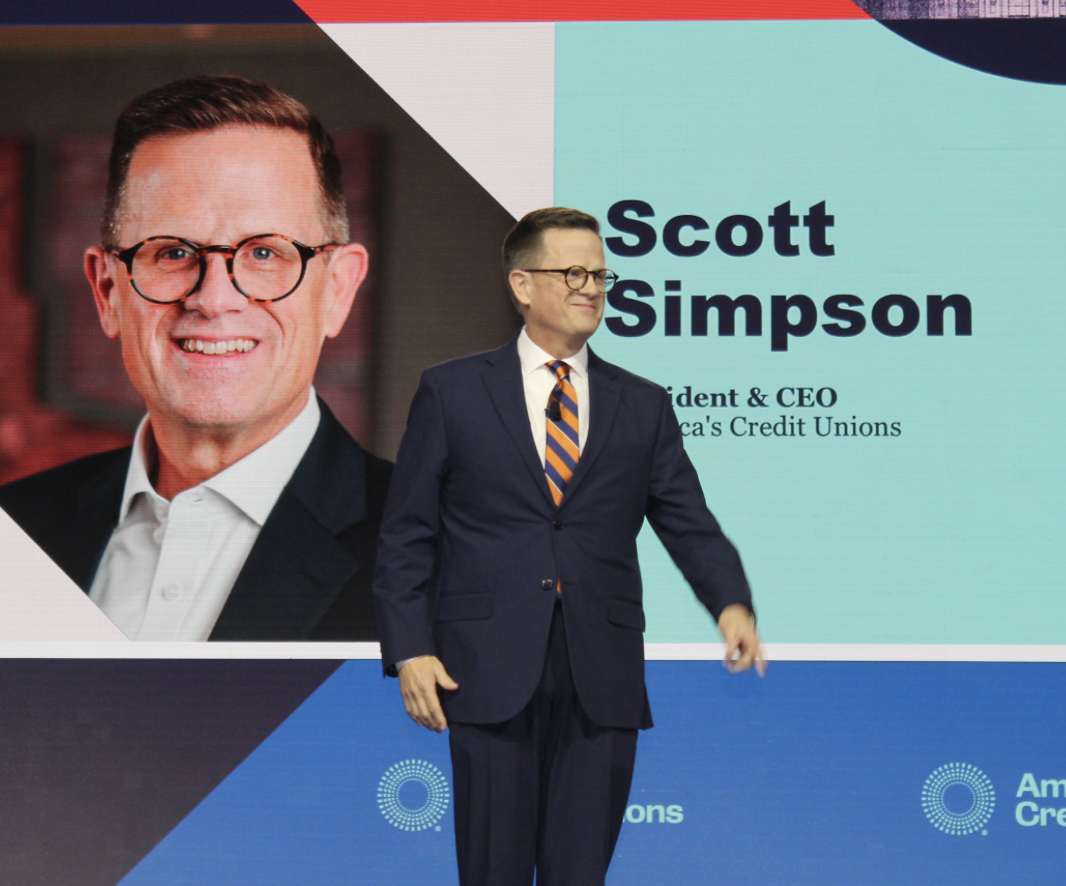
Framing Credit Unions as a Social Movement
Simpson characterized credit unions as a historic extension of Americans’ pursuit of economic opportunity, placing the movement alongside broader national ideals such as political and religious freedom.
“If you look over the arc of our history, the number of lives that have been touched because credit unions exist — it is one of the great social movements in the history of our country,” he said.
He said the industry’s impact is reflected in “a million individual stories” of members helped by cooperative institutions, recounting a personal family experience in which a volunteer credit union leader assisted his father-in-law during a child’s serious illness.
“That humanity isn’t found anywhere else in retail financial services,” Simpson said, encouraging attendees to share similar stories with policymakers during their visits to Capitol Hill.
Advocacy Central to Mission
Simpson stressed that storytelling, paired with data, is critical to influencing lawmakers.
“Every meeting has graphs, facts and figures,” he said. “Very few of them have a real example of a life changed for the better.”
He tied the industry’s federal tax exemption to its historical purpose, noting that Congress passed the Federal Credit Union Act nearly a century ago to expand access to financial services for Americans left out of the traditional banking system.
“Credit unions are here because the government says we can be here,” Simpson said, warning that the status “can be taken away.”
Warning of Opposition From Banks
Simpson said credit unions face well-funded opposition from bank groups that view the not-for-profit cooperative model as a competitive threat.
“They don’t hesitate to spend whatever it takes to destroy this business model,” he said, referencing past efforts to revoke credit unions’ tax treatment.
He argued that claims credit union growth represents a departure from their mission are “simply not true,” calling on institutions of all sizes to remain unified.
“Our small credit unions and large credit unions have so much more in common than any for-profit bank,” Simpson said.
Mobilizing a Large Membership Base
Simpson pointed to the industry’s reach — which he said includes 145 million Americans — as a powerful advocacy tool, particularly in an election cycle.
“That’s a lot of registered voters,” he said, adding that policymakers need to understand the real-world impact of credit unions in their districts.
He urged continued engagement through the industry’s political action committee and grassroots efforts.
Policy Priorities Highlighted
During meetings with lawmakers this week, Simpson said America’s Credit Unions will emphasize several legislative and regulatory concerns, including:
- Opposition to interest-rate caps and interchange mandates that he described as government price controls.
- Modernization of reporting thresholds to reduce compliance burdens.
- Expanded attention to fraud and scams, which he called a “multibillion-dollar business” harming consumers.
- Changes to lending constraints that limit credit unions’ ability to serve small businesses and other borrowers.
“These are policies we need to have changed to keep credit unions relevant in the future,” he said.
A Call to Sustain the Cooperative Model
Despite continued membership growth, Simpson said credit unions remain a modest share of the broader financial services market and are still not widely understood by consumers or policymakers.
“If they don’t know the how and the why behind the credit union difference, how can we expect policymakers to have this at their fingertips?” he said.
Simpson concluded by urging attendees to view advocacy as inseparable from the cooperative mission.
“To the administration, Congress and regulators, we must make it crystal clear that credit unions are the answer to their calls for affordability,” he said. “We are already here, already in the market, and already helping.”
Financial Partners CU’s Nader Moghaddam Wins Award
Separately, America’s Credit Unions presented Nader Moghaddam, CEO of Financial Partners Credit Union, with the Councils’ 2026 Greg Inman Servant Leadership Award during GAC.
This industry-wide award honors and values the principles of servant leadership. It was created by the Councils in 2022 to honor the legacy of Greg Inman, Chief Operations Officer of Neighbors Federal Credit Union in Baton Rouge, La., who passed away in 2021.
To receive this annual award, an individual must have a past or current connection to the credit union industry (a credit union employee or volunteer; a league, association or CUSO executive; a recognized industry provider or supporter).

‘Long-Time Force’
“Nader is a long-time force in the credit union movement, serving for over 27 years and in numerous local, state-level, and national capacities, including on the America’s Credit Unions board,” said Simpson in a statement. “I have witnessed Nader’s servant leadership firsthand, and he embodies the credit union movement’s ‘people helping people’ mission in all that he does. He models the best practices and actively invests in the next generation of credit union leaders. A personal friend and mentor, I know that Nader’s efforts have strengthened the credit union family. He’s a role model who leads by example for us all.”
Added Brad Barnes, Councils Executive Committee Chair and Chief Financial Officer at Air Academy Credit Union
“Councils is proud to present Nader with the Inman Award for a career dedicated to the betterment of his credit union, his community, and the entire credit union movement,” said Brad Barnes, Councils executive committee chair and CFO at Air Academy Credit Union. “Nader represents every aspect of the Inman Award. His authenticity and spirit of servant leadership impact all who have had the privilege to work with him. His legacy is one marked by selfless service and principled leadership.”
‘Humbling to Win’
“It is humbling to be recognized with the Inman Servant Leadership Award by the movement that I care so deeply about,” said Moghaddam in a statement. “I believe the cooperative spirit of credit unions brings out the best in all of us. That focus on humanity, on making a positive impact on people’s lives and our communities, inspires us to do right by our members. I am grateful that I have had the opportunity to serve my credit union members, collaborate with my peers, and support meaningful causes throughout my work’s journey. The big lesson for me is when we work together as an industry, we are a formidable force for good. It’s an honor to be part of the credit union family.”
Original Founder of Council
Moghaddam, one of the original founders of the CEO Council, was recognized for his commitment to leading with heart, authenticity, and trust.
“Across his career, Nader has been a driving force behind the success of Councils as one of the greatest advocates and living examples,” the trade group said. “He leads a strong legacy as a mentor for the next generation of credit union leaders who are inspired to follow his example.”
About the Award
Through their work and actions, a recipient must demonstrate key servant leadership principles, including:
- Believing, serving and listening to others
- Helping others to learn and grow
- Building and supporting community
- Leading, by establishing goals and taking initiative
- Distributing leadership through facilitating and sharing of power
- Being authentic, open, and accountable.
Learn more about Moghaddam’s credit union story here.