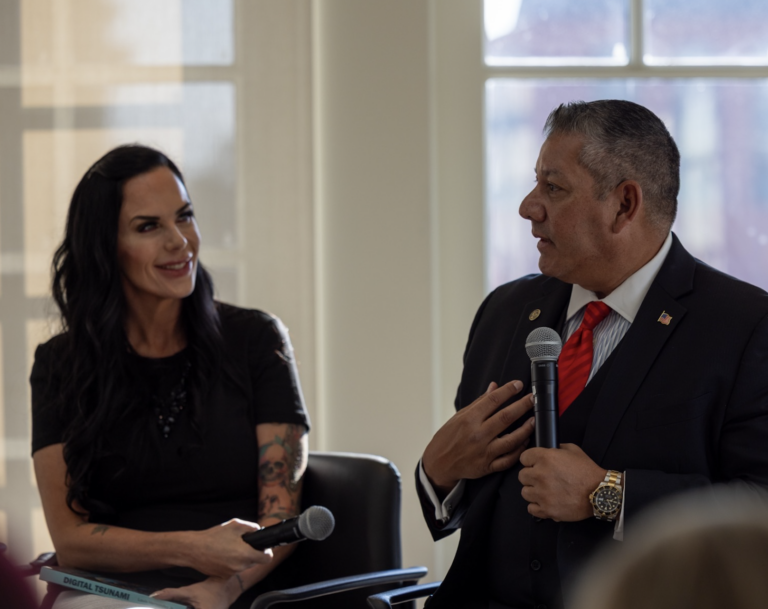
WASHINGTON–One of the best-known and influential entrepreneurs and investors in credit unions and global technology has shared with CU leaders some keen insights on a challenge they have in common with other organizations; an advantage those other organizations don’t have; why technology exists; what’s wrong with most vendor contracts; an overarching piece of advice, and much more.
Those perceptions, experiences and predictions were offered during Mitchell Stankovic’s Underground meeting by Louis Hernendez, the CEO and managing director of Black Dragon Capital, a minority-led private equity firm that has investments in numerous firms, including fintechs that do business with credit unions.
Prior to BDC, Hernandez had founded numerous companies and guided other organizations, including Open Solutions, which offered the DNA core processing system. That company was acquired by Fiserv.
He has also served on and serves on numerous boards, and is the author of three books: Saving the American Dream, Too Small to Fail, and The Storyteller’s Dilemma. In 2011, he founded For A Bright Future, a foundation that focuses on equal opportunity for children.
The insights were shared as part of a discussion titled “Digital Tsunamis” that led by Dr. Brandy Stankovic during the Underground meeting in Washington.
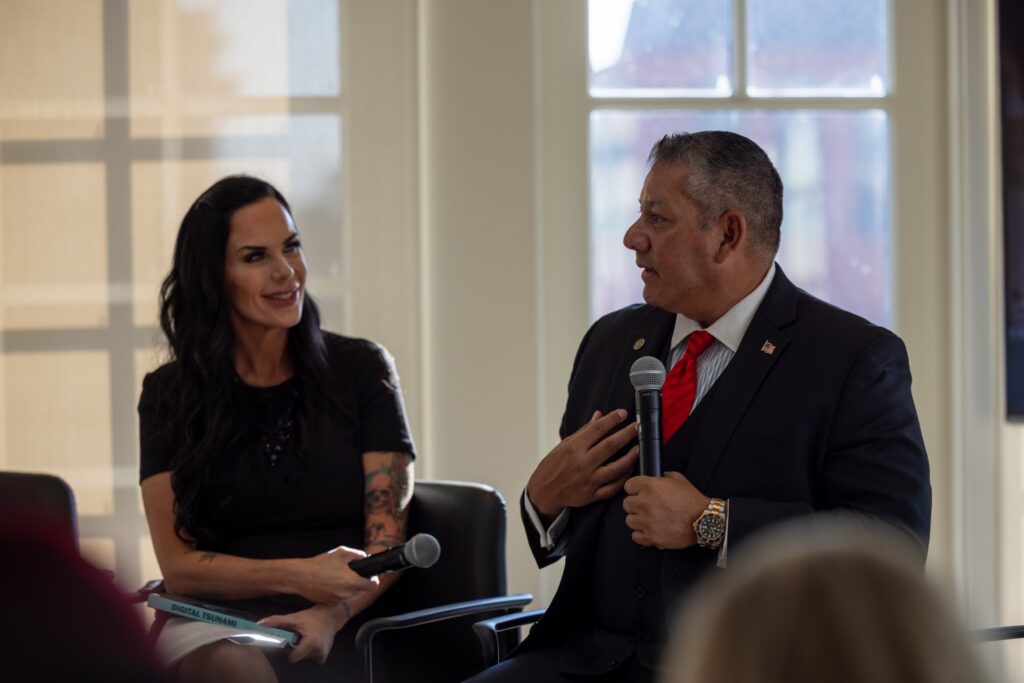
Below is some of what was discussed:
Stankovic: What turns movement into the transformation?
Hernandez: I’ll start with why technology exists—to improve our lives. Humans have always sought technology to make our lives better. Therefore, whatever captures the imagination and convinces people that it is going to improve their lives is usually worth the disruption economically. When you’re an organization, you just layer on the economic and cultural realities about whatever the technology is. So at least for me, that’s what has mainly driven this transition.
Stankovic: Do you get a gut feeling or just know where to invest?
Hernandez: There are three things we look at. First, assess the leader. Second, what’s the issue we’re trying to solve in a compelling way? And third, what are the economic components to it?
For those entrepreneurs in the room, it’s a very intense, very sacrificial, lonely, and joyous thing we do building these things we believe in. I think for Black Dragon, as some of you know—most people know me from the DNA days when I started Open Solutions, the core system, or maybe Payveris—the value comes not when it goes the way you expect, but when it doesn’t. That’s where the human element comes in.

So, to the heart of your question—do you just know? Well, it really is about the leadership, because it’s probably not going to go the way the business plan says it’s going to go. That’s the point where the differences come through with the leaders. They find a way to win, to serve the communities better, and not quit until it’s done.
There’s also the loneliness aspect when I describe being an entrepreneur. People ask me, “Why lonely? What do you mean by lonely?” They don’t expect that piece. It’s hard to explain the reason you’re pursuing this thing. Why did I build DNA? Why did I think there should be one system for a credit union, not based on charter types or countries?
Black Dragon operates in about 100 countries now—and we see technology all over the world. I wish I had a formula, but it’s mostly about the person. Naturally, we also ask whether we believe humans are going to adopt this technology and whether they will be convinced that the improvements outweigh the disruption.
Take flying cars, for example, which companies are experimenting with in Germany and China right now. Will the benefits overcome the disruption of cars flying around with no regulation? That’s the decision we’re going to have to make as societies. And that’s really where the judgment comes in.
Stankovic: Is face-to-face still the only way, or can we have technologies that bridge that gap?
Hernandez: I saw a demonstration where you were supposed to guess whether a human was looking at you or a robot was looking at you. I swear I got it wrong every time, because the digital skin reacts to your reaction.
There’s this big debate, as you know, about AI and acting. I still think authenticity matters. We had this debate at the FII Future Media conference in Saudi Arabia a couple of weeks ago. The actors are very concerned about authenticity and not wanting to participate in this kind of thing.
Personally, I think, unfortunately, we’re past that. I looked at this demonstration and I could not tell how they were responding to me. But humans are natural storytellers, and we connect through stories. Authenticity is really what connects people.
AI might say there are only 17,192 data elements you need—you don’t need millions—because humans aren’t that complex. We respond to certain things. That’s the piece I think will rule the day, and it’s why it’s still important to sit here in front of you. The story that’s unfolding becomes more meaningful because of that.
So, I’m long on humans, if you’re wondering, even though I’m a technologist.
Stankovic: Can these online communities build trust?
Hernandez: Trust is very difficult. What’s going on right now is interesting. We rate our systems, and many of the new systems today rate accuracy based on available information. But if you don’t trust the government systems—if it says the CDC says this is something you should do, but you don’t trust the CDC—then who are you going to trust?
This is the dilemma we all have with the gradual degradation of our institutions of trust. That’s one of the reasons why I think credit unions are in a good position to win. Despite the fact that we’re risking relevancy through the digitization of our relationships with our members, we are trusted. We are authentic because we’re still in the community.
It’s not because of the branches, like you mentioned, or because we have more call center representatives. That’s a mistake. The reason is that we have never gone away from our roots as an authentic service to our communities.
This may end up being our greatest strength—not because of what board members tell me about having more call center roles or branches—but because we’ve never changed our identity.
When people don’t believe anything or anybody, then where does trust start? Human relationships are based mostly on trust, so it’s a very big issue.
Stankovic: Does building trust have to be a priority?
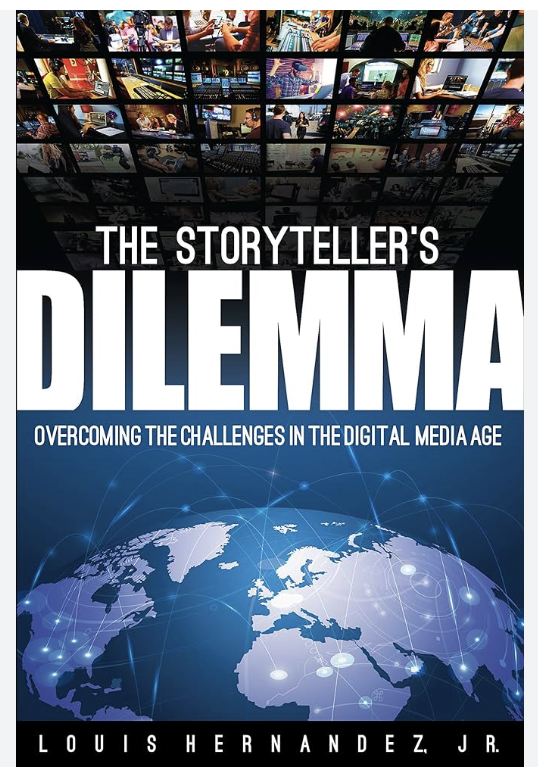
Hernandez: I wrote a book called The Storyteller’s Dilemma. In The Storyteller’s Dilemma, I predicted that if you digitized music, it would flatten the yield curve. Music stores and radio play used to control what we listened to. If everything were digitized, I thought the curve would flatten and we’d hear all these wonderful songs we couldn’t access before.
But the reverse happened. The yield curve tightened because at the peak there are now about 40 million new tracks a year on Apple Music. It became so overwhelming that none of us wanted to spend the time exploring everything.
Because the institution of trust had been eroded—we didn’t just go to the record store anymore—we started listening to the top 10 most popular songs. Crowd decision-making took over. People would just ask what the most popular rap or country music was and listen to that.
The average listening window was about three and a half minutes. It was an example of how trust is being redefined. Digitization is changing the way your members think about service, trust, and affinity.
That’s probably the most important lesson, and I often use the music example to explain it. We started trusting the group more than institutions like Universal Music that built their businesses on expertise. That’s what’s happening in our business, as well.
So, the question is: How do we take our strengths and use digitization to demonstrate that we are the trusted community service provider for our members? That’s one of the biggest and most complicated challenges leaders face today.
Stankovic: What is an organization’s greatest risk if it doesn’t step up?
Hernandez: The easy one is that the more we digitize the products we create and the consumption of those products, the more it collapses workflow and commoditizes it.
Around the world, I don’t know one single industry that is as collaborative, friendly, and cooperative as this group. Yet it only controls roughly 10% of the assets in the United States. For however many decades it’s been, that percentage has never really changed.
There are a lot more people involved now, yes, but the percentage hasn’t changed. That’s depressing to me. Even more depressing is the vendor community around this group, which can be the most combative and punitive of any I’ve seen in the world.
It seems like if you’re the most friendly and collaborative industry, you would also have the most friendly and collaborative partners. That’s why I’m happy you’re betting on partners and finding people who care about what we do. This group should be the beacon for what partnership is all about, and it’s not. That’s sad to me, and it’s part of why I’m here.
Stankovic: What else needs to change?
Hernandez: Continuous contracts that never end, or penalties for innovation—things like this. Not to pick on any vendor in the room. I was a vendor. That’s how I started at Open Solutions.
So, I’m speaking as one of them and reflecting on it myself. Why would we make it hard for you to serve your members better by forcing you to stay with technology that no longer meets your needs?
That doesn’t happen in other industries. It just doesn’t. Even in banking. Some of you know I was on the board of HSBC for years. They would never allow those kinds of provisions in their agreements.
Instead, it’s created a cottage industry of consultants—many of my friends run those firms—just to help credit unions avoid getting taken advantage of too badly. It’s one of the craziest things I’ve ever seen.
Risk exists in the organization, in the culture, and in your partners. And as you digitize the relationship, the final risk you expose yourself to is new forms of fraud, which we’ve all experienced.
Those are the things I’m most focused on as an investor trying to serve this community. (Black Dragon) serves a lot of communities I care about—media, sports, digital commerce. We’re huge in digital commerce, which is ordering and delivering things you buy. But those are the kinds of risks we focus on here in this sector.
Stankovic: With emerging communities, how can they harness emerging technologies?
Hernandez: To me, it’s an opportunity for the rebirth of our membership.
I say this because every time you feel worried about the next generation, I just look at some of these applications from kids (to his foundation). They come from very difficult situations, yet they have 4.0 GPAs and just want enough money to pay for the SAT so they can go to college.
There’s a very powerful group of young people in underserved communities—and even in the prison community—who, with a little help, could become powerful contributors.
That’s one of our best opportunities. If we enable them through our digital platforms, we can usher in a powerful and influential next generation of members for our community. I see this as a massive opportunity.
Stankovic: What advice do you have for the CEOs here?
Hernandez: From a business perspective, I think it’s about forcing change. Agility and urgency are not descriptions of most cultures in credit unions, and they really need to be.
We cannot rely on our institutions of government for regulatory frameworks, because they’re never going to catch up. It’s up to us as leaders to find a way to navigate through those limitations to serve the soul of who we are, which is the member.
That’s my biggest piece of advice, and it’s why leadership is so important in this industry.
I could go into a lot of technical details, but it would probably put most people to sleep this early in the morning. What matters most is culture—embracing the idea that you must be more urgent and more agile in order to survive.
We’re all in the fight for relevance. People are peeling off our most valuable parts of the business. Our cost structures are rising. The regulatory frameworks are intense. We all know the issues.
What’s the solution? The good news is that there is still a need for what we do, and I believe that need is growing. But we have to connect what we’re strong at with a culture that can deliver.
If we do that together, I think there’s a powerful opportunity ahead. (Mitchell Stankovic) is putting more effort into finding partners who believe in this mission, and that may be one of the most important things.
So, my final advice is simple: try to stay as current as you can.