


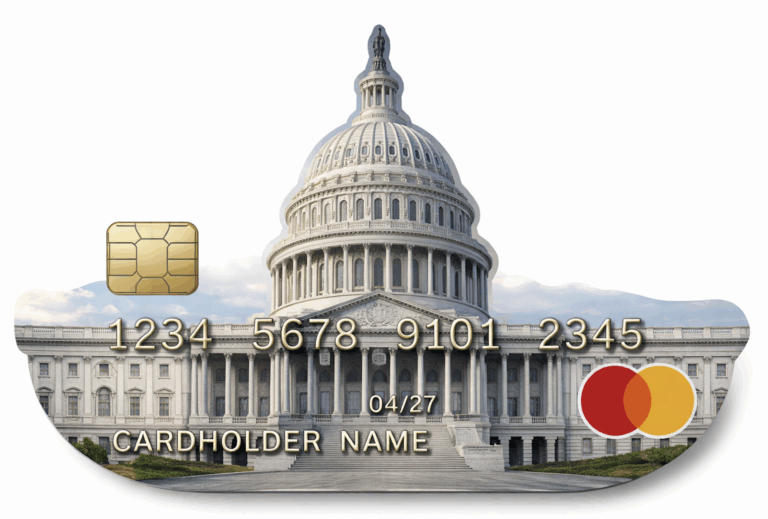
WASHINGTON–Legislation credit unions were relieved to think was behind them in this current Congress has now come back to life, with the Senate Majority Leader saying at some point the Senate will likely vote on the newly resurrected Credit Card Competition Act, which is strongly opposed by credit unions and other financial institutions.
The legislation, which credit unions and other financial institutions fought in the prior session of Congress, got new life after President Trump threw his support behind the legislation, which is co-sponsored by Sens. Roger Marshall (R-Kan.) and Dick Durbin (D-IL), and which seeks to change interchange.
America’s Credit Unions and the Defense Credit Union Council joined with a coalition of other groups in issuing a joint statement in opposition to the legislation.
‘Out-of-Control’ Swipe Fees
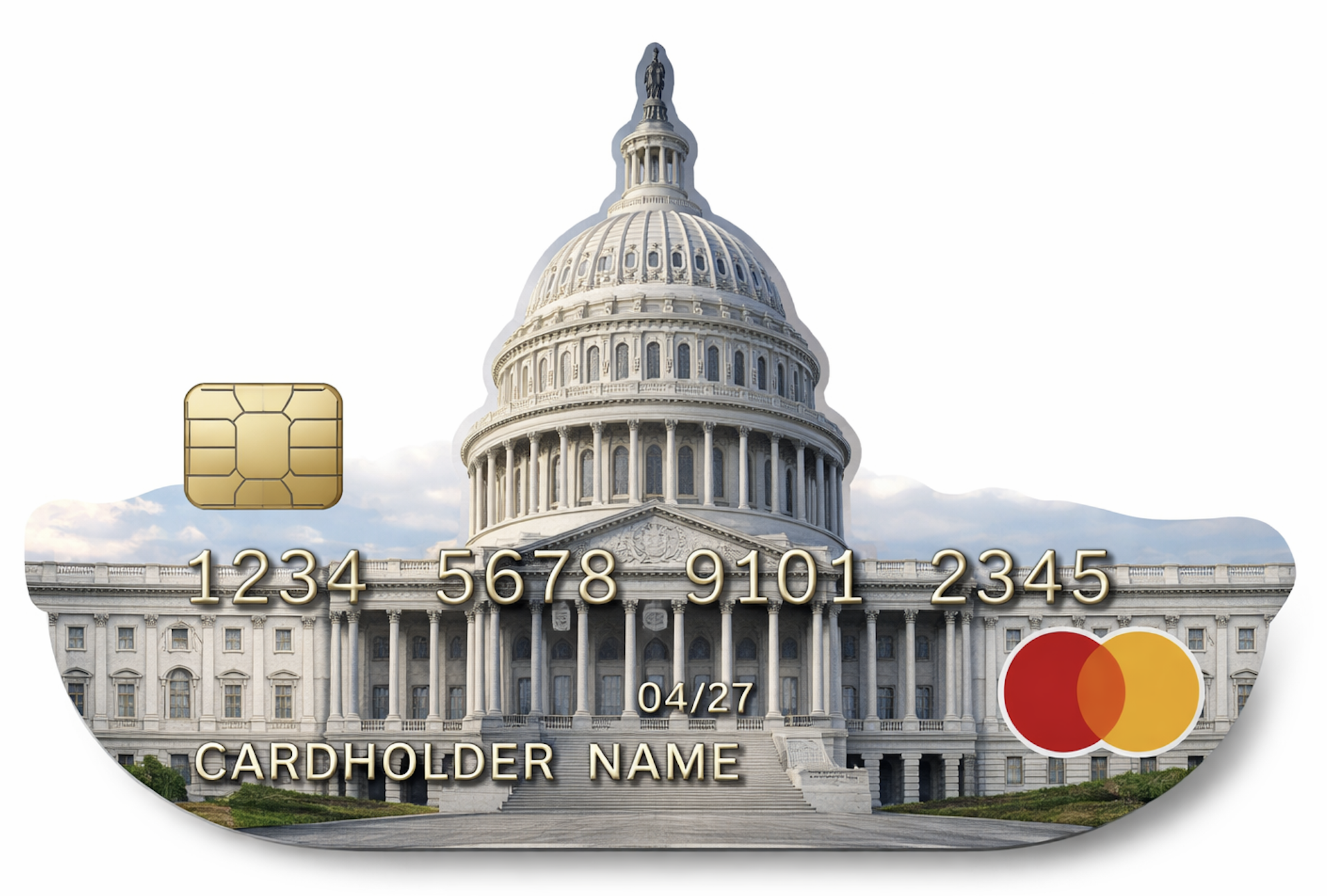
Shortly after proposing a 10% cap on credit card APRs, Trump stated on Truth Social, “Everyone should support great Republican Senator Roger Marshall’s Credit Card Competition Act, in order to stop the out of control Swipe Fee ripoff. Roger is a FANTASTIC Senator!!!”
The Credit Card Competition Act seeks to require large institutions to give merchants a choice of at least two different payment networks, meaning not just Visa or Mastercard, to process electronic credit-card transactions, and aims to break up that duopoly and lower “swipe” or interchange fees that merchants pay.
‘We Cast Hard Votes’
Senate Majority Leader John Thune (R-SD) said Republicans are on both sides of the bill—which is strongly supported by retailers but which failed to gain traction in the prior Congress–and said he believed it would be up for a floor vote “at some point,” according to Politico.
“That’s what we do around here,” he told Politico. “We cast hard votes.”
America’s Credit Unions: ‘Hurts Consumers, Helps Big Box Retailers’
“America’s Credit Unions has long opposed the Credit Card Competition Act because it would disrupt a secure and competitive credit card system in ways that hurt consumers and small financial institutions, while benefiting Big Box retailers,” America’s Credit Unions President and CEO Scott Simpson said in a statement. “The bill’s routing mandates will ultimately lead to increased fraud, reduced card rewards, and limited access to affordable credit for millions of credit union members. There’s no evidence this proposal would lower prices for consumers, but there is evidence this will benefit the largest retailers in the United States. The real risk is that it would weaken the payments system people rely on every day. Credit unions urge lawmakers to reject this approach and focus on policies that support a strong payments system while protecting consumers and financial choice.”
DCUC Urges Rejection of Bill
In response, the Defense Credit Union Council (DCUC) is urging Congress and the White House Administration to reject the Durbin-Marshall credit card mandates, warning the proposal would expand a failed regulatory framework that harms consumers, small businesses, and community financial institutions while delivering a windfall to the nation’s largest corporate retailers.
“The mandates would extend the original Durbin Amendment’s routing requirements to credit cards, despite clear evidence that similar policies failed to benefit consumers, DCUC said. “According to the Government Accountability Office, absent the original Durbin amendment, 65% of noninterest checking accounts at covered banks would have been free. Instead, consumers experienced reduced access to free accounts, fewer benefits, and higher costs. Expanding this approach to credit cards would similarly reduce access to credit, eliminate popular rewards programs, and increase fraud risks.”
‘Same Mistakes’
“These mandates repeat the same mistakes that consumers already paid for under the original Durbin amendment,” DCUC President and CEO Anthony Hernandez said in a statement. “A one-size-fits-all rewrite of the credit card payments system would reduce access to affordable credit, weaken fraud protections, and disproportionately harm servicemembers, veterans, and working families who depend on secure, reliable financial services.”
According to DCUC, lower-income and minority consumers would be hit hardest, with the organization stating that 77% of cardholders earning under $50,000 carry a rewards credit card—benefits that would be jeopardized under the Durbin-Marshall proposal.
Additional Arguments
In its response, DCUC also said:
- “Independent analysis reinforces these concerns. Oxford Economics estimates the bill could cost the U.S. economy $228 billion and eliminate 156,000 jobs by undermining rewards programs that support travel, tourism, and consumer spending. The Congressional Research Service has also concluded it is unclear whether retailers would pass savings on to consumers. History suggests they would not: following the original Durbin amendment, 98 percent of merchants either raised prices or kept them the same.”
- “Claims that the proposal would increase competition are also misleading. A University of Miami study found nearly all savings would flow to retailers with more than $500 million in annual sales, disadvantaging small businesses while consolidating benefits among corporate megastores. Assertions that community banks and credit unions would be “exempt” are equally flawed. Federal Reserve data show community banks experienced a 30 percent decline in interchange revenue after the original Durbin amendment, despite statutory exemptions—an outcome expected to repeat.”
- “The proposal also presents serious fraud risks. A Texas A&M study estimates the mandates could double card fraud to $20 billion over the next decade while reducing institutions’ ability to invest in fraud prevention, cybersecurity, and data protection. Established card networks invest billions annually in real-time monitoring, dispute resolution, and consumer protections—safeguards that would be undermined by forced routing to alternative networks lacking comparable scale and accountability.”
Especially Urgent
“These risks are especially urgent amid ongoing economic uncertainty. Following a recent government shutdown and the possibility of another looming, families face heightened vulnerability,” DCUC said. “Weakening payment protections during such periods increases the likelihood of fraud losses that consumers cannot afford and that may take months to resolve.”
Joint Statement
The American Bankers Association, America’s Credit Unions, the Association of Military Banks of America, the Bank Policy Institute, the Community Development Bankers Association, the Consumer Bankers Association, the Defense Credit Union Council, the Electronic Payments Coalition, the Independent Community Bankers of America, and the National Bankers Association issued the following joint statement after President Trump expressed support for the Durbin-Marshall credit card mandate:
“One surefire way to make life less affordable for Americans would be to pass the misguided Durbin-Marshall credit card mandate, which would harm consumers, small businesses, and the community financial institutions that drive local economies,” the statement reads. “Lawmakers have rightly rejected past attempts at legislation and amendments to mandate the reengineering of the nation’s trusted, resilient, and efficient credit card payments system just to boost the profits of the nation’s largest retailers. This Congress should again reject this harmful proposal. Anyone supporting Durbin-Marshall is voting to make credit card transactions less secure and to take away the credit card reward programs that make life more affordable for millions of Americans.”








One Response
There goes the big salaries SERP’s and LTIPs as well as Hawaii conferences.
Welcome to the real world and earn it