


SACRAMENTO–A member of SAFE Credit Union here has gone public with an issue that has gotten some attention inside credit unions—primarily from the CU Daily—who owns the equity in a credit union when it merges?
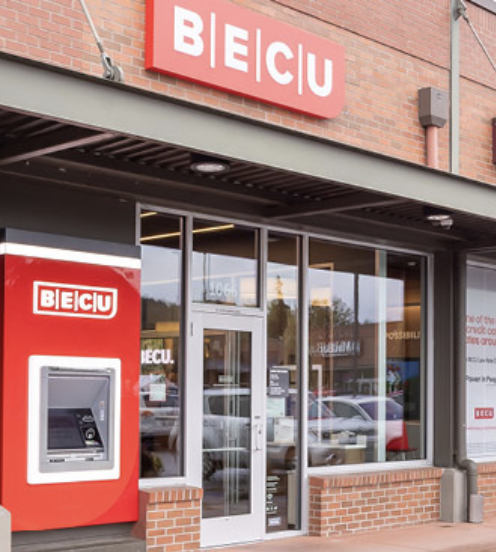
As the CU Daily reported here, in November 2025 the Seattle-based, $29-billion BECU in Washington and the $4.3-billion SAFE Credit Union in Folsom, Calif. said they are seeking to combine.
If SAFE CU’s members approve, upon completion, the combined credit union will serve 1.8 million members and operate more than 80 locations under BECU’s charter. At more than $33 billion in assets, it would be the fourth largest credit union by asset size in the U.S, the organizations said.
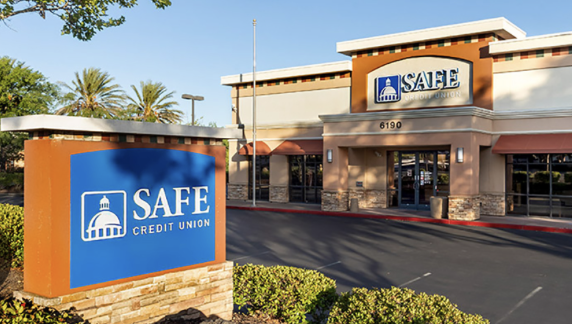
SAFE Credit Union was founded in 1940 as Sacramento Air Force Employees Credit Union for workers at McClellan Air Force Base. It now has a 13-county FOM. BECU, which stands for Boeing Employees Credit Union, was chartered in 1935 and now has an FOM that includes all of Washington State and select counties in Oregon and Idaho.
The question about who owns SAFE CU’s equity was raised in a letter to the editor of the Sacramento Bee by Dr. Scott J. Rose, a retired physician who said he has been a member of SAFE Credit Union since 2002.
‘Who Actually Benefits’
“A credit union is a not-for-profit financial cooperative owned by its members,” wrote Rose, “But who actually benefits when a financially sound credit union is handed over to another credit union? This is what the SAFE Credit Union Board of Directors voted in secret to do. On Nov. 18, 2025, SAFE leadership announced that SAFE Credit Union had signed a ‘definitive’ agreement to ‘combine’ with the Boeing Employees’ Credit Union (BECU), a Washington-based credit union with no previous ties to Sacramento.
“SAFE Credit Union is a treasured local institution, a member-owned, not-for-profit financial cooperative founded in 1940 as the Sacramento Air Force Employees Credit Union. SAFE was built by successive generations of Sacramento families, workers and small businesses, deposit by deposit and car loan by car loan. SAFE’s growth was not an accident: It was a product of loyalty and shared purpose.
Violating the Social Pact
“But that social compact is about to be violated. If this transaction is allowed to occur, SAFE Credit Union as we know it will simply disappear,” Rose’s letter continued. “The public interest group ProPublica reported that in 2024, SAFE had total assets of $4.31 billion and total liabilities of $3.96 billion, nearly all from member deposits. The difference — nearly $350 million — is the owner equity, and it belongs to the members, who are the owners. But member-owners will receive nothing from this transaction. Deals like this merger into BECU are often shrouded in secrecy and sprung upon members with no advance notice and no transparency. BECU is headquartered near Seattle.
‘No Apparent Logical Business or Economic Purpose’
“This merger serves no apparent logical business or economic purpose. At the Annual Meeting of Members on April 16, 2025, there was nothing on the agenda to suggest that a merger was in the works,” Rose continued. “In a letter I received, Board Chair Rick Blumenfeld acknowledged that the Board of Directors had established a merger committee and had ‘engaged outside merger advisors’ prior to April 16, 2025. This confirms to me that the merger negotiations were conducted in secrecy and deliberately concealed from the members — a clear violation of the board’s fiduciary responsibility to act in the best interests of its members.
“Since 1940, successive generations of SAFE leadership have expanded engagement with the Sacramento region. SAFE’s ties to the community ensure that the interests of our region always come first. SAFE has competitive advantages, including decades of member loyalty, local knowledge, organizational relationships and unfolding opportunities to meet members’ needs, such as housing, business loans and support for local institutions,” Rose stated. “In 2025, SAFE reported total local philanthropy of $437,000 — not including $23 million for the naming rights to the Sacramento Performing Arts Center in 2019, paid over the next 25 years. These commitments are in jeopardy if SAFE becomes a BECU branch operation. Philanthropy follows corporate headquarters.
‘Cannot Be Undone’
“SAFE’s assets belong to its members. All member equity — $350 million — should belong to its members and not BECU,” Rose wrote. “At the very least, all 245,000 SAFE members must be paid a minimum of $1,400 each for their ownership equity if this deal actually happens. Member-owners, local leaders and potentially impacted community organizations must speak out. What will be lost is not simply an accounting abstraction — it is real community wealth. California regulators are being asked to approve this deal. But once approved, it cannot be undone.”








One Response
Louder for the people in the back.
These are the right questions for members to be asking.
Mergers should exist to strengthen member value, not simply to increase size or consolidate assets. Growth alone is not a strategy. Member benefit should be the standard.
When expansion becomes the primary objective, it is fair for members to ask who truly benefits and how that benefit shows up in rates, service, access, and long-term value.
Credit unions were built on stewardship and trust. Boards and executive teams carry a responsibility to demonstrate clearly how a merger advances the mission, not just the balance sheet.
Members deserve transparency. And they deserve to vote with full understanding of the impact.