WASHINGTON–A representative of NCUA shared with a congressional subcommittee how the agency is keeping pack with technology during a hearing Thursday.
Amanda Parkhill, acting director of NCUA’s Office of Examination and Insurance, was among the witnesses in the hearing titled, “Innovation at the Speed of Markets: How Regulators Keep Pace with Technology.
The other witnesses included:
- Randall Guynn, Director, Division of Supervision and Regulation, Federal Reserve Board
- Gallagher, Senior Deputy Comptroller and Chief of National Bank Examiner, Office of the Comptroller of the Currency
- Ryan Billingsley, Director, Division of Risk Management Supervision, Federal Deposit Insurance Corporation
Parkhill said in her prepared remarks that NCUA mission is to “enable access to financial services by facilitating safe, sound, and resilient credit unions,” and that it has been peeling back certain regulations and using AI as part of that effort.
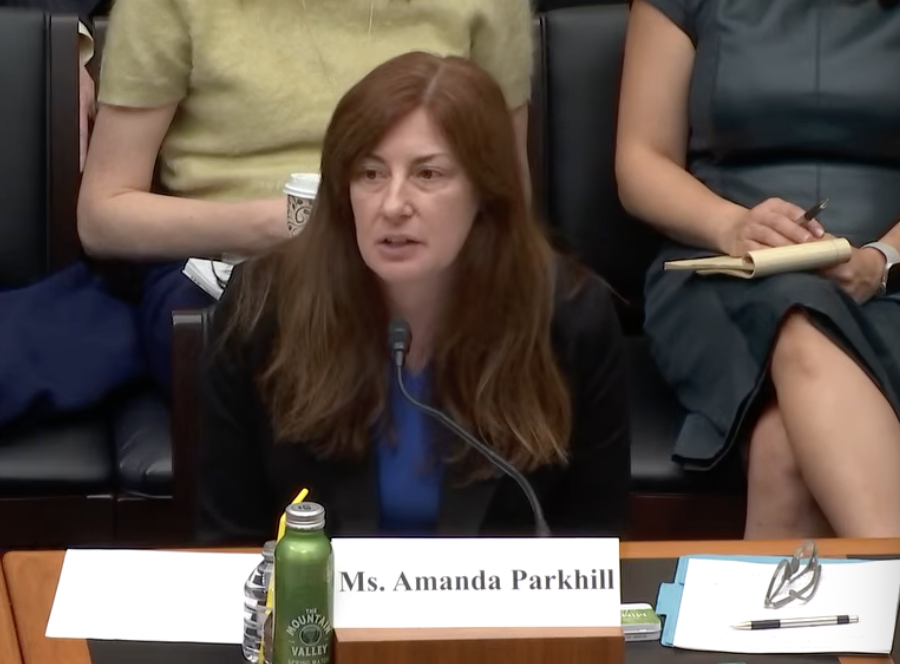
“In meeting this mission, the NCUA is aware that overregulation can stifle innovation and growth. Last December, we launched the NCUA Regulation Review Project, a long-term initiative aimed at methodically reviewing all regulations and revising them as needed,” Parkhill said. “The initial focus is on rules that are obsolete, duplicative of statute, intended to serve as guidance, or unduly burdensome.”
Parkhill told the committee there are currently 15 notices of proposed rulemaking available for public comment in the Federal Register.
‘Well-Positioned’ to Embrace Innovation
“As cooperatives, credit unions are well positioned to embrace the spirit of innovation, finding new ways to maximize efficiencies, pool resources, and meet member needs. Credit unions understand the connection between financial technology and inclusion,” Parkhill said. “They have a long history of embracing technologies that enhance member service, including AI-powered tools for loan underwriting, virtual assistance, and fraud detection.”
Like the other witnesses, Parkhill noted the financial services industry is rapidly evolving, with advances in AI, blockchain, and digital assets, and that the agency has worked to provide support to CUs, including the addition of an AI resources page to its website in August 2025.
“The NCUA actively seeks stakeholder feedback on challenges related to technology adoption. These include regulatory interpretation, due diligence burdens on smaller firms, restrictive long-term contracts with service providers, and limited API access that can make integration difficult for smaller institutions,” Parkhill said in her opening statement. “These insights inform the NCUA’s ongoing work to ensure the regulatory framework supports responsible innovation.”
Tech Used in Exam Program
Parkhill further noted that in December 2024, the NCUA board voted to integrate financial technology expertise into the agency’s examination and supervision program, with the realignment ensuring supervisory staff can effectively assess new technologies and their associated risks and opportunities.
In addition, Parkhill said that beyond supervising how credit unions adopt technology, the NCUA is also exploring how technology can enhance its own operations, including using AI for content generation, to flag anomalies in call report data submissions, to forecast loan performance to support risk analysis, to identify credit unions with elevated risk, and to enhance cybersecurity operations.
She said NCUA is evaluating opportunities through the General Services Administration’s U.S. AI shared services, which provide federal agencies with access to multiple AI models in a secure environment.
Internal Working Group
“An internal working group is assessing these tools, including estimated costs, use cases, and security and privacy considerations,” Parkhill said. “These collaborative efforts will inform our strategy and decisions about deploying additional AI capabilities.”

When it comes to the recently enacted GENIUS Act, Parkhill said NCUA has moved “promptly” with other regulators to publish a notice of proposed rulemaking establishing the application requirements for credit unions and their subsidiaries seeking approval to become permitted payment stablecoin issuers.
“A forthcoming rulemaking will address issuer standards, including reserves, capital, liquidity, and risk management requirements,” Parkhill said. “We are working to meet Congress’s deadline and ensure that credit unions are not disadvantaged compared to other financial institutions.”
Questions from Committee Chair
Subcommittee chair Bryan Steil (R-WI) had two questions for witnesses.
Steil: Can you share one concrete example of an action taken by your agency to keep pace with technology?
Parkhill: Our chairman (Kyle Hauptman) held multiple roundtables on AI and digital assets to get information both from credit unions and industry about challenges and information and the resources that would be helpful, and we’re taking that information back and including it in any future guidance.
Steil: AI can be used by bad actors, but also used to prevent bad actors from being successful. What is most effective way your agency is using technology like AI to fight fraud.
Parkhill: We are using it internally in our cyber-operations. We find it particularly useful in helping to block threats related to phishing and malicious attachments.