BOSTON–A new report has found, perhaps not surprisingly, that consumer payment behavior is largely driven by entrenched habits and the nature of the purchase, with distinct patterns emerging between everyday transactions and more specialized purchases such as travel.
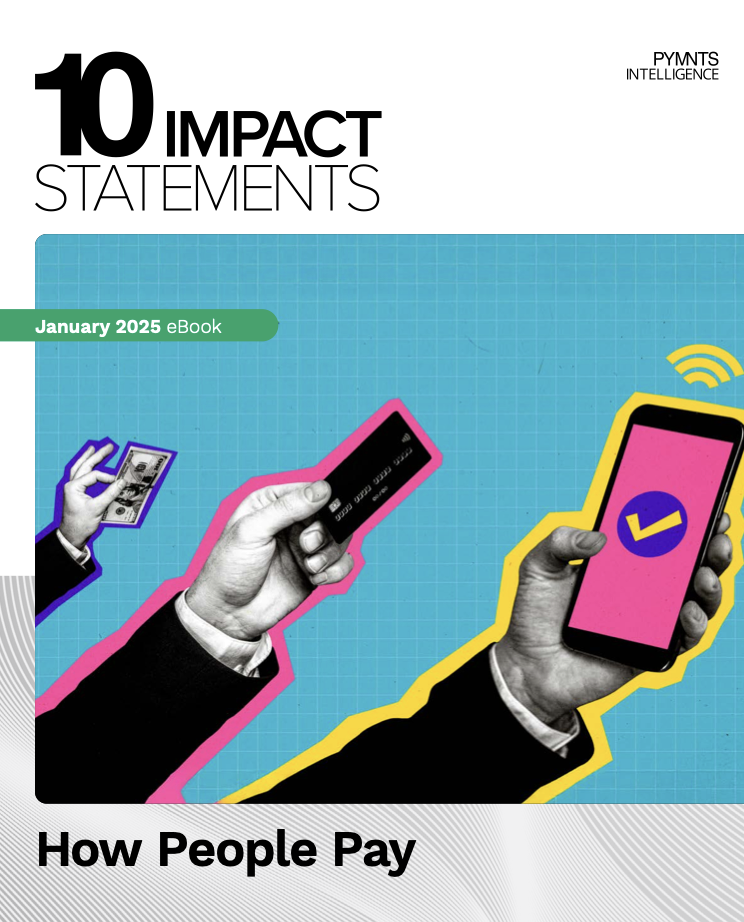
The recent “How People Pay” eBook from PYMNTS, which is based on November 2024 data, offers detailed insights into those preferences, finding that debit cards continue to be the dominant choice for routine expenses, while credit cards are favored for higher-value items.
“This stickiness in payment preferences indicates that encouraging the adoption of new payment methods remains a challenge for the industry,” according to PYMNTS.
Role of Physical Stores
PYMNTS said the report further elaborates on the interplay between purchase type and shopping channel, showing that physical stores still primarily serve consumers’ daily needs, contrasting with a strong online preference for specialized goods and services.
“Digital wallet usage also aligns with this trend, being significantly more prevalent for online-centric purchases such as travel, as opposed to in-store grocery shopping,” PYMNTS said. “These findings underscore a segmented approach by consumers, who adapt their payment and shopping methods to suit the context and perceived convenience of each transaction.”
Key Data Points
According to PYMNTS, key data points from the report include:
• Debit card preference for groceries: Consumers are 67% more likely to use a debit card than a credit card when purchasing groceries, reflecting a preference for using “cash on hand” for smaller, everyday items, PYMNTS said. “This trend has been consistent, with debit remaining the preferred method for grocery purchases over the past two and a half years, accounting for 44% of most recent grocery payments as of November 2024.”
• Credit card dominance for travel: “Unlike daily purchases, 40% of consumers most recently used a credit card to pay for travel services,” the analysis states. “This indicates a strategic choice for larger expenditures, where credit cards often offer benefits such as rewards or better expense management.”
• Digital wallet use for travel: According to the PYMNTS analysis, consumers are 2.4 times more likely to use a digital wallet for a travel purchase than for a grocery purchase. “This highlights that digital wallets are increasingly used for less routine transactions that are more frequently conducted online, rather than for typical in-store grocery shopping.”
Positive Developments
PYMNTS said the report also provides “positive developments” in payment security and success rates, noting a 27% decline in payment failures over the past two years, with only 13% of consumers experiencing a decline in November 2024.
“Furthermore, fraud rates have remained stable and low, with less than 1 in 10 consumers reporting fraud in 2024, demonstrating effective measures by merchants, financial institutions and consumers in mitigating fraud,” PYMNTS said.