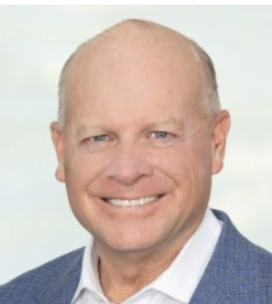
TAMPA, Fla. — In what may be one of the best-planned retirements ever in credit unions, Charles E. (Chuck) Fagan III has announced plans to step down as CEO of Velera on Sept. 30, with Brian Caldarelli, executive vice president and chief administrative officer, named to succeed him as president and CEO effective Oct. 1.
Fagan was appointed president and chief executive officer of Velera in January 2024, following the merger of PSCU and Co-op Solutions. Prior to the combination, Fagan served as president and chief executive officer of PSCU since April 2015.
Caldarelli has served as Velera’s executive vice president and chief administrative officer since the combination of PSCU and Co-op Solutions (“Co-op”) in January 2024. He also has served as executive leader of the company’s Integration Management Office (IMO) over the past two years. Caldarelli joined PSCU as EVP and CFO in July 2012.
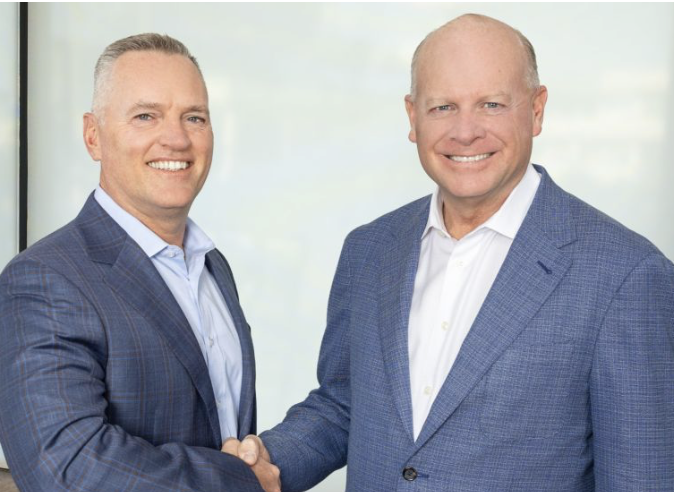
Below, Fagan and Caldarelli speak with The CU Daily about retirement plans, what they see taking place in payments, what’s ahead for the company, and what it will take for credit unions to remain viable into the future, in addition to other issues.
The CU Daily: How long has this succession been in place at Velera?
Fagan: I gave the board this date on March 15, 2015, when I accepted the job. I never knew that it would play out to the exact day, but I’ve been working with Brian more than 11 years. He’s been to every board meeting I’ve attended. Over that period of time, we’ve started Lumin Digital, we’ve established a partnership with Jack Henry, and PSCU and Co-op came together.
Brian brought the two companies together. He led the Integration Management Office, so I’ll say it was two to three years ago the board worked with me on putting a CEO profile together. As that was established, we started investing in Brian, and it was a CEO acceleration process. It was very disciplined. It covered quite a bit, and Brian brought a lot to the table, obviously, but he started out as our CFO, so he had the financial background. Then we got him engaged in more and more pieces of the organization as we did those other things. I’d say that training and development has been going on more than 11 years, but it really intensified over the last two to three.
The CU Daily: Why such a long-term retirement horizon? That’s more than 10 years.
Fagan: My wife is four years older than I am, so we always based our retirement on her age, not mine. We want to be active. We want to be able to do things while we’re both still very healthy. I asked her to give me a year off airplanes, and then we can start doing some of the travel that she wants to do. We’ve now got a place on one of the rivers that runs into the Chesapeake Bay in Virginia, with a boat. And I don’t get to play the golf that I used to when I was in sales, so I look forward to being able to do a bit more of that.
Now felt like the right time personally. But even more relevant recently, it felt like the right time for the business. We’ve done a lot to bring the organizations together. I committed to the board that I would be here for the bulk of the integration efforts and that it would take two to three years, maybe a little longer. It’s two years and nine months, and it’s going on three years that I will have been part of that integration. So, I think from a business standpoint it’s the right timing.
The CU Daily: You mentioned that you had looked to Brian three years ago and began investing in him at that point. Did Velera look at other candidates?
Fagan: Obviously, it was the board’s decision, but yes, we invested in other internal talent, and the organization will continue to benefit from that investment. The board looked at external candidates as well, so it was very comprehensive. The interviews happened back in January, and they made their decision. We knew we had our client conference coming up in mid-April, so now is the right time to announce it and give Brian time to begin some of the work he’s doing with the board to make sure that everything is set for him to step into the role on Oct. 1. It gave me a chance to get in the right frame of mind to hand off this incredible company later this year.
The CU Daily: Brian, you led the Integration Management Office for the merger of the two companies. How did that process go?
Caldarelli: More than 80% of merged organizations don’t work out; they don’t hit their business case. There were two things that we were really concerned with. One was hitting the targets that we put out there for our membership and for our board. The other was keeping the talent you want to keep, which is really important for us. A lot of that, too, is ensuring that things like your culture improve, things like engagement improve. We’ve been very fortunate and very lucky that we’ve been able to improve our employee engagement scores, which is fantastic.
The CU Daily: What advice would you have for credit unions that are integrating their operations and going through a merger?
Caldarelli: I think the biggest thing we learned, and Chuck was the main proponent of this, was to be extraordinarily mindful about culture and the importance of culture and what that means. Culture, in some ways, is defined as what people do when the boss isn’t looking. It’s ensuring that we’re doing the right things for our credit unions and our clients each and every day, and doing the right things for our employees, and really being employee- and client-centric in terms of how decisions are made. We ensured that as part of the integration, culture has a seat at the table. In fact, with every decision we were making, we were also looking at that through the lens—just as you would look at it through financial or operational lenses—we were also looking at it through the lens of culture.
Coming from a CFO background, you don’t necessarily get that in your training, but it’s something that you learn along the way. We have this saying of “culture eats strategy for lunch.” It absolutely does. I’d say it’s one of the key ingredients between having a merger fail or a merger succeed. I would advise credit unions going through similar combinations that if you think you’re communicating to your team and the market enough, you’re not.
The one thing that we did intentionally was we wanted to take the best of the best. So, each team that had a bit of work with the merger included individuals from both legacy companies, with the clear instruction to find the best of the best. I don’t care which legacy company it comes from. Your job is to determine what is the best solution and products are.
The CU Daily: The PSCU/Co-op merger is relatively recent, and yet an awful lot has changed in payments in just that time. How do you look to the future for the company, the future of the plastic card, the future of tokenization? Where do credit unions fit?
Fagan: As we brought the two companies together, the worst answer we could have given to a credit union is, “Hey, we can’t deal with your project right now because we’re bringing the two companies together.” That means we would be slowing down the credit union’s business, and that was not an option. So, we built an emerging services unit so as new payment technologies and different aspects of our business surfaced, this team was separated from everything. They would say they really have the best jobs because they didn’t have rules around all the other stuff that was going on in bringing the two companies together.
In 2025, we had things like tokenization, stablecoin, and the emergence of the hockey stick for digital wallets. That addiction to plastics kind of shifted to where people understood the tokenized aspects of their card being in the mobile wallet and not having the raw account number built into the mobile device. It’s the tokenized version of it, so it’s actually a safer transaction than using the physical piece of plastic.
As that new technology surfaces, it’s incumbent upon an organization like Velera to concentrate on speed. If credit unions are lagging on technology getting to market, today’s younger members will move their loyalty. It’s different from when I grew up. I still have the original account I opened at a credit union in the 1980s when I got my first job. That loyalty is important to me. But the loyalty of the younger demographic, who went through COVID and who see how important Amazon and others have become in their daily lives, will shift.
All those companies want to be in payments because of the data it provides about each of us—how we spend our money, how we do things. That data is something you see with X, with Elon Musk now getting into funds movement. You have Facebook Cash. You have other applications because of what the data represents. So, I think ongoing new payment types will continue to emerge, and our company has to at least keep credit unions on that leading edge. The bleeding edge is probably too risky for credit unions, but leading edge is the right place, and we think that can be one of the advantages of Velera.
We can use our size, which is smaller than the mega-players in the market, to be fast and nimble, with the intentionality of building innovation into all we do and understanding the market we’re in. There will always be new players and new solutions. We’re in a market with some of the most well-capitalized and most competitive organizations on the planet. That’s just where we are. We’ve got a lot of smart people who wake up thinking about that every single day.
The CU Daily: Where does AI fit in Velera’s future, and how are you using it?
Fagan: Velera has been using AI for years. Co-op was using it, PSCU was using it. Some of the earliest use cases were in fraud protection—the neural aspect of using data behind trends and patterns of consumers and using that data to protect them. That is well established in terms of utilization.
I think AI has incredible opportunities to make our company efficient and fast. If we get a call from a credit union on the West Coast about a situation, then we handle it, and we get a call about a similar situation from a credit union on the East Coast and we can use AI and the data on how we fixed or helped with the situation and use that repetitively over and over again.
One thing I’ve always been passionate about, and Brian endorses as well, is a credit union member may experience AI entering the call center or other aspects of managing their card product, but they need to always be able to reach a person. That human touch is something credit unions want and will continue to (need) as we use more technology to provide service.
I think AI is also going to get into incredible use cases on the agentic side, where consumers and employees will be able to have agents perform tasks for them, but again, there will be a person there.
One thing both Brian and I are overseeing is that AI is only as good as the data you have and how clean it is. We have an extensive project underway around structuring our data so it is best positioned to be used by AI, whether by us or by credit unions.
The CU Daily: Brian, every organizational leader has a particular fascination or interest. What do you find most interesting about the business?
Caldarelli: I think it’s just the heart of the business—what credit unions mean for people, for members, for the communities they serve. I grew up in a single-parent household. My mom was a nurse, and her access to the credit union at work—the advice and counsel—was critical for us growing up.
There is also the work we do in our communities when there’s a natural disaster. Look at the hurricanes here. We helped dozens of our employees who lost their homes. So that’s one aspect.
Clearly, the other would be payments and the incredible level of innovation in the space. If you love business, you’re going to love payments. That’s where the scope and scale that Velera has on an aggregate basis is important. We’re the third-largest cardholder base in the U.S. That puts us at the top tier in terms of partnering with the largest organizations in the country. That’s a fascinating space because there are so many smart solutions coming out, and that’s just the tip of the iceberg.
The CU Daily: Brian, you’ve worked outside credit unions. What do you think you bring to Velera with that perspective?
Caldarelli: I certainly learned a lot coming into PSCU and Velera, especially about the importance of culture and engagement. I was one of those CFOs focused on short-term quarterly earnings. Luckily, I was able to unlearn a lot of those lessons and really understand the importance of this business for individuals and communities. That’s been very rewarding.
I came to Velera thinking I’d be here two to three years. Fourteen years later, Velera is as much a part of my life as anything else.
The CU Daily: Chuck, how do you view the future of credit unions?
Fagan: I don’t think there’s any question that credit unions can make it. There’s no better example of the power of credit union collaboration than Velera. As Brian said, we’re the third-largest issuer in the United States because we’re able to bring together 4,000 financial institutions and look like a single client.
It’s important that the industry stays comfortable with collaboration. When you look at banks, they got together around money movement and built Zelle, but there aren’t many examples where those banks sit in the same room and collaborate broadly.
If the credit union industry can continue that willingness to collaborate, there’s no stopping it because of the community aspect of what we do. It’s every bit as powerful today as it was when I started in the 1980s.
There are fewer credit unions, and consolidation has accelerated, but hopefully the outcome is stronger, more viable institutions.
Velera is an example—with the largest shared branching network, the largest surcharge-free ATM network, and the third-largest issuer. More and more, there are examples of how this power of collaboration supports the industry. That’s been one of the most rewarding things to see as we brought the two companies together.