


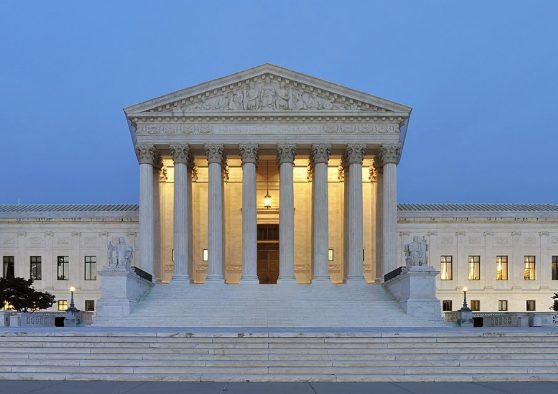
WASHINGTON–In a case that has potentially huge implications for NCUA and its consistency as a regulator, the Supreme Court has opted not to hear a case filed by two NCUA board members who have challenged President Trump’s authority to fire them, sending it back to the D.C. appeals court.
Both America’s Credit Unions and the Defense Credit Union Council stressed in the wake of the decision that the independent future of NCUA remains paramount.
As the CU Daily has been reporting, the president fired board members Todd Harper and Tanya Otsuka—both Democrats—in April, leaving one person on the board, Republican and current Chairman Kyle Hauptman.

Harper and Otsuka had earlier filed a petition with the U.S. Supreme Court requesting it grant certiorari before judgment in the case and to consider the case alongside Trump v. Slaughter. As the CU Daily reported, the Supreme Court had earlier indicated it would review the case filed by Rebecca Slaughter, who is challenging President Trump’s attempt to remove her as a commissioner of the Federal Trade Commission.
Oral Argument Delayed
As the CU Daily additionally reported, oral arguments in the case involving the NCUA board members—officially known as Harper v. Bessent–were originally scheduled for Nov. 21, but the D.C. Circuit Court of Appeals suspended them pending the Supreme Court review of Slaughter.
The NCUA and FTC cases are similar in that both involve what had long been considered “independent” agencies in which board members and commissioners could only be fired for cause, based on the long-held precedent established by the 1935 Supreme Court ruling known as Humphrey’s Executor, which found the U.S. Constitution allows Congress to enact laws limiting the ability of the President of the United States to fire the executive officials of an independent agency that is quasi-legislative or quasi-judicial in nature.
Harper and Otsuka are also arguing that the one-person NCUA board does not qualify as a quorum.
Oral arguments in the Trump v. Slaughter case are scheduled for Dec. 8.
‘Very Critical’
“It is widely anticipated that the Supreme Court will be very critical of Humphreys Executor and may just outright overturn that decision,” said Ann Petros, VP-policy engagement and credit union operations with America’s Credit Unions. “It has slowly been chipping away at that principle and standard over years now.”

After hearing arguments in the Slaughter case, a Supreme Court ruling is not expected until the Spring of 2026.
If the court rules in favor of the administration and against the precedent established by Humphrey’s Executor, it could create a scenario in which the direction of NCUA swings every time there is a new political party in the White House following an election.
Potential for ‘Fundamental’ Change
“This decision could fundamentally change the administrative space and what we understand to be independent agencies, so that’s a new world that we’re stepping into that we have to understand and navigate,” said Petros in response to a question from the CU Daily. “It’s really an issue we need to discuss more fully with our membership and decide what the best path forward is to establish that clarity and consistency and ensure the NCUA board is able to take action on behalf of the industry.”
Petros noted America’s Credit Unions has long supported an “independent” NCUA, and clarified that what it means by independent is a “separate regulator for credit unions that’s not rolled into the FDIC or the banking regulators.”
DCUC Cites ‘Uncertainty & Evolution’
In a statement, the Defense CU Council said the Supreme Court’s decision to pause action on the Harper/Otsuka case while proceeding with oral arguments in the Humphrey’s Executor challenge highlights that the future structure and leadership of the NCUA board remain uncertain and could continue to evolve.

“For credit unions serving military families, veterans, and DoW communities, regulatory stability remains important,” President and CEO Anthony Hernandez said in a statement. “Regardless of potential changes involving individual board members, DCUC is focused on ensuring that any future appointments or administrative actions support NCUA’s independence, mission clarity, and its ability to maintain a strong and competitive credit union system.
“We are closely monitoring the legal and constitutional issues involved and consulting with experts to understand the broader implications. Our priority is to support continuity, predictability, and sound governance at the agency responsible for overseeing more than 144 million credit union members nationwide,” Hernandez continued. “DCUC will continue to advocate for stable, mission-driven leadership at NCUA on behalf of all credit unions as developments unfold.”








One Response
With any luck, this will lead to the Projct 2025 goal of combining NCUA with other agencies