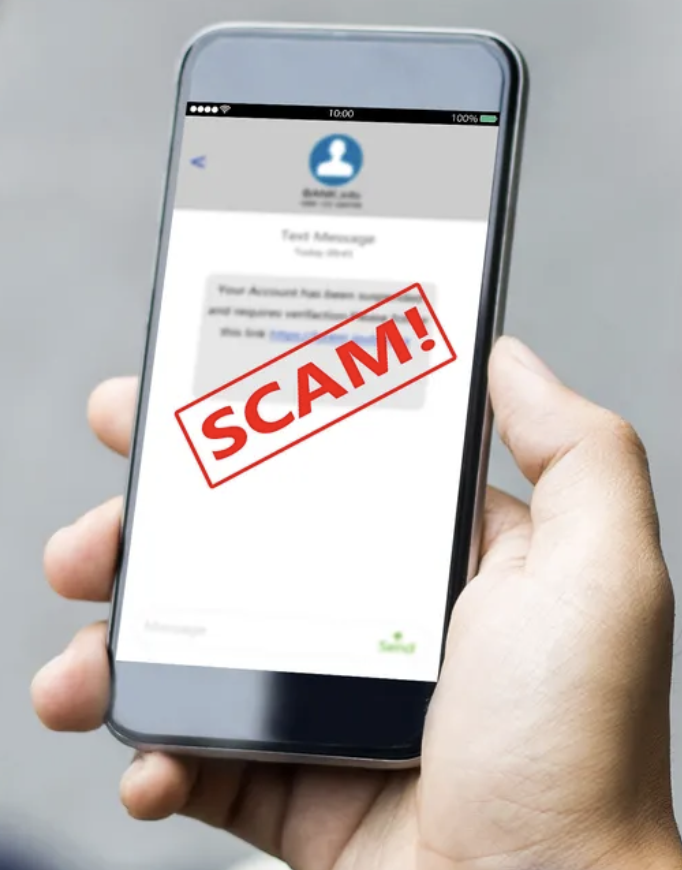
WASHINGTON–The websites and communications of credit unions across the country are full of warnings to members to not be scammed by bogus text messages claiming to be the credit union—or other financial accounts—and a new analysis shows just how big the problem is and how much money is being scammed.
According to officials with the Department of Homeland Security, criminal organizations operating out of China have used the scams to make more than $1 billion over the last three years on everything from ploys related to credit unions and Fis to overdue tolls to alleged credit card breaches.
The gangs behind the scams take advantage of this information to buy iPhones, gift cards, clothing and cosmetics, according to Homeland Security.
‘Behind the Con’
“Behind the con, investigators say, is a black market connecting foreign criminal networks to server farms that blast scam texts to victims,” the Wall Street Journal reported. “The scammers use phishing websites to collect credit-card information. They then find gig workers in the U.S. who will max out the stolen cards for a small fee.
“Making the fraud possible: an ingenious trick allowing criminals to install stolen card numbers in Google and Apple Wallets in Asia, then share the cards with the people in the U.S. making purchases half a world away,” the report added.
According to Proofpoint, a company that filters mobile spam messages, the text scams are only growing, with American reporting an all-time high of 330,000 toll-scam messages in a single day last month. The average monthly volume of toll-scam messages is about 3½ times what it was in January 2024, the company said.
Setting up SIM Farms
The Journal further reported that criminal gangs are able to flood people with text messages using so-called SIM farms, which are rooms jammed with boxes of networking devices. The servers are stuffed with the little white cards that mobile customers put in their new phones to begin making calls or sending texts, the report explained.
38 ‘Farms’ in the U.S.
Ben Coon, chief intelligence officer with the cybersecurity company Unit 221b, who has investigated the messaging fraud, told the Journal there are at least 200 SIM boxes operating in at least 38 farms across the U.S., in cities such as Houston, Los Angeles, Phoenix and Miami.
In the U.S., the gangs recruit the workers via the WeChat messaging app. The criminals find people in the U.S. willing to make purchases through Telegram channels. On any given day scammers employ 400 to 500 of the mules. The workers are paid around 12 cents for every $100 gift card they buy, according to the Wall Street Journal.