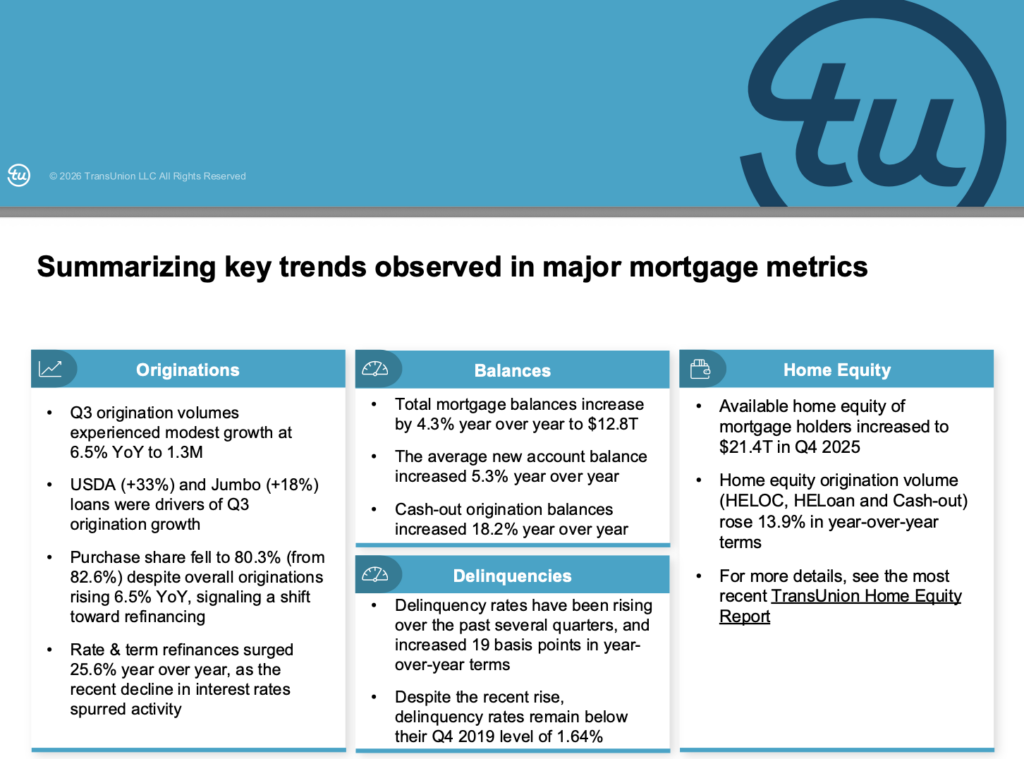
CHICAGO– Consumers are “reengaging with credit” in a more measured way, yet at the same time, delinquencies are ticking up, according to new analysis from TransUnion, which said in Q4 the 60+ DPD rate on personal loans rose to 3.99% from 3.57% a year earlier, and credit card 90+ DPD edged up to 2.58%.
The data is part of TransUnion’s 2026 Credit Originations Forecast alongside its Q4 2025 Credit Industry Insights Report (CIIR), which it said is
“compelling story about where consumer credit is headed.”
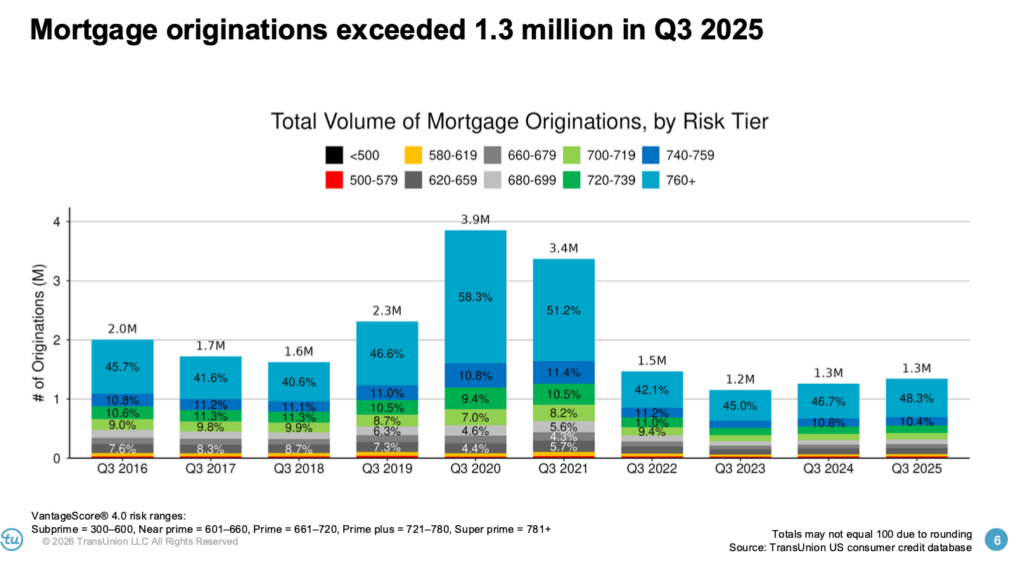
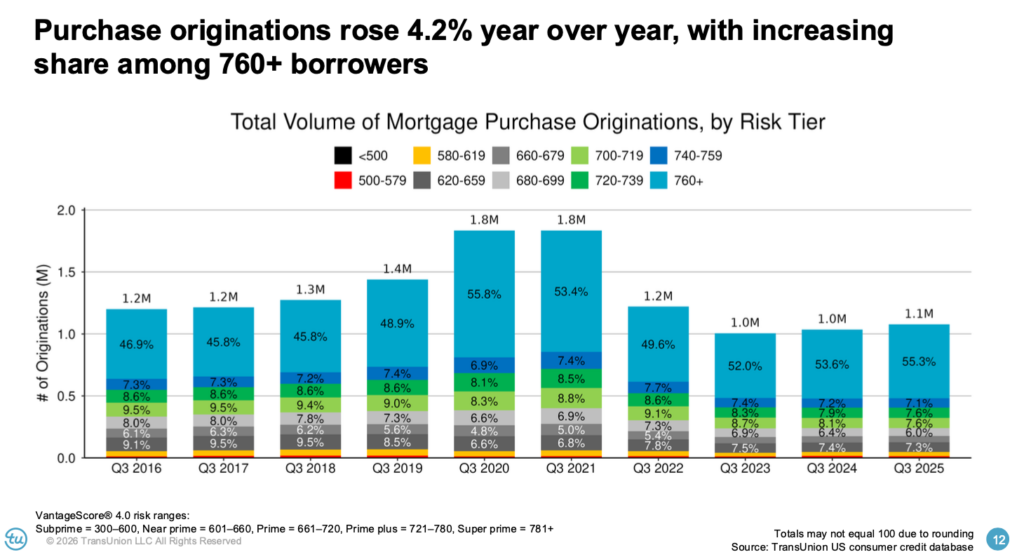
The new report found mortgages and personal loans are experiencing growth as forecasted demand for other credit products shows mixed performance. Credit card originations are expected to remain flat or experience slight seasonal declines next quarter, with a growing share shifting toward below‑prime consumers, TransUnion said.
“Unsecured personal loan originations hit a record 7.2 million in Q3 2025, the second consecutive quarter of new highs,” according to TransUnion. “Total balances climbed to a record $276 billion across 26.4 million consumers. Growth is forecasted at 5.7% for 2026, marking a third straight year of expansion.”
Additional Findings
According to TransUnion:
- Subprime borrowers are driving growth: Personal loan originations among subprime consumers jumped 32.5%.
- FinTech lenders now hold 42% of personal loan originations, up from roughly one-third a year earlier, signaling a continued shift in who’s lending to consumers.
- Credit card originations surged 11.7% year-over-year — the strongest annual growth in three years — with total balances reaching $1.15 trillion.
The Big Picture
“TransUnion forecasts that the market will gradually return to a more traditional growth pattern,” TransUnion said. “Early signs of these forecasted originations growth can be seen when looking back to late 2025, where year-over-year (YoY) increases emerged across credit cards, unsecured personal loans and auto. Consumer demand for credit remains strong across risk tiers and will likely strengthen further if interest rates fall more than expected in the coming quarters.”