WASHINGTON — U.S. banks closed 2025 with strong earnings and balance sheets, supported by loan and deposit growth, though higher expenses and lingering unrealized losses continued to weigh on some results, according to the Federal Deposit Insurance Corp.
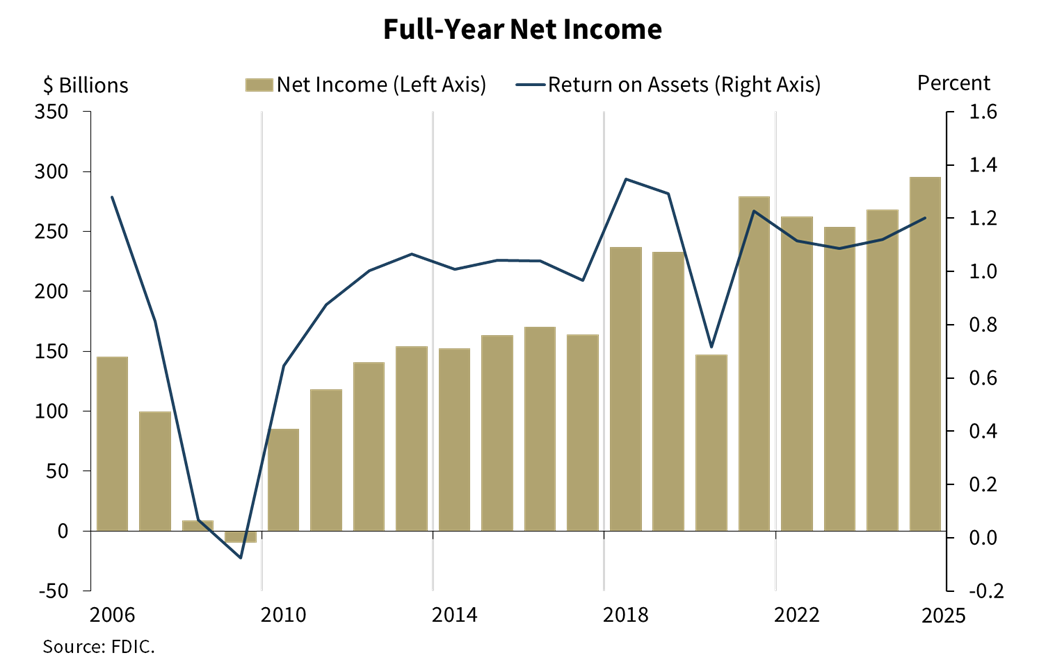
FDIC-insured institutions reported full-year net income of $295.6 billion, a 10.2% increase from 2024. The industry’s return on assets rose 8 basis points to 1.20%, driven by higher net interest income and gains in noninterest income that offset increased expenses, the FDIC said in releasing its quarterly banking profile.
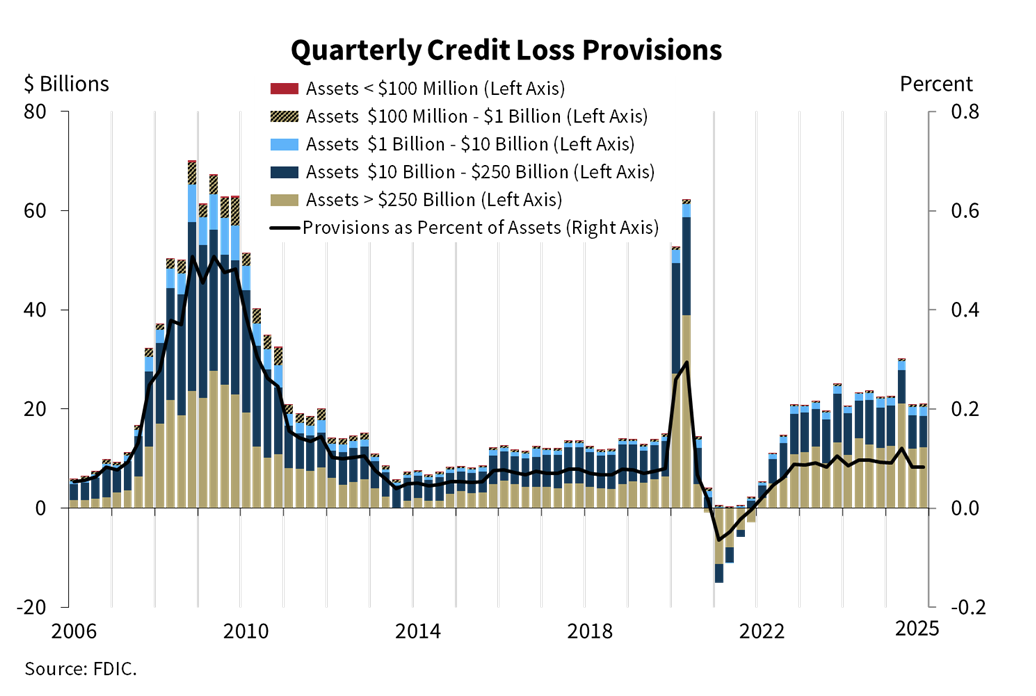
Loan growth accelerated during the year, and domestic deposits also expanded. Asset quality remained generally favorable, although regulators said they are continuing to monitor weakness in certain loan portfolios. Unrealized losses declined but remained elevated.
Strong Capital, Liquidity
Banks maintained strong capital and liquidity levels, conditions the FDIC said support continued lending and provide a buffer against potential losses.
Community banks outperformed the broader industry on several measures. They reported full-year net income of $29.9 billion, up 22.5% from 2024, with pre-tax return on assets rising 18 basis points to 1.32%, largely reflecting stronger net interest income.
Fourth-Quarter Results Mixed
According to the new FDIC data:
- Industry net income totaled $77.7 billion in the fourth quarter, down $1.6 billion, or 2%, from the prior quarter. The FDIC attributed the decline primarily to higher noninterest expenses and nonrecurring items at several large banks.
- Quarterly return on assets measured 1.24%, down slightly from the third quarter but 13 basis points higher than a year earlier.
- Community bank net income fell 3.8% from the prior quarter to $7.9 billion, reflecting higher expenses and increased securities losses. However, their quarterly pre-tax return on assets rose 28 basis points from a year earlier to 1.35%.
Margins Improve as Funding Costs Ease
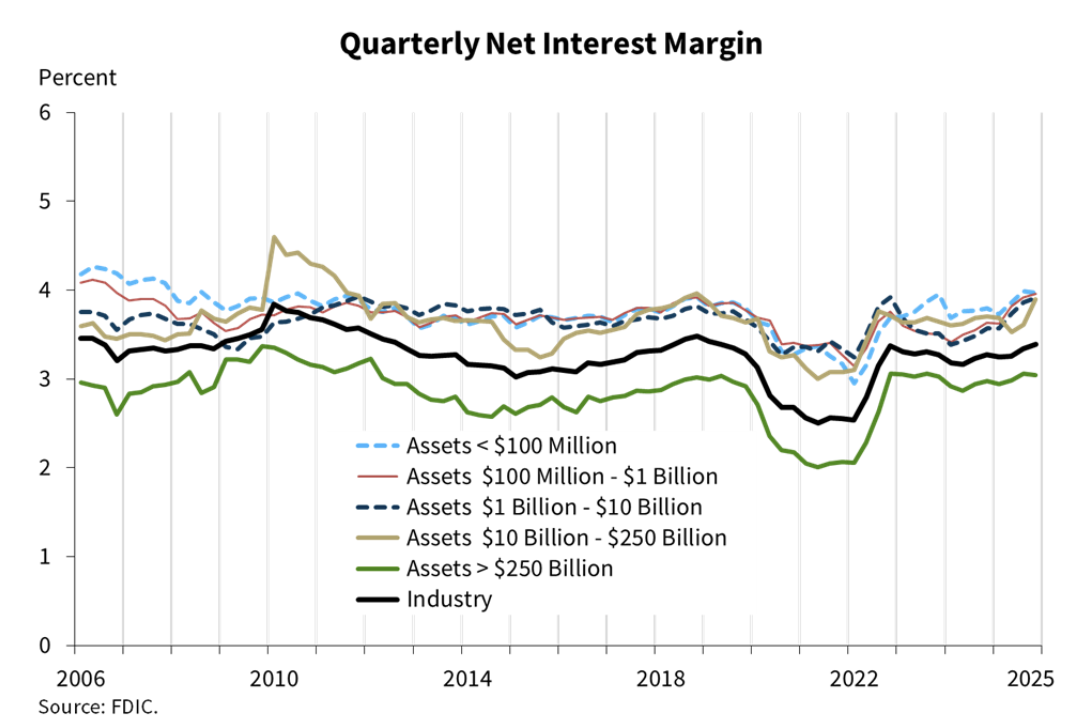
- Net interest margins improved across much of the industry. The average margin rose 5 basis points from the previous quarter to 3.39%, the highest level since 2019.
- Community bank margins increased to 3.77%, their highest level since 2018.
The FDIC said the margin expansion was largely due to a decline in funding costs that outpaced a modest drop in yields on earning assets. At community banks, a 9-basis-point decrease in funding costs more than offset a 5-basis-point decline in asset yields.
Overall, the FDIC said the banking industry entered 2026 with solid earnings performance and balance-sheet strength, even as institutions face ongoing expense pressures and areas of credit risk that regulators continue to monitor.