NEW YORK — U.S. consumer spending continued to show resilience at the end of 2025, but new data from the Federal Reserve Bank of New York point to a widening divide in how households are spending and how confident they feel about the year ahead.
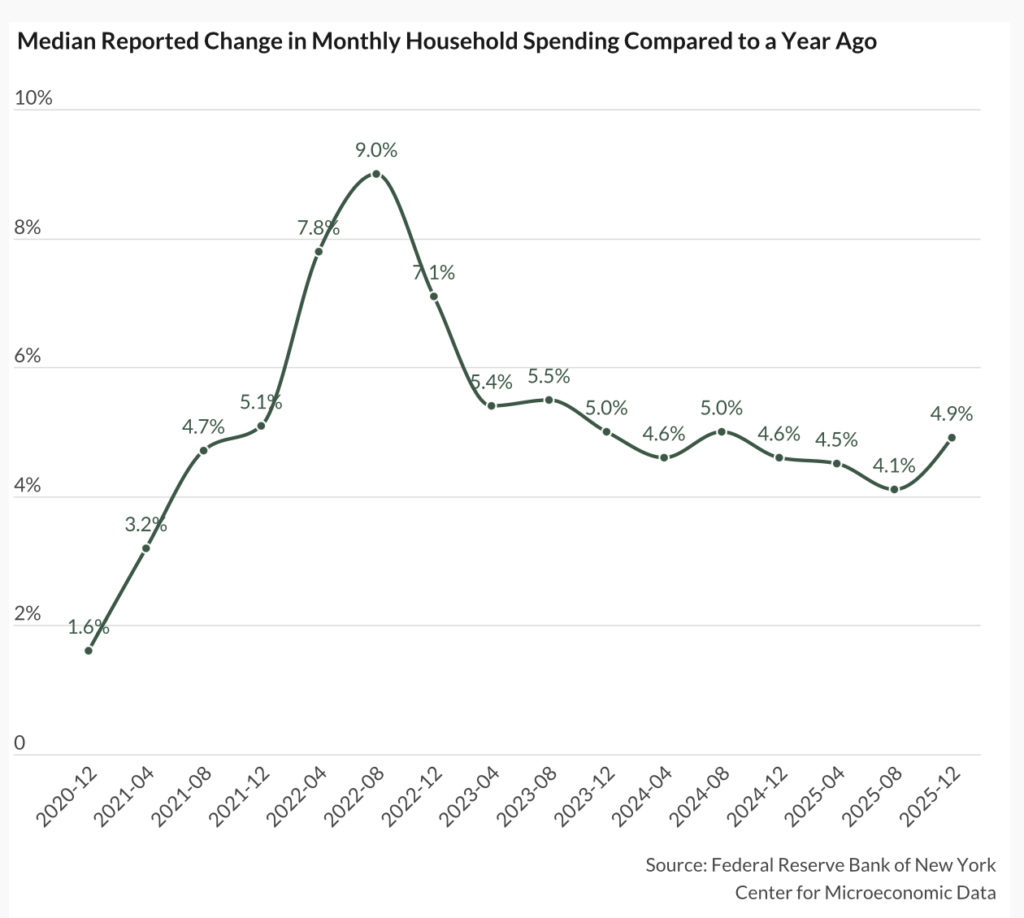
The New York Fed’s latest Survey of Consumer Expectations, released Tuesday, shows households reported a median 4.9% year-over-year increase in nominal monthly spending in December, up from 4.1% in August and higher than a year earlier. While well below the post-pandemic surge of 2022, the data suggest spending growth has stabilized above pre-pandemic levels rather than continuing to slow.

Beneath that headline strength, however, the survey shows growing selectivity. Spending growth is increasingly concentrated in essential categories, while discretionary purchases continue to soften.
In December, households reported higher expected spending growth for food at 5.4%, medical care at 5.3% and housing at 4.1%. Expectations for food and medical care both reached series highs, underscoring the pressure that essential costs continue to place on household budgets. Utilities spending expectations were unchanged at 4.6%.
The Contrast
By contrast, expected spending growth declined modestly for transportation and recreation, the New York Fed data show. Clothing spending edged higher but remained relatively subdued, signaling that consumers are still spending but prioritizing necessities over optional purchases.
That caution is also evident in large-ticket items, the New York Fed survey indicates, as the share of households reporting major purchases such as furniture, vehicles, home repairs and vacations declined in December, even as spending on homes, appliances and electronics increased slightly, pointing to more targeted buying decisions.
Key Dividing Line
The Fed analysis noted income remains a key dividing line. Among households earning less than $50,000 a year, the share reporting at least one large purchase fell to 40% in December from 46% in August. For those earning between $50,000 and $100,000, the share declined to 61% from 66%. Higher-income households showed little change, with 77% of those earning $100,000 or more reporting at least one large purchase, the Fed survey found.
Looking ahead, the survey shows households expect spending growth to moderate. Median expected monthly spending growth over the next 12 months rose slightly to 3.4%, up from 3% in August. The survey also found a gap between expectations and reality: while 52% of consumers expect to save more in the coming year, only 24% increased savings over the prior six months.