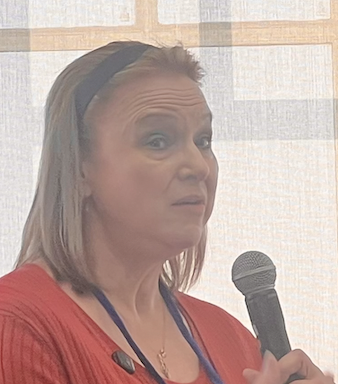
WASHINGTON—Credit union growth, the “schism” between large and small credit unions, and what CUs can learn from sequoias were all addressed during a discussion among a group of CU CEOs here.
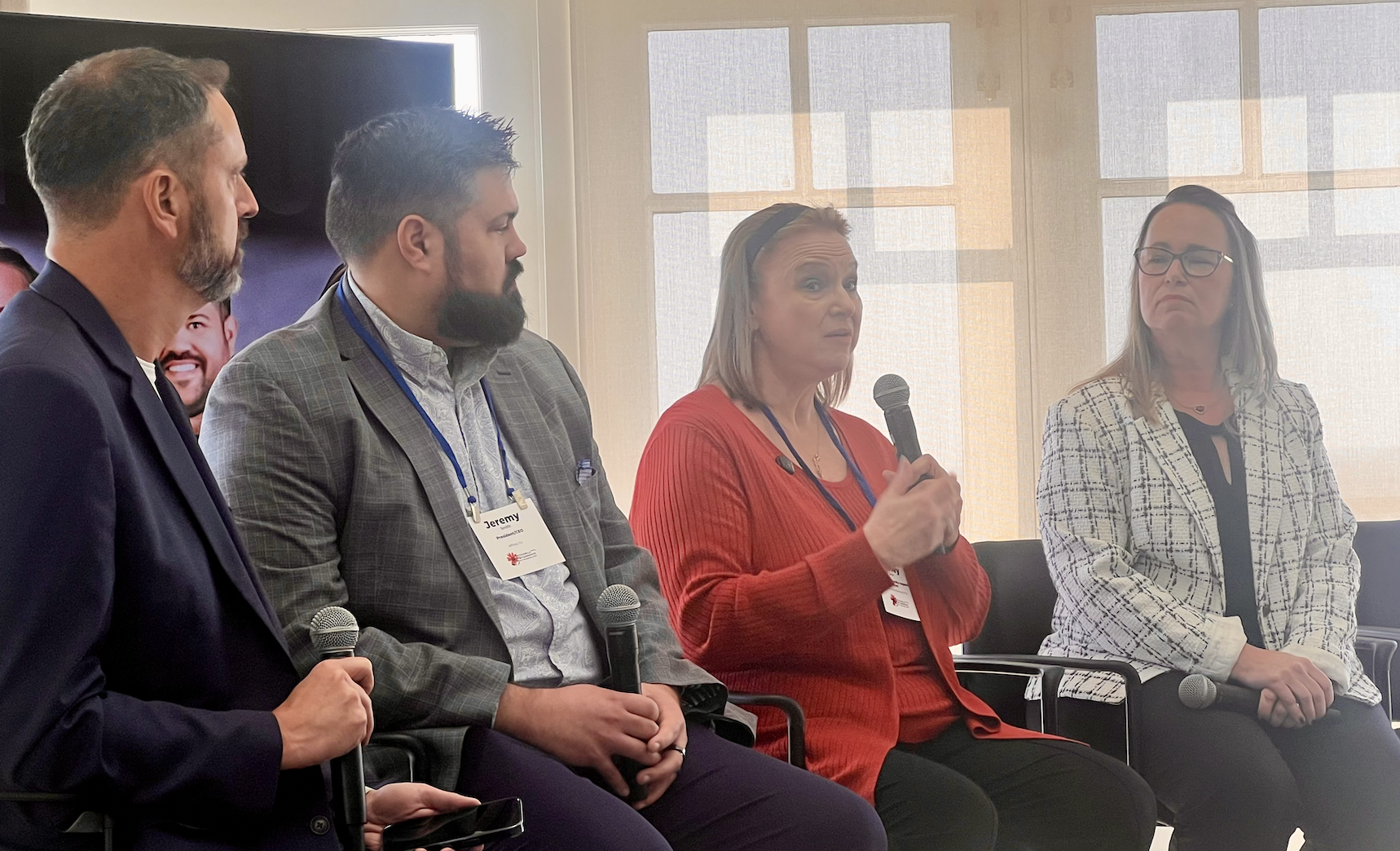
Participating in the discussion during Mitchell Stankovic’s Underground meeting were Tyler Valentine, president/CEO with StagePoint FCU (who acted as moderator); Christine Haley, president/CEO of PostCity Financial CU; Jeremy Smith, president/CEO, Affinity CU, and Shirley Senn of New Orleans Firemen’s FCU.
Here is some of what was discussed.
Haley: The benefit of technology is it makes things faster and more efficient, but it takes away the opportunity to have human engagement. So, we started doing things. Like having pictures with Santa and the Easter Bunny at the branch just to try to continue the momentum, and our members just love seeing each other in the lobby. We have a picnic every year where they just come and hang out. We had a couple of hundred come and have burgers. We just keep trying to retell our story through experiences.
Valentine: How do you envision being able to take that culture and scale it for growth?
Haley: What we’re trying to titrate is we look at our member transaction surveys and then we look at our NPS and there’s a gap. So, these pictures with Santa, pictures with the Easter Bunny and other events are opportunities for us to figure out what is drawing them in and what is keeping that ‘I love my credit union.’ We don’t have the answer yet on how to close that gap?
Valentine: How do you take the culture and scale it for growth?
Senn: It comes back to the leadership, which has to have a purpose, and it has to be embedded in the team members. We have hired an outside company to help us understand what that looks like. We are taking a look to see what is our purpose and culture as we look forward. It’s important to bring in our middle management, our front line, our members, so they can be part of that story. It doesn’t make any sense to have a culture without that.
Valentine: What can the largest CUs learn from the smallest?
Smith: I think authenticity is sometimes missed. You were there to serve to begin with. It just seems like today there’s just a lot of noise out there and nobody’s really getting to the true point of why they were there to serve in the beginning, and what they’re there for in their community. I think just sticking to that authenticity of how you originated and staying with your roots is important.
Haley: When we’re scaling, we think about asset size and growth, and sometimes we need to think about relationships with the members. When we look at loyal and ideal members, those are the people they are having an experience they are telling their kids and grandkids about.
Valentine: We’ve heard we all have the same last name, but there does feel to be a schism between small and large. How do we bridge that gap?
Senn: I was at Sequoia National Park recently. If you think about some of those sequoias, they are thousands of years old. How did they get that way? Well, it wasn’t just, ‘Hey, I’m the biggest in the forest and nobody else is going to be bigger than me.’ Think about the underlying root system. It’s not a deep root system; they are all interconnected and intertwined, so those large sequoias cannot be large without the small ones and the saplings. It makes a whole ecosystem. We have to start looking at it that way.
The large ones have to understand that they need us as much as we need them.
Valentine: We also have to stop being defensive when a larger credit union is offering help. They aren’t just there to merge you. And if they are there to merge you, you can say no.