WASHINGTON–A Supreme Court justice has posed a question that many in credit unions have also shared concerns over: What happens if a new administration arrives in 2028 and it fires every Trump appointee on agency boards and commissions, leading to pivots and reversals in their positions and direction?
As the CU Daily has previously reported, it’s not a hypothetical. In April 2025, President Trump fired NCUA board members Todd Harper and Tanya Otsuka, both Democrats, leaving Republican Kyle Hauptman as the lone board member—and now, chairman. What had been a 2-1 Democratic board is now a 1-0 Republican board.
While Harper and Otsuka have filed suit, arguing their ouster violated the Federal Credit Union Act, a Supreme Court hearing on a similar case last week involving the Fed brought questions that could just as easily apply to NCUA.
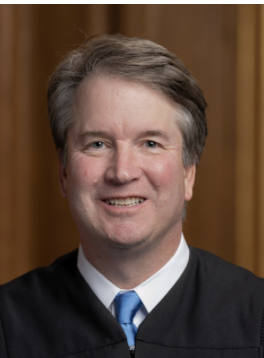
Case Involves Fed Gov
In the case, the Supreme Court heard arguments on President Trump’s move to fire Federal Reserve Board Governor Lisa D. Cook. While “justices from across the ideological spectrum questioned whether the allegations President Trump lodged against Ms. Cook– an unproven assertion that she engaged in mortgage fraud before taking office — were serious enough to allow the president to fire her,” it was a separate line of questioning that should have credit unions’ interest.
Justice Brett Kavanaugh, a Trump appointee, asked if the court found in Trump’s favor, it would mean the president could fire all independent agency officials “at-will” – ending the “for cause” legal requirement.
As the New York Times noted, Kavanaugh argued “the current president’s appointees would likely be removed for cause on Jan. 20, 2029, if there’s a Democrat president…then we’re really at-will removal.”
The Discussion
Below is a transcript of that exchange, according to the Times:
Kavanaugh: For present purposes, you accept the constitutionality of the for-cause removal provision for the Federal Reserve, and that is what protects the independence of the Federal Reserve. What, in your view, is the purpose of that independence?
Solicitor General D. John Sauer: It protects the governors. Exactly reflecting the plain text of the statute, it protects the governors from removal for policy disagreement or for no reason at all.
Kavanaugh: What is the broader purpose of that?
Sauer: To preserve the independence of the Federal Reserve.
‘What Goes Around’
Kavanaugh: Let’s talk about the real-world downstream effects of this. Because if this were set as a precedent, it seems to me, just thinking big picture, what goes around comes around. All of the current president’s appointees would likely be removed for cause on January 20, 2029, if there’s a Democratic president, or January 20, 2033. And then we’re really at at-will removal. So, what are we doing here? What is—you know, we started—that’s why I started with what’s the purpose of the independence and the for-cause removal. If we accept all these—no procedure, no judicial review, no remedy—you know, that’s what’s going to happen, I think. And then where are we? So, do you dispute that that is, you know, the real-world effect?
Sauer: I can’t predict what future presidents may or may not do, but the argument strikes me as a policy argument.
Kavanaugh: Well, history is a pretty good guide. Once these tools are unleashed, they are used by both sides, and usually more the second time around. And I think that’s what we have to make sure we’re—again, that can’t drive the decision necessarily. We have to be aware of what we’re doing and the consequences of your position for the structure of the government.