
HOLLYWOOD, Calif.–California-based First Entertainment Credit Union has introduced a digital credit union brand in the Atlanta market called CineFi that it said is aimed at people working in the television, motion picture, music, gaming, content creation, and influencer industries. It is now sharing why it did so, where it sees a gap in providing services, and some of the lessons it learned in creating the new digital brand.

As the CU Daily reported here, the Atlanta market has become a hub for film and television production in recent years and with it employment has soared. First Entertainment, well-known within Hollywood’s film and television production industries, has moved into the central Georgia market with its CineFi solution rather than branches. Below, First Entertainment President and CEO Stephen Owen offers additional insights into why the credit union is pursuing the new strategy and where it sees an opportunity, and also shares some advice for other credit unions.
The CU Daily: First, can you tell us more about First Entertainment and its brand, and how it currently serves people in the entertainment industry?
Owen: First Entertainment was created by those who work in entertainment. Our founders pooled their resources together to create a better banking experience for those who work in entertainment. Today, we continue to champion that mission for the creators in the greater Los Angeles area. Founded in 1967, we now serve nearly 90,000 members with personalized financial solutions shaped by decades of industry-specific experience.
Entertainment professionals face financial realities that aren’t always understood by traditional institutions: irregular and project-based income, freelance careers, side‑by‑side creative and technical work, and constant transitions between roles or productions. Because we’ve spent more than half a century immersed in this world, we understand those rhythms and design our banking services to support them.
As a member-owned credit union, our success is measured by how well we serve the people who bank with us. Our membership spans the full entertainment ecosystem—from studio and network employees to artists, crew, digital creators, content creators, streamers, social media influencers, electronic gaming industry, music industry, and live entertainment professionals and the many specialists working behind the scenes. That breadth gives us a deep appreciation of how the industry truly operates.
Our brand is built on trust, accessibility, and long‑term partnership. We aim to be a steady financial ally throughout a member’s career, whether that’s through digital tools that fit their on‑the‑go lives, in‑person support where they work, or a team that genuinely understands their craft and their challenges.

At its heart, First Entertainment exists to help industry professionals feel secure and confident about their financial lives—so they can stay focused on the creative work that inspires millions.
The CU Daily: Why launch the CineFi brand?
Owen: CineFi emerged from a clear need we saw in the marketplace. When I stepped into the CEO role at First Entertainment, it became obvious that there were gaps no one was addressing; especially for entertainment professionals living and working in Atlanta’s rapidly expanding creative economy. CineFi was built to fill that space. It’s the first fully digital credit union created specifically for people in film, TV, gaming, content creation, and the broader creative community in Atlanta.
One of the biggest challenges for these professionals is mobility. Productions move. Sets relocate. Freelancers spend months at a time in different cities, and “home base” can shift from project to project. CineFi was designed around that reality. By making the platform entirely digital, we ensure members can access their banking, whenever and wherever their work takes them.
Income fluctuation is another defining part of this industry, so we built CineFi’s financial tools with flexibility and stability in mind. That includes high‑yield checking and savings, round‑up savings on everyday debit spending, early direct deposit up to three days ahead of payday, fee‑free digital banking, access to more than 33,000 surcharge‑free ATMs, and even ATM surcharge rebates – all tailored to people whose cash flow doesn’t always follow a traditional pattern.
But CineFi isn’t just about convenience; it’s also about community. Atlanta has become one of the country’s most vibrant entertainment hubs, yet many professionals there haven’t seen themselves reflected in traditional financial institutions. We wanted to change that from day one. CineFi is built to welcome this new generation of creators, crews, and digital storytellers into the credit union world with a brand and experience that feels authentically theirs.
At its core, CineFi is about meeting entertainment professionals where they are – on the go, on set, and on their own terms – with financial solutions designed specifically for the way they work and live.
The CU Daily: Has First Entertainment seen in its member data or its member companies the relocation of members/companies to the Atlanta market? Or was it different data around employment in the industry, perhaps?
Owen: It was a combination of what we were seeing among our own members and what the broader data made clear. Georgia’s screen sector has evolved into a major production hub, with $2.6 billion in film and television spending in fiscal year 2024 and 273 productions filmed statewide, contributing to $11 billion in direct spend over the past three fiscal years. Even during periods of industry slowdown, the underlying infrastructure has continued to expand; Georgia now hosts one of the largest inventories of purpose‑built soundstage space in the U.S., surpassing New York and rivaled only by Los Angeles.
Those trends mirror what we’ve observed directly: more productions setting up in Atlanta, more crew members and creatives building long‑term careers there, and more member companies establishing a presence in the region. The growth isn’t just cyclical – it reflects Georgia’s long‑term investment in production incentives, studio capacity, and workforce development. Taken together, it signaled that Atlanta had become a foundational market for the industry, which strongly informed our decision to design CineFi around the needs of this expanding creative community.
The CU Daily: To be able to serve this market, First Entertainment obviously needed to include it within its FOM? What was required for First Entertainment to get approval to serve the greater Atlanta market?
Owen: To serve the Atlanta market through CineFi, we first had to ensure that First Entertainment was authorized to expand its field of membership beyond California. That required a coordinated effort with both California and Georgia state banking regulators, working through the formal review and approval process to add the greater Atlanta region to our charter.
As a result of that work, our field of membership now includes individuals who live or work in DeKalb, Douglas, Fayette, Fulton, Gwinnett, Newton, Paulding, or Rockdale counties, as well as anyone who lives with an existing CineFi member. Once someone becomes a First Entertainment member, CineFi functions as a fully digital extension of the credit union, giving them the ability to manage their finances from anywhere their work takes them, whether that’s on set in Atlanta, traveling between productions, or living elsewhere in the country.
The CU Daily: The First Entertainment name and brand are well known in California and within the industry in its markets. How will it be promoting CineFi in the Atlanta region? Is the lack of branches a hindrance? Are there any plans for branches?
Owen: CineFi was built from the ground up as a digital‑first extension of First Entertainment – intentionally designed around how entertainment professionals in Atlanta actually live and work. Instead of relying on a branch‑driven model, our approach centers on industry relevance, mobility, and community connection. That means promoting CineFi through targeted digital outreach, partnerships across Atlanta’s entertainment ecosystem, and direct engagement with productions, unions, studios, and creator communities already active in the region.
Importantly, while CineFi is fully digital, we are operating locally and face-to-face. We have employees based in Atlanta who work closely with community partners, industry leaders, and organizations to maintain a strong on‑the‑ground presence. Their role is to build relationships, understand emerging needs, and represent CineFi in the spaces where entertainment professionals collaborate and create. That local presence and visibility helps connect CineFi to the community.
The lack of branches isn’t a hindrance; it’s part of the model. CineFi was designed to remove geography as a barrier and give members the ability to open accounts, access support, and manage their finances entirely online, wherever their careers take them. While we’ll continue evaluating member needs as we grow, there are no immediate plans to open physical branches. For now, our priority is delivering a seamless, modern digital banking experience paired with a meaningful, human presence in Atlanta’s creative community.
The CU Daily: First Entertainment said CineFi fills a “longstanding gap” in financial services for the entertainment industry. What is that gap, and how does CineFi fill it?
Owen: Great question. The gap we saw was not simply about access to financial services, but about relevance. Many people working in entertainment have income patterns, career paths, and financial needs that do not align neatly with how traditional financial institutions are built. That disconnect is what led us to launch CineFi. In fast-growing entertainment hubs like Atlanta, many professionals are contributing to a thriving industry but have never felt that financial institutions truly understood how they work or their needs. CineFi meets them where they are, both geographically and professionally, and offers a modern, accessible way into the credit union system that reflects how today’s entertainment careers actually work.
We built features that support creatives, including round-up savings on debit card purchases, high-yield checking and savings accounts, direct deposits up to two days early, no account fees, access to more than 33,000 surcharge-free ATMs, and ATM surcharge rebates. These tools bring predictability and long-term financial success, enabling members to grow and adapt alongside CineFi as an institution.
On top of that, we offer curated educational tools available to all members on the platform, helping them become better equipped to handle any challenge thrown their way.
The CU Daily: Tell us a little more about how FECU refined the CineFi digital experience. What was learned during development?
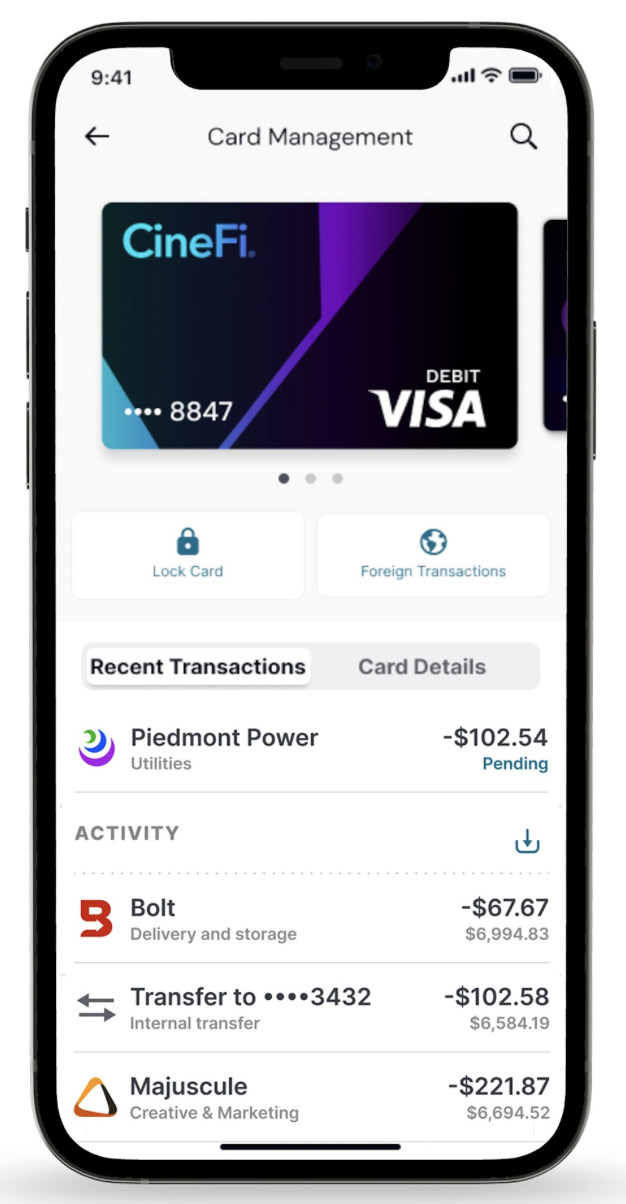
Owen: We set out to streamline the entire membership lifecycle, from first touch to everyday banking, so creatives can join and manage money without friction. We know that joining a credit‑union can feel more complicated than onboarding with a fintech–especially with credit union eligibility requirements–so we moved most qualification checks behind the scenes. The result: prospective members experience a flow that feels as simple as opening an account at a digitally-optimized bank, while we still meet all regulatory requirements.
We also flipped the traditional sequence many institutions use. Instead of forcing people to apply for membership before they can access digital features, CineFi lets them create a digital profile in‑app first, explore features, and return when they’re ready to open accounts or finalize membership. From there, we built a fully digital journey with clear wayfinding, fast account opening, and intuitive servicing once they’ve joined.
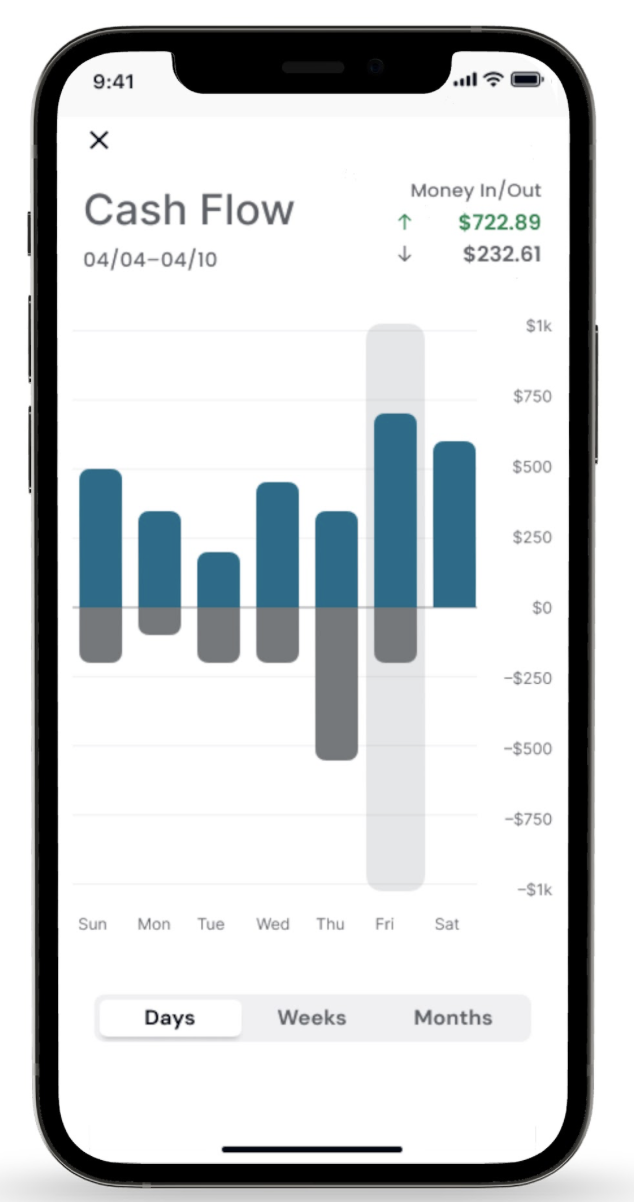
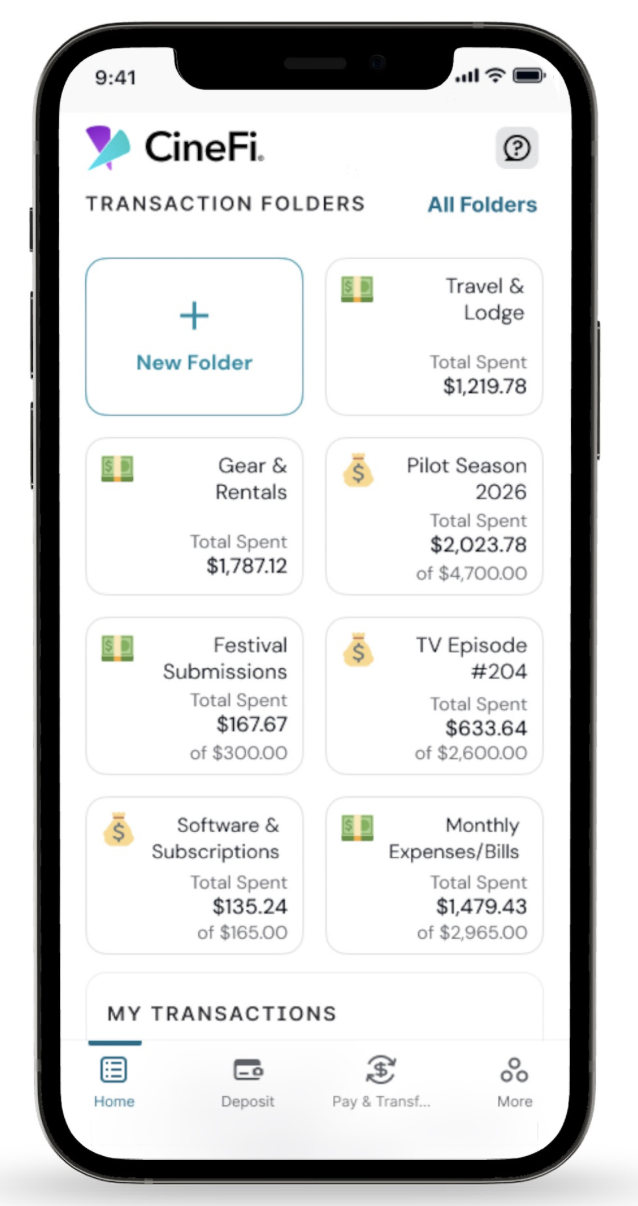
Because cash flow in entertainment is rarely “twice‑a‑month,” we added budget tools tailored to irregular income – including flexible budgeting, project‑based income tracking, and specialized financial education content that speaks to the nuance of the industry. Across the board, we designed everything from the member’s experience first, then aligned our business and compliance processes to make that experience simple, easy, and seamless by design.
The CU Daily: The CU Daily is running a 2026 series called the ‘Profitability Imperative,’ in which lessons in growth are shared. What advice would First Entertainment have for any other CU considering the launch of a new branch?
Owen: Launching a new branch, or expanding to a new market, is about more than just opening doors. Our advice would be to start with a deep understanding of the audience you’re trying to serve. Ask yourself: who are they, what are their specific financial realities, and how can your institution deliver value that others don’t?
It’s also important to match delivery channels to member behavior. In many cases, especially with mobile or project-based professionals, digital-first approaches can provide reach and efficiency that a traditional branch may not.
Finally, be prepared to iterate and learn quickly. Collect feedback early, test solutions, and adjust based on what members actually need — that flexibility is key to growing sustainably while maintaining profitability.